Four Main Methods for Handling Oil-Water Mixtures at Skid-Mounted Fuel Stations


Skid-mounted fuel stations (typically referring to barrier-proof skid-mounted refueling units) may generate oil-water mixtures during operation due to rainwater accumulation, tank cleaning, or minor leaks. This mixture is classified as hazardous waste (usually categorized as HW08 waste mineral oil and mineral oil-containing waste) and must be handled professionally and compliantly. The mainstream approach for handling oil-water mixtures at skid-mounted fuel stations is an integrated process of multi-stage physical separation and deep purification. The core process involves first rapidly removing floating oil and emulsified oil using gravity/coalescing/air flotation, followed by deep treatment using filtration/adsorption/membrane methods to ensure the effluent meets standards.
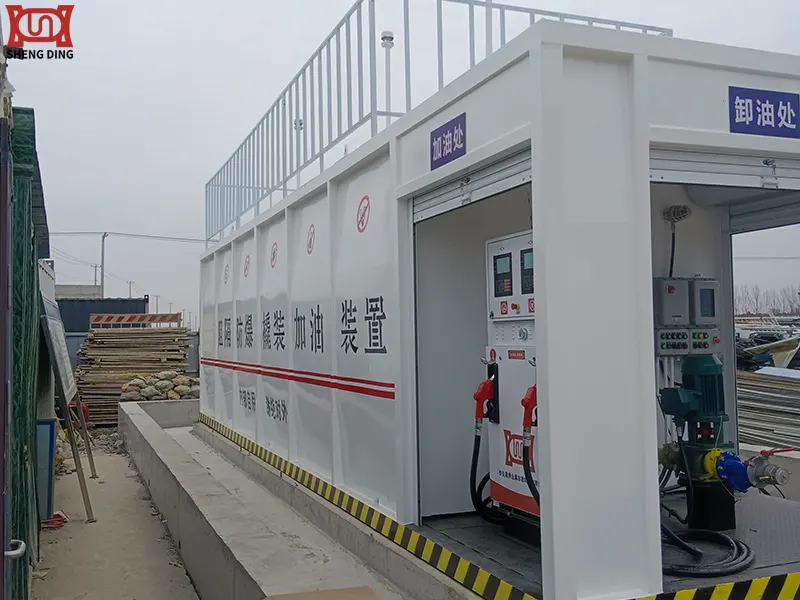
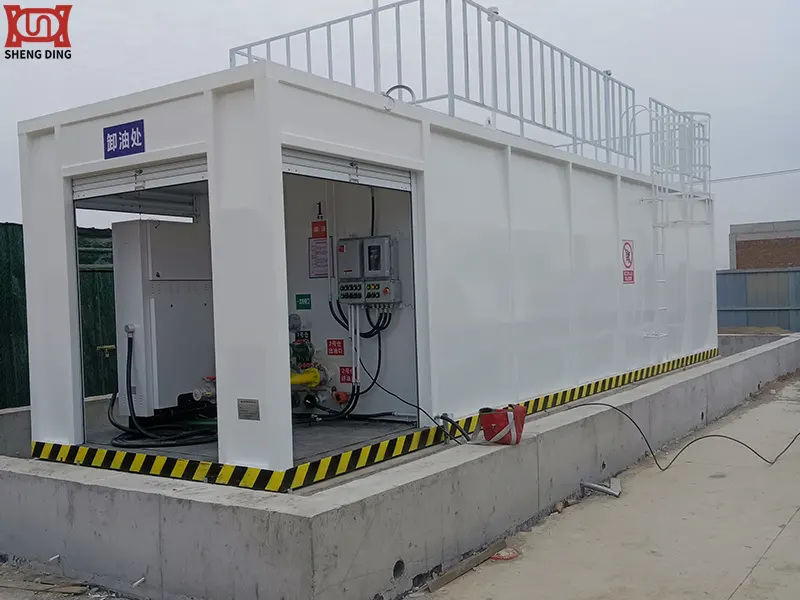
1. Sources of Oil-Water Mixtures at Skid-Mounted Stations
- Tank bottom water removal (water sediment at the bottom of the tank) ensures good sealing of the unloading port and manhole (tank cover) to prevent large amounts of rainwater from seeping into the storage tank or explosion-proof pool. Equipped with a double-layer tank leak detector, any leaks in the inner or outer tank can be detected promptly, preventing the formation of more difficult-to-handle emulsions from the mixture of large amounts of oil and water.
- Wastewater from fuel dispenser/pipeline cleaning and oil dripping from the ground should first be cleaned with lime or clay pads, then rinsed with water, and finally discharged directly into the municipal sewage outlet.
- Initial rainwater (containing oil stains on the ground) may cause a fire if oil and natural gas discharged into the sewage ditch encounters an ignition source outside the station, endangering the gas station. Therefore, gas stations must install oil-water separation wells (utilizing gravity settling principles) when discharging wastewater.
- Leakage and spillage collection liquids should not be inspected at the oil wells in skid-mounted stations to prevent the accumulation of oil and gas from igniting exhaust fumes from refueling vehicles, causing an accident. If an oil well catches fire, the flame height should not exceed 30 cm; simply covering the oil well with a fire blanket will extinguish the flame.
2. Mainstream Treatment Methods (by Process)
2.1. Pretreatment: Bar Screen + Equalization + Settling
- Bar Screen/Basket Filter: Intercepts silt, impurities, and large particles to protect downstream equipment.
- Equalization Tank: Homogenizes water quality and quantity, stabilizing the load.
- Primary Sedimentation/Oil Separation: Utilizing density differences (oil = 0.9, water = 1), floating oil naturally rises, water remains at the bottom, and sludge settles.
- Equipment: Horizontal flow oil separator, inclined plate/corrugated plate separator, residence time >= 30 min, removing floating oil and large dispersed oil particles.
- Efficiency: 60%-70%, suitable for oil droplets > 60¦Ìm.
2.2. Core Separation: Coalescing + Air Flotation (Standard Skid-Mounted)
2.2.1 Coalescing Separation (High-Efficiency Removal of Dispersed Oil)
- Principle: Oil droplets collide, adsorb, and coalesce into larger droplets on oleophilic coalescing packing material (fiber/ceramic/composite material), accelerating their rise.
- Equipment: Coalescing oil separator, cartridge-type coalescer.
- Efficiency: 95%-98%, capable of handling 10-100¦Ìm dispersed oil.
- Skid-Mounted Advantages: Pressure-driven, sealed, small footprint, automatic oil discharge.
2.2.2 Air Flotation Separation (Demulsification + Deemulsified Oil)
- Principle: Releases micro-nano bubbles to adhere to emulsified oil/suspended matter, forming scum that is scraped off; often used in conjunction with demulsifiers/flocculators.
- Mainstream: Cyclone Dissolved Air Flotation (CDFU) - combines cyclone centrifugation and dissolved air flotation, removing oil droplets larger than 5¦Ìm without chemical dosing, suitable for skid-mounted systems.
- Efficiency: Emulsified oil removal rate 90%+.
2.3. Deep Purification (Key to Compliance)
- Filtration and Adsorption: Walnut shell filters, activated carbon, quartz sand, remove residual oil and suspended matter.
- Membrane Separation: Ultrafiltration/microfiltration membranes (PTFE, etc.), retaining 0.1-1¦Ìm oil droplets, effluent oil content < 5mg/L.
- Advanced Oxidation: Photocatalysis, ozone, degrading dissolved oil and COD, meeting stricter standards.
2.4. Tank Farm Water Cut-off (Commonly Used in Skid-Mounted Tanks)
- Process: Sampling and assessment --> Explosion-proof pump extraction --> Coalescing and dehydration --> Oil recovery --> Wastewater enters the treatment system.
- Tools: Explosion-proof oil pump, water test paste, oil collection tank, coalescing and dehydrating device.
- Key Points: Closed operation, explosion-proof, oil recovery, no wastewater discharge.
3. Typical Process Combinations for Skid-Mounted Integrated Tanks
- 3.1. Basic Type (General): Oil separation --> Coalescing --> Filtration --> Effluent oil content <=20mg/L.
- 3.2. High-Efficiency Type (High Emulsified Oil Content): Oil separation --> CDFU flotation --> Coalescing --> Activated carbon --> Effluent <=10mg/L.
- 3.3. High Standard (Reuse/Direct Discharge): Oil separation --> Flotation --> Coalescing --> Ultrafiltration membrane --> Effluent <=5mg/L.
4. Key Equipment and Parameters (Commonly Used for Skid-Mounted Systems)
| Unit | Equipment | Core Parameter | Function |
| Pretreatment | Bar screen + equalization tank | Retention 10-20 min | Impurity removal, homogenization |
| Primary separation | Inclined plate oil separator | HRT>=30 min | Oil removal |
| Core separation | Coalescing oil separator | Packing material gradient pore size | Coalescing small oil droplets |
| Core separation | CDFU air flotation | Microbubble, cyclone | Demulsification, deemulsified oil |
| Depth | Ultrafiltration membrane | 0.1-1 µm | High-precision oil removal |
| Auxiliary | PLC automatic control | Liquid level/oil discharge interlock | Automatic operation |
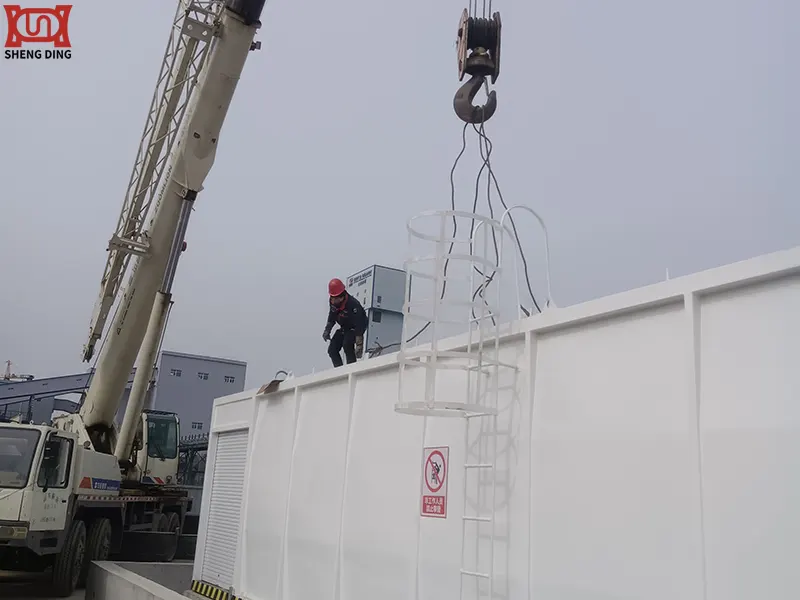
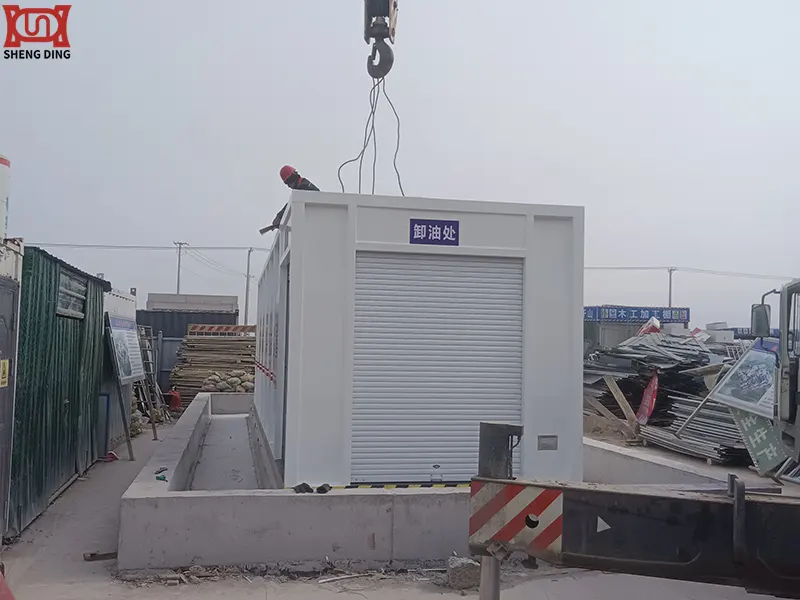
5. Operation and Maintenance Points
- 5.1. Daily: Regularly discharge oil and sludge, backwash filter/membrane elements, and monitor influent oil content and effluent indicators.
- 5.2. Chemicals: When emulsification is severe, add demulsifiers and flocculants, controlling the dosage to avoid secondary pollution.
- 5.3. Safety: Explosion-proof, anti-static, and VOC-collecting systems are used. Waste oil is disposed of by qualified units.
- 5.4. Compliance: Effluent must meet GB 20922 or local standards; direct discharge is strictly prohibited.
6. Selection Recommendations
- Small water volume, mainly floating oil: Select a compact skid-mounted system with oil separation + coalescence + filtration.
- High emulsification volume, high requirements: Select an integrated skid-mounted system with CDFU air flotation + coalescence + membrane.
- Tank farm water removal: Equip with a dedicated coalescence dehydrator + explosion-proof pumping system.
The method for handling oil-water mixtures at skid-mounted fuel stations typically follows a process of "source control - oil-water separation - compliant disposal." We hope the above explanation will be helpful in handling oil-water mixtures at skid-mounted gas stations in the future.
Written by
TAIAN SHENGDING METAL CONTAINER MANUFACTURING CO., LTD.
Editor Wang
WhatsApp:+86 152 5486 3111
Email:shengdingtank@126.com


- WhatsApp
- E-MailE-Mail:shengdingtank@126.com
- WeChatWeChat:15254863111