9 Key Technologies for Fire and Explosion Prevention in Skid-Mounted Fuel Stations


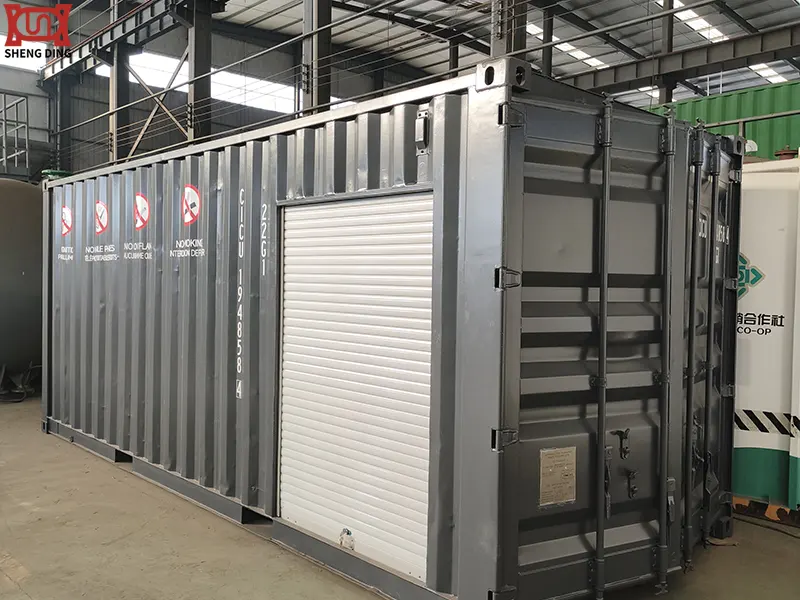
Skidded gas stations are ground-based refueling facilities that integrate oil storage tanks, fuel dispensers, and explosion-proof electrical systems. Due to their location in densely populated areas or within businesses, and the large capacity of their storage tanks, fire and explosion prevention are central to their safety design. Below are nine key technologies for fire and explosion prevention in skid-mounted fuel stations compiled by Shengding Containers, which we hope will be helpful when using skid-mounted fuel stations in the future.
1. Double-Layer Tank Walls and Explosion-Proof Materials
Explosion-proof materials and double-layer tank walls are two core technologies ensuring the safety and environmental protection of skid-mounted fuel stations. They construct an inherently safe defense line from the two dimensions of suppressing explosions and preventing leaks, respectively.
1.1. Explosion-Proof Materials
Explosion-proof materials are typically honeycomb mesh structures made of special aluminum alloys or stainless steel, filling the interior of the oil storage tank.
1.1.1. Core Functions
- Suppressing Explosions, Achieving "Burn Only, No Explosion": The honeycomb structure divides the tank's interior into countless tiny "compartments," blocking the flame propagation path. Simultaneously, the material rapidly absorbs combustion heat, significantly reducing reaction temperature and pressure, preventing explosions at their source.
- Eliminating Static Electricity, Preventing Accumulation: The material possesses excellent static conductivity, promptly dissipating static electricity generated by oil sloshing and filling, preventing hazards caused by static sparks.
- Suppressing Oil and Gas Evaporation: The honeycomb structure effectively confines oil and gas, reducing evaporation losses and improving environmental friendliness and economy.
- Enhancing Tank Impact Resistance: The material buffers impacts, gunshot wounds, and other external forces, reducing the risk of tank breakage.
1.1.2. Working Principle
When the tank encounters extreme situations such as open flames, static electricity, lightning strikes, or gunshot wounds, the honeycomb structure instantly cuts off flame propagation and rapidly dissipates heat, preventing the combustion reaction from forming a pressure peak sufficient to trigger an explosion, ensuring "ignition only, no explosion."
1.2. Double-walled Tank
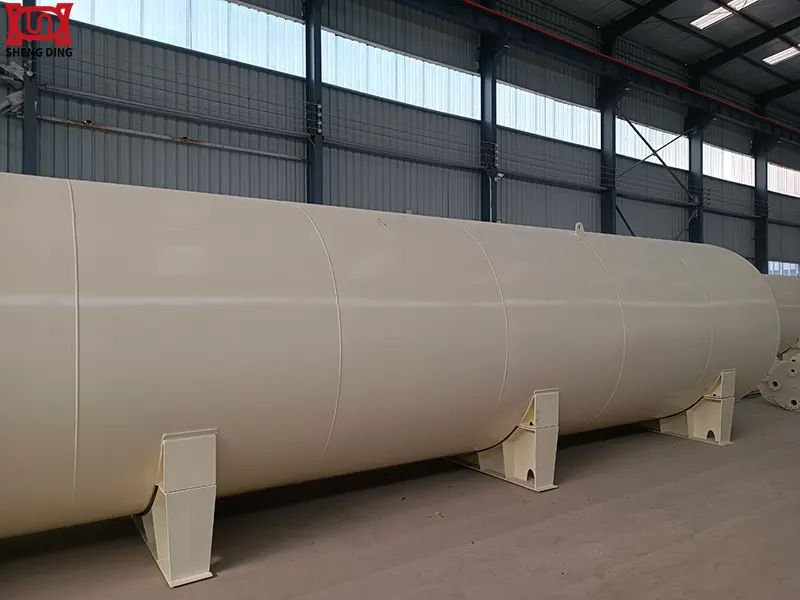
The double-walled tank consists of inner and outer steel structures with a sealed interlayer space, equipped with a leak detection device.
1.2.1. Core Functions
- Double leak prevention, eliminating pollution: In the event of damage to the inner tank, the outer tank can trap leaked oil in the interlayer, preventing oil from seeping into the soil and groundwater, completely eliminating environmental risks.
- Real-time monitoring, early warning: The leak detection system in the interlayer can provide real-time alarms, enabling early detection and handling of leaks, preventing the risk from escalating.
- Enhanced structural strength and explosion resistance: The double-walled structure significantly enhances the mechanical strength of the tank. The inner tank is designed with a pressure of no less than 0.8 MPa, effectively resisting unexpected internal pressure shocks.
- Extended tank lifespan: The outer tank protects the inner tank from external corrosion, and the double-walled protection significantly extends the overall service life.
1.2.2. Compliance Requirements
- According to international standards, skid-mounted refueling units must use double-walled steel tanks, and the interlayer space must be equipped with a leak detection device to ensure that any leakage can be detected promptly.
The combination of these two aspects allows Shengding skid-mounted refueling stations to achieve a balance between the three core advantages of safety, environmental protection, and convenience, meeting the safe fuel usage needs of enterprises, logistics parks, construction sites, and other scenarios.
2. Overflow and Leakage Prevention Monitoring System
The overflow and leakage prevention monitoring system of Shengding skid-mounted refueling stations is the core line of defense for ensuring safety and compliance, responsible for active overflow prevention and passive leak prevention, respectively.
2.1. Overflow Prevention System
Active Overflow Prevention, Eliminating Overflow
- Core Configuration: Level gauge with high level alarm function, overflow prevention valve, emergency shut-off valve (ESD), overflow prevention probe.
- Standard Threshold: Alarm at 90% capacity, automatic stop of fuel supply at 95%.
- Operating Logic: Real-time level gauge monitoring ---> Triggers 90% audible and visual alarm ---> Upon reaching 95%, triggers ESD protection, shutting off power within 1-2 seconds and forcibly stopping the pump/unloading.
- Auxiliary Protection: The inlet pipe extends 50-100mm to the bottom of the tank, designed to prevent siphoning; the refueling nozzle has a self-sealing mechanism, automatically shutting off when full.
- Mechanical Overflow Prevention: The overflow valve has a built-in float/mechanical lock, automatically locking in case of power failure/malfunction, providing double protection.
2.2. Leakage Monitoring System
Double-layer protection, accurate early warning
- Core Configuration: Double-walled steel oil tank, interlayer leakage detection sensor (float type/piezoelectric type/optical oil-water identification), leak alarm controller, detection riser.
- Double-layer Tank Function: When the inner tank is damaged, the outer tank traps the leaked liquid in the interlayer, preventing soil and groundwater pollution.
- Detection Principle: Detects the interlayer liquid level and oil-water composition with an accuracy <=2mm, distinguishing between oil/water/malfunction.
- Response and Compliance: Leakage must trigger an audible and visual alarm within 2 seconds, supporting data upload and remote monitoring; a detection riser must be installed to ensure that leaks at any point can be detected.
- Peripheral Defense: A protective dike/oil leakage collection pool must be installed around the perimeter, with an effective capacity of not less than 50% of the total tank capacity, using non-combustible solid materials.
Overflow and leakage prevention signals are connected to the station's safety PLC, triggering overall shutdown and remote alarms in case of abnormalities, achieving "dual protection for humans and machines."
3. High-Temperature Automatic Oil Shutdown Protection
3.1. Core Configuration and National Standard Requirements
- Mandatory Configuration: A high-temperature automatic oil shut-off protection valve (fusible valve) must be installed on the oil tank's outlet pipeline.
- Installation Location: On the main oil pipeline between the oil tank outlet and the refueling machine, close to the oil tank side.
- Trigger Temperature: National and industry standards typically set it at 70oC (some are 60+/-3oC).
- Action Requirements: When the temperature reaches the set value, it must automatically and completely shut off within 1¨C3 seconds, remaining closed until the fault is cleared.
- Compliance Basis: GB 50156-2021, Clause 6.4.3 (Mandatory Clause).
3.2. Working Principle
- Normal State: Valve is normally open, oil circuit is unobstructed.
- Over-temperature Trigger: When the ambient/pipeline temperature rises to 70oC, the built-in fusible alloy fuse melts.
- Oil Cut-off Execution: Spring/weighted mechanism drives the valve core to quickly close, completely cutting off oil supply.
- Reset Requirements: Manual replacement of the fuse and manual reset are required to reopen the valve, ensuring safety.
3.3. System Functions and Protection Logic
- Fire Interception: In the event of a fire, quickly cut off the oil supply to prevent further fire.
- Over-temperature Protection: Provides early warning in case of high summer temperatures or equipment overheating to prevent the risk of oil spontaneous combustion.
- Independent and Reliable: Purely mechanical structure, no power/gas supply required, can still operate reliably in extreme power outage/runaway scenarios.
- Interlocking and Coordination: Integrates with Emergency Discharge (ESD) valves, combustible gas alarms, and automatic fire extinguishing systems to form a complete safety chain of "overheating ---> fuel cut-off ---> alarm ---> fire extinguishing."
4. Explosion-Proof Electrical System
The explosion-proof electrical system of Shengding skid-mounted fuel stations is the core line of defense against oil and gas explosions.
4.1. Explosion-Proof Power System
- Explosion-proof Distribution Box: Main control power supply, motor start/stop, overload/short circuit protection.
- Explosion-proof Oil Pump Motor: Drives submersible pumps/self-priming pumps, linked with high-temperature fuse valves.
- Explosion-proof Fuel Dispenser: The entire unit, with built-in explosion-proof motor, solenoid valve, and metering device.
4.2. Explosion-Proof Monitoring and Instrumentation (Core: Intrinsically Safe)
- Intrinsically Safe Level Gauge: Zone 0 monitoring, high level alarm (90%), ultra-high level pump stop (95%).
- Intrinsically safe combustible gas detectors: Installed in 1/2 zone, alarm value <=25% LEL, linked to shut-off and ventilation.
- Intrinsically safe temperature sensor: Monitors tank/pipeline temperature, linked to high-temperature oil shut-off.
- Explosion-proof audible and visual alarm: Provides strong on-site warning in case of abnormalities.
4.3. Explosion-proof wiring and installation (mandatory requirement)
- Cables: Use copper core armored cables or galvanized steel conduits for protection; plastic conduits are strictly prohibited.
- Connections: Explosion-proof junction boxes, explosion-proof flexible conduits, and reliable sealing of joints.
- Grounding: Reliable grounding at both ends of the metal conduit/armored outer sheath, forming a continuous conductive path.
4.4. Lightning protection and anti-static grounding system (mandatory shared system)
- Shared grounding network: Combined grounding for lightning protection, anti-static, electrical, and instrumentation; grounding resistance <=4ohm.
- Equipotential bonding: Bridging between tanks, pipelines, equipment casings, and flanges to eliminate potential differences.
- Static Electricity Grounding Alarm: Forced grounding during oil unloading; unloading cannot begin if the grounding is not properly established.
4.5. Safety Linkage Control (Explosion-proof PLC)
- Logic: Gas alarm ---> power cut-off + pump stop + valve close + ventilation; High temperature ---> oil cut-off + alarm; High liquid level ---> pump stop + alarm.
- Power Supply: The control circuit uses intrinsically safe power, and the main circuit is equipped with an explosion-proof emergency stop button.
Through four principles-zoning selection, intrinsic safety, reliable grounding, and linkage control-"no sparks, no explosion, and capable of cutting off" is achieved.
5. Lightning Warning and Lightning Protection Grounding
- Static Electricity Grounding: A dedicated static electricity grounding release pile is installed to ensure equipotential bonding between the tanker truck and the tank body during oil unloading.
- Lightning Protection Grounding Network: The skid-mounted unit must be connected to an underground grounding network. The grounding resistance is typically required to be <=4ohm (according to local regulations) to ensure that lightning current can be quickly conducted to the ground, preventing electric sparks.
- Lightning Warning (Advanced): Some smart skid-mounted stations are equipped with a lightning warning system that automatically locks the fuel dispensers and suspends operations before a thunderstorm.
6. All-Weather Vapor Recovery and Concentration Monitoring
- Vapor Recovery: Employing primary and secondary vapor recovery systems, vapors volatilized during refueling and unloading are recovered into the fuel tanks, preventing the formation of explosive gas mixtures around the skid-mounted station.
- Concentration Alarm: Combustible gas concentration detectors are installed inside or around the skid-mounted station. If the vapor leakage concentration reaches 20%-25% of the lower explosive limit, an audible and visual alarm is immediately triggered, and the ventilation system is forcibly activated.
7. Automated Emergency Shutdown System
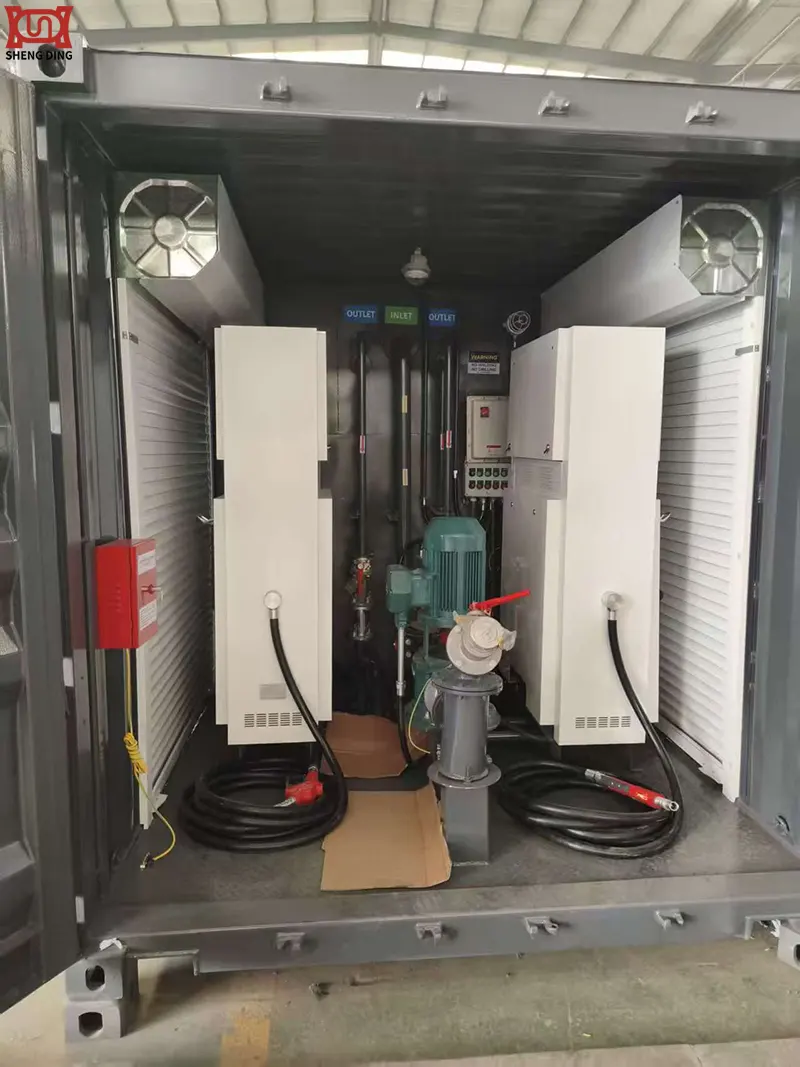
- Remote/Local Control: Emergency stop buttons are installed in prominent locations within the skid-mounted station and in the remote control room.
- Interlocking Logic: When the emergency stop button is pressed, all fuel dispensers stop pumping, all valves close, and power is cut off (except for explosion-proof lighting), physically isolating the entire system from hazardous sources.
8. Automatic Fire Alarm and Extinguishing Linkage
- Fire Source Detection: Utilizing heat-sensing cables, flame detectors, or infrared thermal imaging technology, real-time monitoring of storage tanks and refueling areas is achieved.
- Automatic Extinguishing: Linked to suspended dry powder fire extinguishers or foam fire extinguishing systems. Once a detector is triggered, the extinguishing device automatically activates, providing comprehensive coverage of the fire without manual intervention, saving valuable initial fire suppression time.
9. Explosion-Proof Electrical Wiring and Static Electricity Discharge
- Conduit Protection: All cables must be laid in metal conduits with explosion-proof sealed joints to prevent sparks from cable breakage.
- Static Electricity Elimination: Static electricity discharge balls (non-metallic material, slow discharge) are installed at the entrance to the refueling area to prevent operators from carrying static electricity while wearing synthetic clothing during refueling operations.
Conclusion
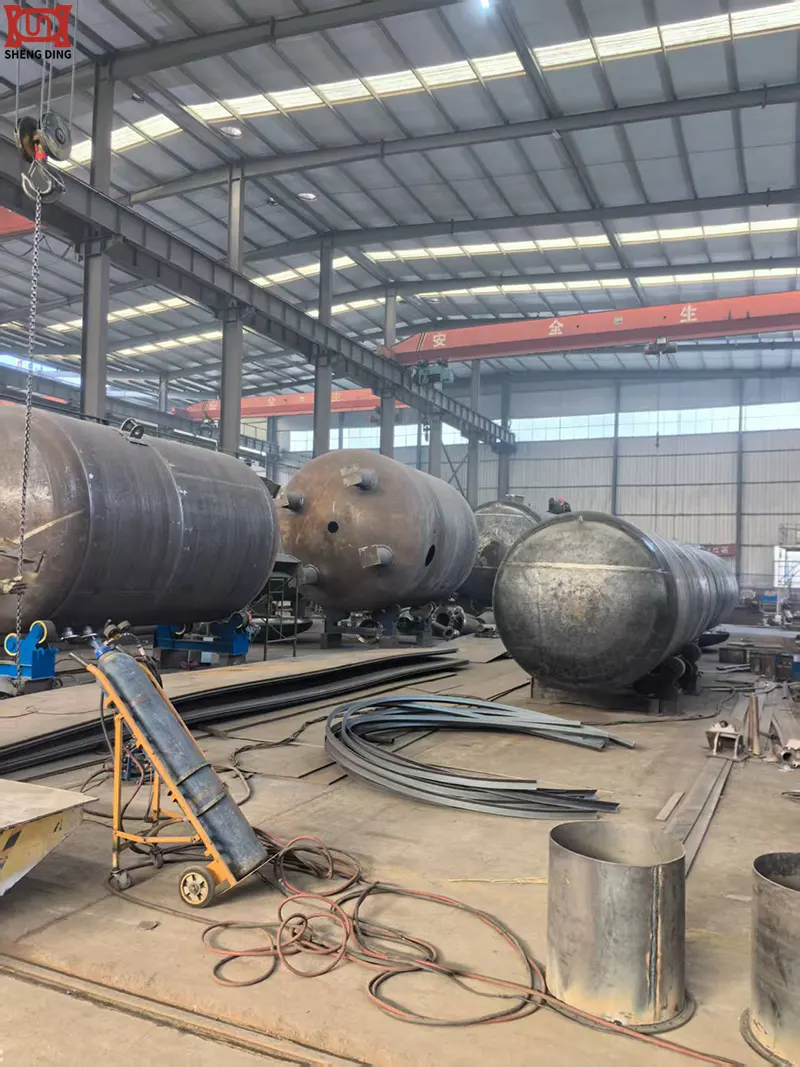
These nine technologies together constitute the four-level protection system of Shengding skid-mounted fuel stations: "Explosion Suppression-Monitoring-Control-Extinguishing." Among them, explosion-proof materials are the foundation, automated monitoring and interlocking are the nerve center, and emergency shut-off and fire extinguishing are the last line of defense. Production safety is of paramount importance. Shengding Containers always prioritizes safety, builds upon quality, adheres to integrity, and is driven by innovation. Upholding meticulous craftsmanship, we rigorously control every process, safeguarding every entrustment, and are committed to providing customers with safe, reliable, and durable skid-mounted fuel station products and solutions. Together with our partners, we create value and achieve sustainable growth.
Written by
TAIAN SHENGDING METAL CONTAINER MANUFACTURING CO., LTD.
Editor Wang
WhatsApp:+86 152 5486 3111
Email:shengdingtank@126.com


- WhatsApp
- E-MailE-Mail:shengdingtank@126.com
- WeChatWeChat:15254863111