7 Key Technologies for Installing Anti-static Grounding Systems in Skid-Mounted Fuel Stations


With the widespread application of skid-mounted fuel stations in logistics parks, industrial and mining enterprises, and port terminals, their flexibility and convenience are becoming increasingly prominent. However, these facilities are often located outside the fire safety distance of traditional gas stations and store large quantities of flammable and explosive oil products, posing significant safety risks. Among numerous safety hazards, electrostatic discharge is one of the main causes of fires and explosions. Static electricity can accumulate throughout the entire process of loading, unloading, storing, and refueling oil in skid-mounted fuel stations. If a reliable and complete static discharge channel is not established, even a tiny electric spark can lead to catastrophic consequences. Anti-static grounding systems are crucial barriers to ensure the safe conduction of static charges to the ground. This involves not only the equipotential bonding of the equipment itself but also multiple technical aspects such as grounding grid design, oil unloading interlocking, corrosion protection, and online monitoring. The following are seven key technologies for installing anti-static grounding systems in skid-mounted fuel stations:
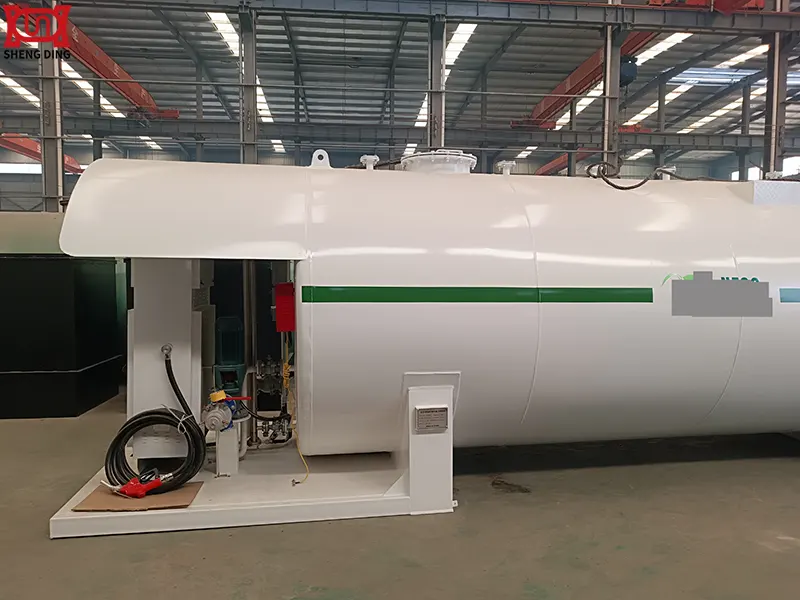
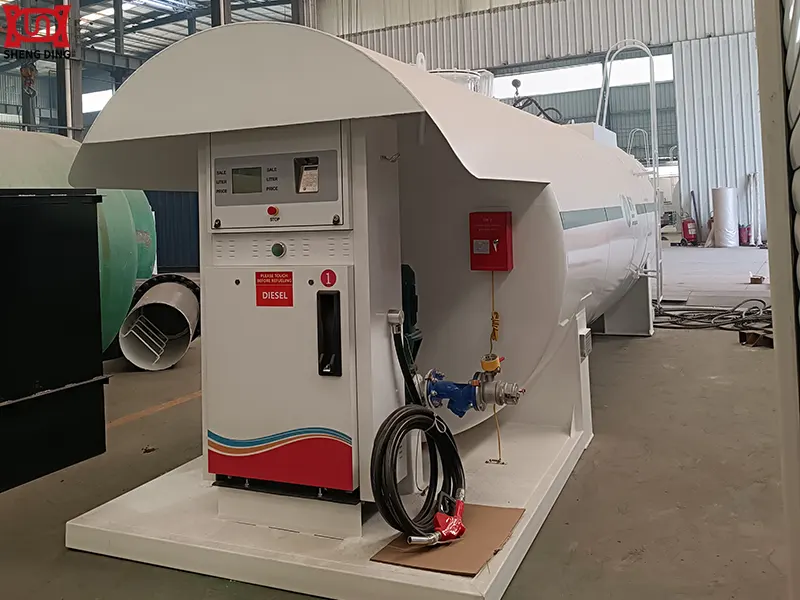
1. Composite Structure Design Technology of Grounding Grid
Skidned gas stations cannot rely solely on the grounding of the equipment's base; an independent artificial grounding grid must be established.1.1. Overall Design Requirements
1.1.1. Grounding System Functions
- Simultaneously meet the following requirements: lightning protection grounding, anti-static grounding, electrical equipment protective grounding, and information system grounding. A combined grounding method should be adopted, without separate independent grounding electrodes.
1.1.2. Grounding Resistance Indicators
- Combined grounding network grounding resistance: <= 4 ohm
- Anti-static separate grounding (if required on-site): <= 100 ohm
- Static discharge column, unloading grounding stake: <= 10 ohm
1.1.3. Scope of Application
- Coverage: All exposed conductive parts of skid-mounted tanks, refueling machines, unloading areas, process pipelines, power distribution equipment, monitoring cabinets, metal fences, etc.
1.2. Grounding Network Structure Design
1.2.1. Layout
- A closed-loop horizontal grounding network should be adopted, arranged around the skid-mounted equipment area, refueling island, and unloading area.
- The outer edge of the grounding network should preferably be rounded to avoid right angles and sharp corners, reducing current dissipation resistance.
- Grounding grid burial depth: >= 0.8 m; in areas with frozen soil, it should be buried below the frozen soil layer.
1.2.2. Vertical grounding electrode installation
- Material: 50mm hot-dip galvanized steel pipe, L=2.5 m or copper-clad steel grounding electrode
- Spacing: >= 5 m
- Quantity: Configured according to soil resistivity; generally, 4-6 electrodes are sufficient for skid-mounted stations to meet <=4ohm requirements.
- Arrangement: Evenly distributed along the ring-shaped horizontal grounding conductor.
1.2.3. Horizontal grounding trunk line
- Material: 40*4 mm hot-dip galvanized flat steel
- Connection: Double-sided welded connection to the vertical grounding electrode.
- Grounding trunk line lead-out: At least two leads to the skid-mounted equipment grounding terminal box, serving as spare grounding terminals.
1.2.4. Measures to Reduce Resistivity in High Soil
- Preferred methods: resistance-reducing agents, soil replacement, and extended grounding electrodes.
- Strictly prohibit the use of highly corrosive or soil-polluting chemical resistance-reducing agents.
- n mountainous areas and rocky geology, an extended grounding grid can be used, extending to a low-resistivity area.
1.3. Construction Process
- Surveying and setting out -> Excavating grounding trenches.
- Driving vertical grounding electrodes into the soil.
- Laying and welding horizontal grounding flat steel.
- Anti-corrosion treatment of welding points (asphalt paint + anti-corrosion tape).
- Pre-inspection of grounding resistance.
- Backfilling and compaction in layers (fine soil backfill, no stones or construction waste allowed).
- Leading the grounding trunk line to the equipment grounding box.
- Overall system continuity test and final acceptance test.
1.4. Key Requirements for Welding and Connection Construction
1.4.1. Welding Methods
- Flat steel to flat steel: overlap length >= 2 times width, double-sided welding.
- Round steel/steel pipe to flat steel: overlap length >= 6 times diameter.
- Weld requirements: Full weld, free of slag inclusions, free of incomplete welds, and free of undercut.
1.4.2. Corrosion Protection Process
- After welding cooling -> Remove weld slag -> Apply asphalt anti-corrosion paint -> Wrap with anti-corrosion tape.
- Buried parts must be protected against corrosion to prevent electrochemical corrosion.
1.4.3. Grounding Lead-out Line
- Use 40*4 flat steel or >=25mm2 copper stranded wire to lead the lead-out line to the ground.
- Set up grounding test points/disconnection cards for easy daily inspection.
- Clearly marked: Joint grounding network test point.
1.5. Connection Requirements with Skid-Mounted Equipment
- Skidned tank metal body: No less than 2 symmetrical grounding points.
- All metal components, flanges, valves, and pipes must be equipotentially bonded.
- Fuel dispensers, pumps, and motor casings must be individually connected to the grounding main line; series grounding is strictly prohibited.
- Dedicated electrostatic grounding posts and electrostatic grounding alarms must be installed in the unloading area.
2. Equipotential Bonding Technology between Tank and Steel Base
The storage tanks of skid-mounted equipment are usually double-layered steel structures with a steel base. If there is insulation between the tank and the base (such as anti-corrosion coating isolation), a potential difference can easily occur.
2.1. Core Design Principles
- The inner and outer walls of the double-walled tank must be equipotential.
- The tank's metal body and steel base must have reliable electrical connection.
- The steel base must be connected to the station's integrated grounding network.
- Relying on the paint or bolt contact surfaces of the supports as conductive paths is strictly prohibited.
2.2. Connection Location and Quantity Requirements
2.2.1. Number of Grounding Points
- At least two symmetrical equipotential connections between the tank and the base.
- Preferably located diagonally across the tank to ensure reliable electrical path.
2.2.2. Connection Point Locations
- Weld a dedicated grounding terminal to the reinforcing ring/head base material at the bottom of the tank.
- Weld a grounding connection plate to the main beam of the steel base.
- Use copper braided tape/copper stranded wire for bridging between the two points.
2.3. Material Specifications and Selection
2.3.1. Bridging Wire Specifications
- Recommended: Multi-strand copper braided tape (flexible connection).
- Cross-sectional area: >=16 mm2
2.3.2. Grounding Connection Plate
- Material: Galvanized steel plate or stainless steel plate.
- Thickness >= 4mm, with M10 or larger bolt holes
2.3.3. Fasteners
- Bolts: Stainless steel bolts (M10 or larger).
- Equipped with flat washers, spring washers, and lock nuts to prevent loosening.
2.4. Construction Process (Key Acceptance Points)
2.4.1. Terminal Welding
- Weld the galvanized grounding terminal plate onto the tank body base material.
- Full weld, free of incomplete welds and slag inclusions, post-weld anti-corrosion treatment.
2.4.2. Contact Surface Treatment
- The bolt connection surface must be free of paint, rust, and oxide layers.
- Apply electrical compound grease (conductive paste) to reduce contact resistance.
2.4.3. Flexible Connection Installation
- The copper braided strap should be naturally loose, not taut under stress.
- Avoid breaking the wire due to thermal expansion and contraction of the tank body.
- Securely fixed, avoiding friction with sharp edges.
2.4.4. Steel Base Grounding
- The steel base must be connected to the station area's unified grounding network at at least two points.
- Use 40*4 hot-dip galvanized flat steel or >=25mm2 copper stranded wire.
3. Combined Lightning and Static Electricity Protection Technology
The lightning protection grounding and static electricity protection grounding of skid-mounted fuel stations must share a single grounding system (common ground). Separate systems are strictly prohibited to avoid backflashover.
3.1. Unified Grounding Resistance Control
- A single grounding resistance value is applied to the entire station: <=4ohm.
- No longer distinguishing between 10ohm for lightning protection and 100ohm for static electricity protection.
- The entire grounding network is controlled with the strictest lightning protection requirements.
3.2. Equipotential Bonding (Core Technology)
- Tank body, steel base, pipelines, equipment, and metal fences are all equipotentially connected.
- Flange jumper wire: >=6mm2 copper stranded wire.
- Tank body and base: >=16mm2 copper braided strap flexible connection.
- All grounding must not be connected in series and must be led to a separate grounding trunk line.
3.3. Downlead Installation Requirements
- No fewer than 2 downleads, symmetrically arranged.
- Downlead spacing <=18m.
- Downlead material: 40*4mm hot-dip galvanized flat steel.
- Downleads are welded to the grounding network on both sides and treated with anti-corrosion coating.
3.4. Full Continuity of Metal Components
- Both ends of metal pipelines entering and leaving the station are grounded.
- When the spacing between parallel pipes is < 100mm, a bridging connection should be made every 20m.
- Metal pipe trenches, metal wells, and operating platforms should all be connected to the equipotential bonding network.
3.5. Special Grounding Requirements for Explosion-Proof Areas
- All non-energized metal components within the explosion hazard area must be grounded.
- The electrostatic grounding alarm is interlocked with the oil unloading system.
- Audible and visual alarms should be triggered in case of poor grounding, and oil unloading should be prohibited.
3.6. Welding and Corrosion Protection Process
- Overlap length: Flat steel >= 2 times the width, double-sided welding.
- Rust removal after welding -> application of electrostatic composite grease -> anti-corrosion paint/tape.
- Full-section anti-corrosion protection for buried sections to prevent electrochemical corrosion.
3.7. Test Point and Disconnection Card Setup
- Disconnection card/test point should be set for each down conductor.
- To facilitate separate testing of grounding resistance and continuity resistance.
- Test points should be 0.3-0.5m above the ground and clearly marked.
4. Static Electricity Discharge Technology for Fuel Dispensers and Oil Pipelines
The rapid flow of oil inside fuel dispensers is the core area for static electricity generation.
4.1. Grounding of Metal Pipelines
- Grounding terminals must be installed at the pipe entry and exit points of the skid-mounted enclosure, before and after the pump, and at both ends of the filter.
- At least one grounding point should be provided for each section of metal pipeline; for long-distance pipelines, an additional grounding point should be provided every 100m.
- Grounding lead: >=6mm2 copper stranded wire or 40*4 galvanized flat steel, connected to the combined grounding network.
4.2. Flange and Valve Bridging Technology
- When metal flanges are connected, if fewer than 5 bolts are effectively connected, a bridging wire must be installed.
- Bridging wire specifications: >=6mm2 multi-strand copper stranded wire or copper braided tape.
- Rust and paint removal from contact surfaces, application of conductive paste to ensure reliable conductivity.
- Non-continuous conductive components such as valves, filters, and expansion joints must be bridging.
4.3. Treatment of Parallel and Crossing Pipelines
- When the net distance between parallel pipelines is < 100mm, bridging should be used every 20m.
- When the net distance between crossing pipelines is < 100mm, equipotential bonding must be used at the crossing point. Objective: To eliminate potential differences between different pipes and prevent gap discharge.
4.4. Special Treatment for Non-metallic Pipes
- When using conductive composite pipes, the volume resistivity must be <=10ohm.m.
- The metal joints at both ends of non-metallic flexible hoses must be grounded; using insulated flexible hoses alone is strictly prohibited.
- The metal parts at both ends of the hose must be connected to the grounding system after being bridged with >=16mm2 copper flexible wire.
4.5. Grounding of the Fuel Dispenser
- The fuel dispenser base, casing, pump, and motor must each have a separate grounding wire.
- Series grounding with other equipment is strictly prohibited; single-point grounding is mandatory.
- Grounding lead: >=25mm2 copper stranded wire or 40*4 flat steel.
- Grounding resistance: Included in the combined grounding network, <=4ohm.
4.6. Static Electricity Discharge from the Fuel Dispenser Nozzle and Hose (Most Critical)
- The fuel dispensing hose must be an explosion-proof hose with a built-in conductive steel wire/conductive layer.
- Ensure electrical continuity throughout the entire process from nozzle to hose to fuel dispenser casing.
- There must be no insulation between the metal joints at both ends of the hose and the machine body.
- Refueling nozzle housing resistance: 10⁵-10⁹ohm (meets explosion-proof and anti-static requirements).
4.7. Static grounding of internal components
- Submersible pump, solenoid valve, flow meter, filter, and other metal components are reliably grounded to the frame.
- Explosion-proof junction box, motor housing, and metal parts of the control panel are all at the same potential as the frame.
- Internal grounding wire uses a dedicated yellow-green bicolor grounding wire with clear markings.
4.8. Grounding of refueling island and metal components
- All metal railings and control platform of the refueling island are equipotentially connected.
- Local equipotential bonding terminal blocks are installed inside the refueling island, centrally connected to the grounding grid.
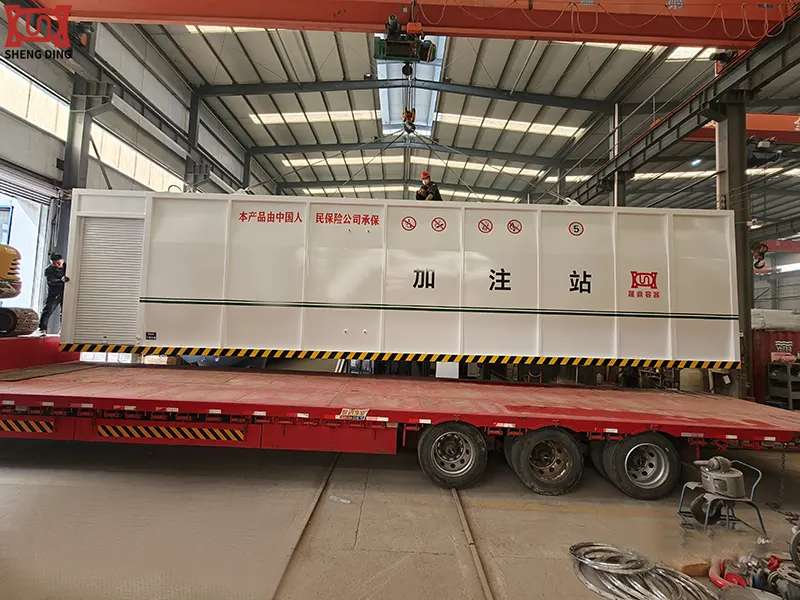
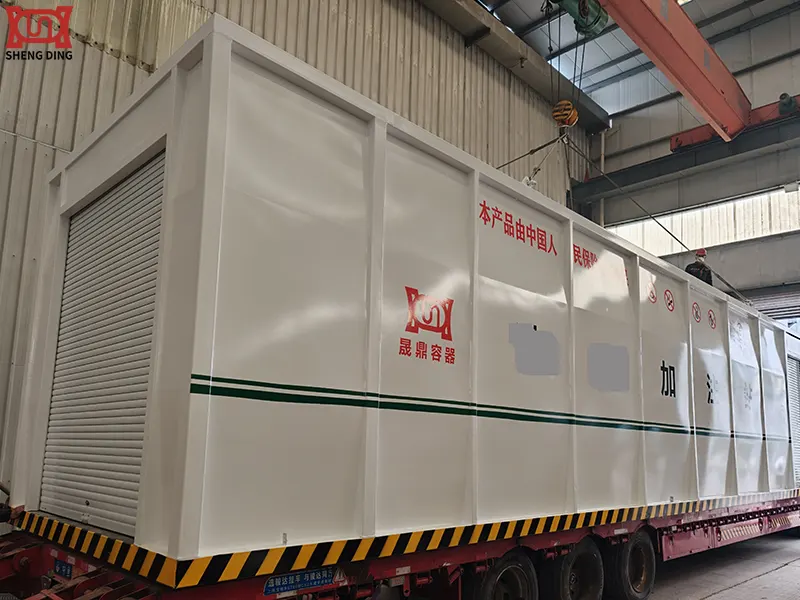
5. Anti-static and Explosion-proof Junction Boxes and Return Devices in the Unloading Area
Unloading operations are the process with the highest electrostatic risk.
Anti-static and Explosion-proof Junction Boxes:
- The installed electrostatic grounding alarm or electrostatic overflow protector must use explosion-proof or intrinsically safe explosion-proof junction boxes.
Electrostatic Grounding Clamps and Return Interlocks:
- Intelligent Detection: "Electrostatic grounding clamps" and "overflow interlock" technology must be installed. That is, if the electrostatic grounding clamp is not firmly clamped to the tanker truck during loading and unloading (contact resistance greater than the specified value, usually 50-100ohm), or if the tanker truck is not properly clamped, the loading and unloading pumps cannot start.
- Return Function: After loading and unloading is completed, the grounding clamp must return to its designated seat before the system allows settlement or valve closure, preventing accidents caused by forgetting to remove the grounding clamp.
6. Flange Bridging and Full-Sealing Corrosion Protection Technology
skid-mounted fuel stations are exposed to outdoor environments (acid rain, salt spray) for extended periods, making grounding connection points highly susceptible to corrosion, leading to potential "open circuit" hazards.
Technical Points:
- Corrosion Protection: All grounding main line connections must be made using heat welding (exothermic welding) or bolting. If bolting is used, anti-loosening washers (spring washers) must be added, and conductive paste or electrical compound grease must be applied to the connection point. Finally, it should be covered with asphalt paint or anti-corrosion paint to isolate it from air.
- Flexible Connection: For areas subject to vibration or displacement (such as the connection between the unloading port and the hose), copper braided tape must be used as a jumper to prevent rigid connections from breaking due to vibration.
7. Information-Based Online Grounding Resistance Monitoring Technology
Modern skid-mounted fuel stations' safety standards require an upgrade from "periodic manual inspection" to "real-time online monitoring."
- Technical Points: Install an online grounding resistance monitoring instrument on the main grounding main line.
- Functional Requirements: The instrument should have wireless remote transmission capabilities, enabling 24-hour uninterrupted monitoring of the grounding circuit's continuity. If the grounding wire breaks, its resistance exceeds the standard (e.g., greater than 4ohm), or it is deliberately damaged, the system will immediately issue an audible and visual alarm in the station control room and push fault information to the administrator's mobile phone via the IoT platform, ensuring that potential hazards are detected as soon as possible.
8. Conclusion
The key to the anti-static grounding system of a skid-mounted fuel station lies in "full connectivity, no dead zones, corrosion resistance, and strong monitoring." During construction and acceptance, the following should be carefully monitored:
- Whether the grounding resistance is <=4ohm.
- Whether the tank and base are connected at two points.
- Whether the unloading electrostatic clamp is electrically interlocked with the pump.
- Whether the sealing level of all explosion-proof junction boxes meets the standard (IP65 and above).
The anti-static grounding system of a skid-mounted fuel station is not simply "connecting a ground wire," but a systematic project involving multiple professional fields such as electrical engineering, explosion protection, corrosion protection, and monitoring. From the structural design of the composite grounding network to the multi-point equipotential bonding between the tank and base; from the intelligent interlocking of the unloading area to the online real-time monitoring of the grounding status¡ªevery link requires rigorous technical control and strict construction management.
Practice has shown that only by adhering to the design principles of "full connectivity, no blind spots, corrosion prevention, and strong monitoring," and strictly implementing quality control throughout the entire process from material selection and welding techniques to regular testing, can a truly safe and reliable electrostatic discharge channel be built. For operating units, the anti-static grounding system should not merely remain a "report" during final acceptance, but should be a key focus of daily inspections and periodic testing.
Safety is paramount; hidden dangers often lurk in the smallest details. When every flange bridging is secure and reliable, every grounding clamp forms an effective interlock with the control system, and every grounding electrode maintains stable conductivity for decades, the safe operation of a skid-mounted fuel station is guaranteed by the most solid foundation.
Written by
TAIAN SHENGDING METAL CONTAINER MANUFACTURING CO., LTD.
Editor Wang
WhatsApp:+86 152 5486 3111
Email:shengdingtank@126.com


- WhatsApp
- E-MailE-Mail:shengdingtank@126.com
- WeChatWeChat:15254863111