Best 5 Self Bunded Tank Specifications for Safe On-site Fuel Storage


Fuel spills don't just cost money - they cost reputation, regulatory compliance, and sometimes your operating license. A single unnoticed leak can contaminate soil, trigger EPA investigations, and run up remediation bills exceeding $250,000. Self bunded tanks eliminate the guesswork by combining primary storage and secondary containment in a single, factory-built unit. But not all self bunded tanks are created equal. Here are the 5 best specifications to look for when choosing a self bunded tank for safe on-site fuel storage.
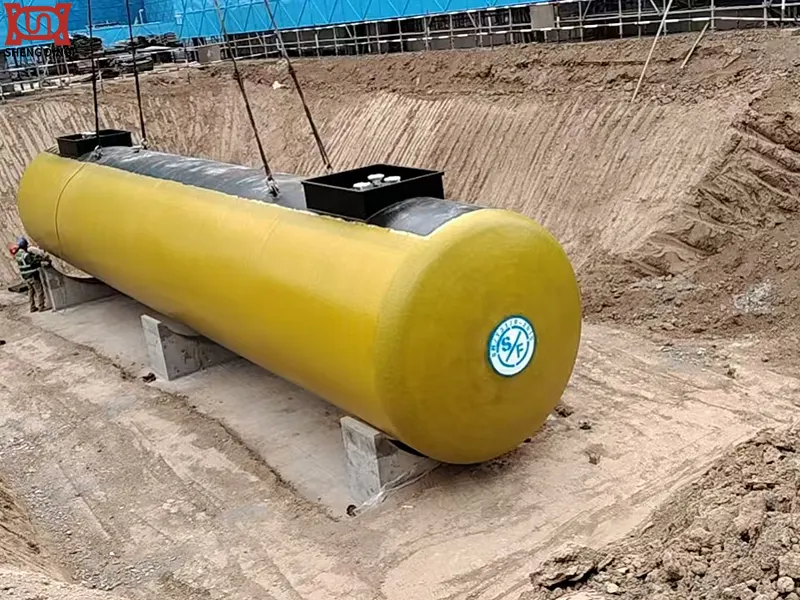
Introduction: What Is a Self Bunded Tank?
A self bunded fuel tank - also known as a double-skinned or integrally bunded tank - is a fuel storage system consisting of two layers:
- Inner Tank - Holds the fuel (diesel, petrol, biodiesel, or aviation fuel)
- Outer Tank (Bund) - Acts as secondary containment, designed to hold at least 110% of the inner tank's capacity in case of a leak or rupture
This "tank-within-a-tank" design eliminates the need for a separate concrete or earth bund wall, making the unit portable, easy to install, and compliant with environmental safety regulations. Self bunded tanks are widely used across construction, mining, agriculture, transport, and remote site operations.
When evaluating a self bunded tank for your operation, these 5 specifications should be at the top of your checklist.
Specification 1: 110% Secondary Containment Capacity - The Non-Negotiable Standard
Why it matters: The most critical specification of any self bunded tank is its secondary containment capacity. Environmental regulators worldwide require that any bunded storage system must hold at least 110% of the largest tank's capacity in the event of a failure.
What to look for:
- The outer tank (bund) must be designed to contain at least 110% of the inner tank's total capacity - not 95% with ullage space, but the full brim-fill volume
- For multiple tanks in the same bund, the requirement is 110% of the largest tank or 25% of the total storage capacity, whichever is greater
- The bund must be impervious to liquid and designed to withstand a full hydrostatic head
- Self bunded tanks achieve this by integrating the bund directly into the tank design, eliminating the need for separate concrete or earth bunds
Regulatory reference: This 110% rule is embedded in multiple international standards, including Australian Standard AS 1940, UK's HSG176, and EPA guidelines. For tanks over 2,000L, secondary containment is mandatory in most jurisdictions.
Red flag: Any tank that cannot demonstrate 110% bund capacity through certified design documentation.
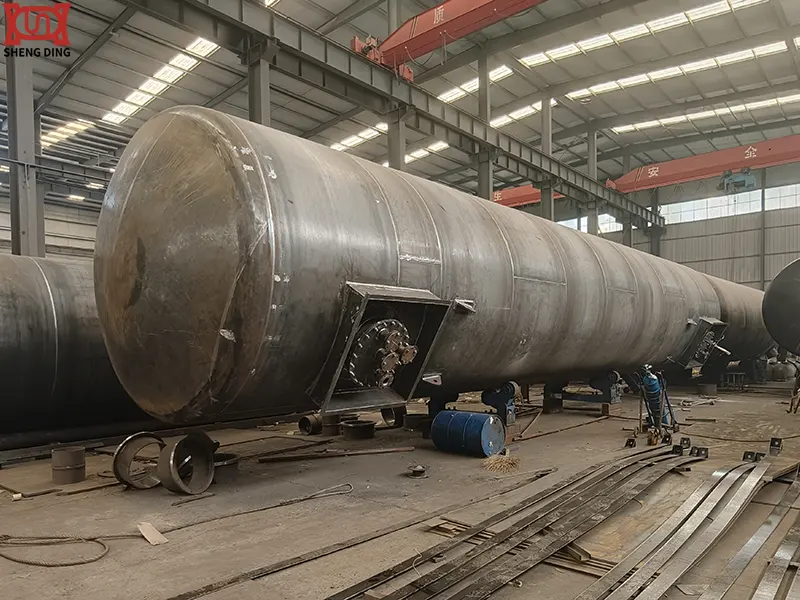
Specification 2: Double-Wall Steel Construction with Verified Material Thickness
Why it matters: The structural integrity of both the inner and outer tank determines how long your investment lasts - and whether it survives transport, installation, and daily operation.
What to look for:
| Specification | What to Verify |
| Material grade | High-grade steel such as Corten 350MPa or S355 JR |
| Inner wall thickness | Typically 5-6mm for primary tank |
| Outer wall thickness | Typically 3-6mm for secondary bund |
| Construction standard | Built to AS1692, CAT-3 or equivalent |
Common configurations:
- 6mm inner + 6mm outer - Maximum durability for harsh environments
- 5mm inner + 5mm outer - Heavy-duty construction
- 5mm inner + 3mm outer - Standard configuration for many commercial tanks
Additional features to verify:
- Baffled internally - restricts movement of product during transport, preventing spills and minimising accidents
- Galvanised edges and corner posts - prevents damage during lifting and transport
- Stainless steel fasteners - prevents corrosion of critical connections
- Weather-tight design - protects against harsh external conditions
Red flag: Tanks with unspecified wall thickness or material grade - you need documented specifications, not verbal assurances.
Specification 3: Compliance with Recognised International Standards
Why it matters: Regulatory inspectors don't just look at the tank - they ask for documentation. A tank built to recognised standards passes audits; one that isn't triggers compliance notices, fines, and potentially shutdown orders.
What to look for:
A best-in-class self bunded tank should comply with multiple of the following standards:
| Standard | Scope | Region |
| AS 1940 | Storage and handling of flammable and combustible liquids | Australia |
| AS 1692 | Steel tanks for flammable and combustible liquids | Australia |
| UL 142 | Aboveground steel tanks for flammable/combustible liquids | North America |
| UL 2085 | Fire-protected and fire-resistant aboveground tanks | North America |
| ULC S601 | Aboveground steel tanks | Canada |
| BS 799-5 | Oil storage tanks | UK |
| UN 31A | Transportable tanks | International |
Why multiple certifications matter: A tank that meets AS1940, AS1692, UL142, and UN31A standards demonstrates manufacturing depth and global suitability.
Documentation to request:
- Factory test reports
- Third-party inspection certificates
- Material traceability records
- Pressure test results
Red flag: "Our tanks meet international standards" - but the supplier cannot produce original certificates.
Specification 4: Integrated Safety and Monitoring Systems
Why it matters: A tank is only as safe as its safety systems. Modern self bunded tanks come factory-fitted with features that actively prevent incidents - not just respond to them.
What to look for:
Overfill Protection
- Mechanical overfill protection valve - automatically closes when the tank reaches capacity
- Electronic overfill alarm - provides audible and visual warning
- Calibrated to prevent filling beyond 90% of tank capacity
Fire Safety
- Fire-safe flanged ball valves
- Fire-rated models available for high-risk environments, with 2-hour to 4-hour fire resistance
- UL 2085-labelled "fire-protected" and "fire-resistant" tanks
Leak Detection
- Interstitial leak detection sensor between inner and outer walls
- Alerts operators to loss of primary containment before fuel reaches the environment
Level Monitoring
- Real-time tank level gauging
- Options include ultrasonic, radar, or guided-wave radar sensors
- Monitors liquid level, temperature, and water accumulation
Pumping and Dispensing
- Lockable pump bay to secure equipment and prevent theft
- Flow rates ranging from 20-60 L/min for light vehicles up to 100-150+ L/min for heavy equipment
- Explosion-proof electrical components for hazardous areas
Red flag: Safety systems listed as "optional extras" - critical safety features should be factory-installed as standard.
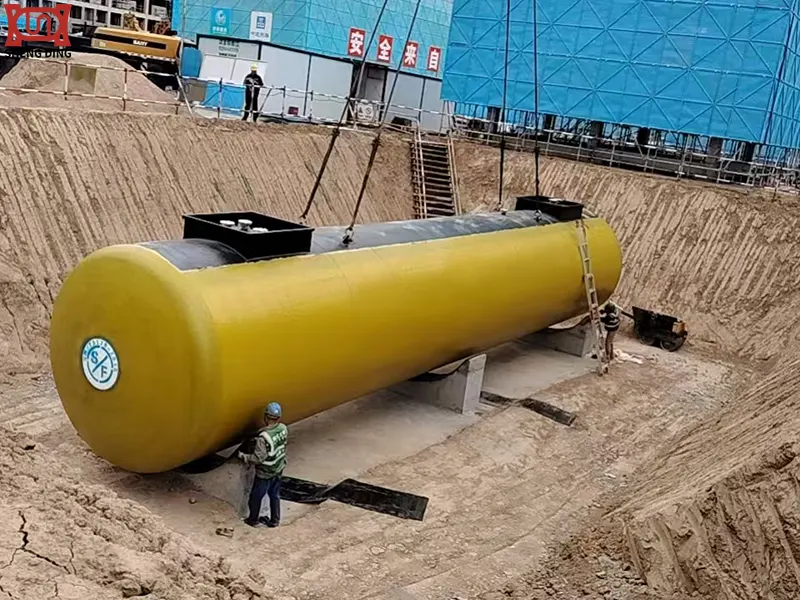
Specification 5: Installation-Ready Design and Site Compatibility
Why it matters: The best tank specification means nothing if it can't be installed quickly, safely, and compliantly at your site. Installation costs and site preparation often rival the tank's purchase price.
What to look for:
Minimal Site Preparation
- Self bunded tanks are delivered 90% ready to work - all that's required is a hard stand or plinth, power, and fuel
- No separate concrete bund or drainage system required for the tank itself
- Can be placed on a compacted gravel base or concrete pad, minimising installation costs
Foundation Requirements
- Foundation must support the weight of the tank plus 100% of the tank's contents when full
- Small tanks can use concrete foundation piers; large tanks require cast, high-strength concrete platforms
- Foundation surface must be horizontal to ensure stability
Transport and Mobility
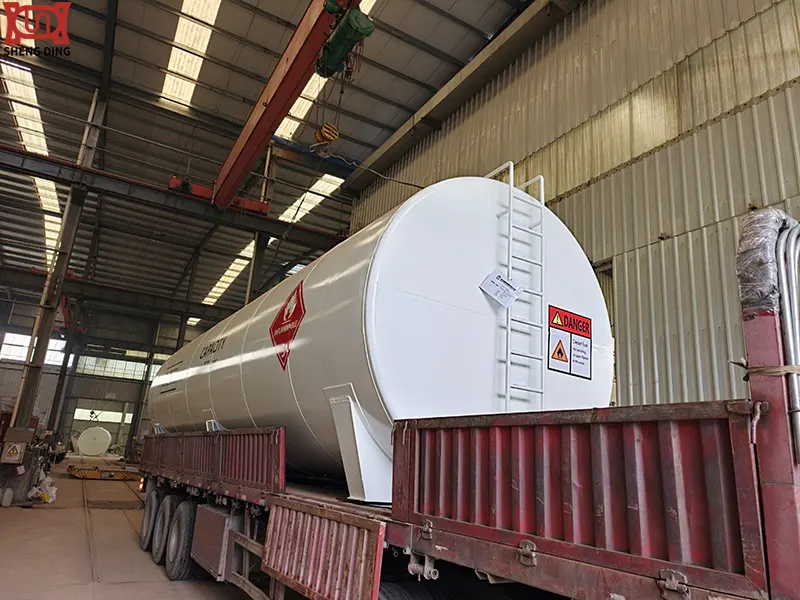
- Built to ISO container footprints for economical transport
- Standard sizes include 10ft, 20ft, and 40ft container footprints
- Fork pockets and crane lift points for easy on-site positioning
- Relocatable - tanks can be moved as operations expand or relocate
Site Placement Considerations
- Separation distances from boundaries and protected places
- Ventilation access for fuel delivery trucks and maintenance crews
- Impact protection for tanks in vehicle-accessible areas
Red flag: Suppliers who can't provide installation drawings, foundation specifications, or transport guidance.
Quick Reference: 5 Best Specifications Checklist
| # | Specification | Key Verification Point |
| 1 | 110% Secondary Containment | Bund capacity ¡Ý110% of inner tank brim-fill volume; impervious construction |
| 2 | Double-Wall Steel Construction | 5-6mm inner wall; 3-6mm outer wall; documented material grade |
| 3 | Standards Compliance | AS1940, AS1692, UL142, UL2085, ULC S601, BS799-5, UN31A - with certificates |
| 4 | Safety & Monitoring Systems | Overfill protection, fire-safe valves, leak detection, level gauging, lockable pump bay |
| 5 | Installation-Ready Design | ISO container footprint; minimal site prep; foundation specs; transport compatibility |
Benefits of Choosing the Right Self Bunded Tank
When specified correctly, a self bunded tank delivers:
- Environmental Protection - Double-wall construction prevents fuel leakage from contaminating soil and waterways
- Regulatory Compliance - Meets AS1940 and international environmental regulations
- Cost Efficiency - Reduces fuel delivery costs by enabling bulk on-site storage, minimising downtime for refuelling
- Mobility - Skid-mounted or containerised design enables relocation when operations move
- Versatility - Can store diesel, petrol, kerosene, biodiesel blends, waste oils, and more
Conclusion
Self bunded tanks represent the gold standard for on-site fuel storage - combining primary storage and secondary containment in a single, factory-built unit. But the difference between a tank that passes inspections and one that fails comes down to specifications.
When evaluating suppliers, verify every one of these 5 specifications:
- 110% secondary containment capacity - the non-negotiable regulatory baseline
- Double-wall steel construction with documented material thickness
- Compliance with recognised international standards - with certificates to prove it
- Integrated safety and monitoring systems - factory-installed, not optional
- Installation-ready design that minimises site work and maximises mobility
Ask for documentation. Visit the factory if possible. And never compromise on the specifications that protect your site, your reputation, and the environment.
Ready to specify the right self bunded tank for your operation? Contact Shengding Container for expert guidance, transparent specifications, and customised solutions backed by full-chain manufacturing expertise.
Written by
TAIAN SHENGDING METAL CONTAINER MANUFACTURING CO., LTD.
Editor Wang
WhatsApp:+86 152 5486 3111
Email:shengdingtank@126.com


- WhatsApp
- E-MailE-Mail:shengdingtank@126.com
- WeChatWeChat:15254863111