Design standards and important role of internal reinforcing plates in double-walled oil storage tanks


The internal reinforcing plate of a double-walled oil storage tank is a key structure for improving the tank's safety and performance. Its core functions are to enhance rigidity and strength, suppress liquid sloshing impact, reinforce open areas, and support the inner tank. Although the internal reinforcing plate is a critical component for ensuring structural safety, its location inside the tank makes it difficult to directly access and inspect in daily use. Therefore, the design and fabrication of the internal reinforcing plate for double-walled oil storage tanks must adhere to design standards and industry specifications, with strict quality control over materials, dimensions, spacing, open area ratio, and connection methods. Below, Shengding Containers will explain the design standards and crucial role of the internal reinforcing plate for double-walled oil storage tanks.
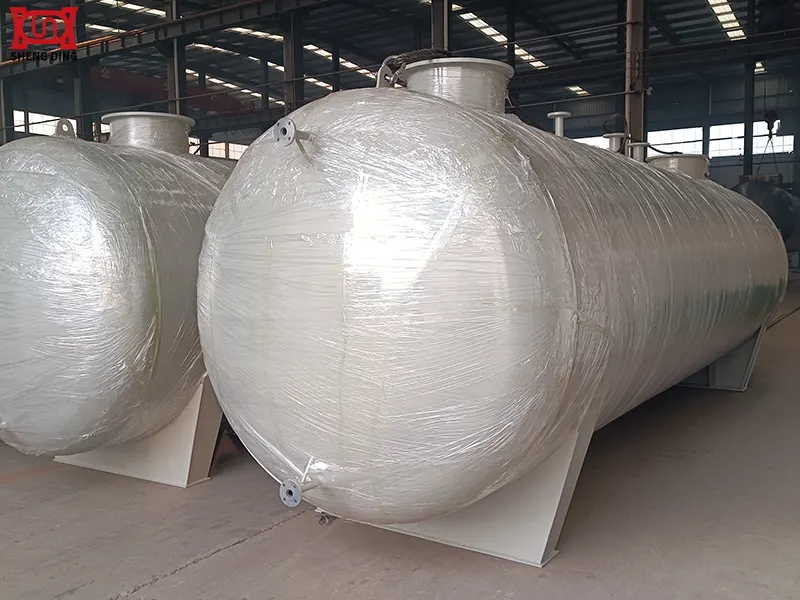
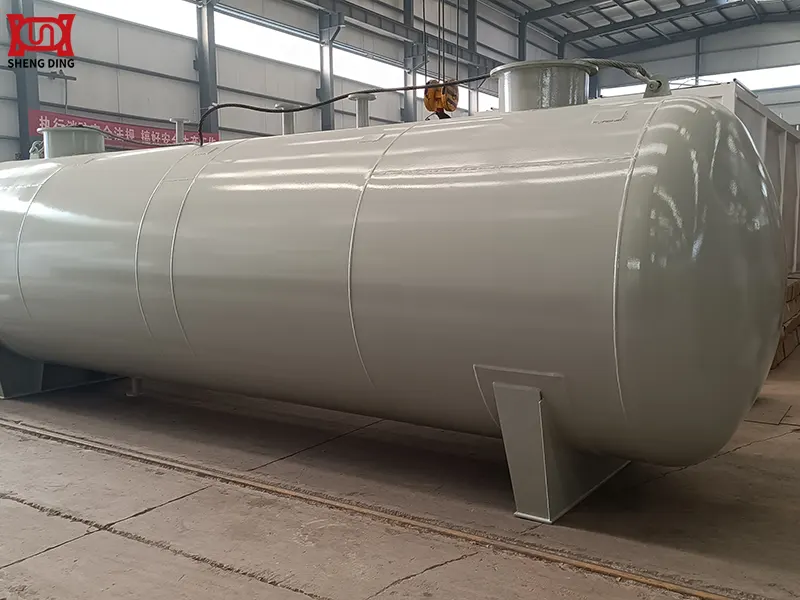
1. Main Types and Core Functions of Internal Reinforcing Plates
1.1. Surge Brake/Impact Brake (Most Common)
- Suppresses liquid sloshing impact: Reduces the impact force of liquid on the tank wall and end caps during transportation or filling, preventing structural fatigue and cracking.
- Improves operational stability: Reduces liquid center of gravity shift, preventing vehicle/equipment tipping risk (especially critical for mobile storage tanks).
- Auxiliary structural reinforcement: Serves as internal support for the tank, improving overall rigidity and preventing tank wall instability and deformation.
- Mitigates pressure fluctuations: Reduces sudden pressure changes within the tank caused by liquid impact, protecting the sealing system.
1.2. Reinforcing Ring/Annular Reinforcing Plate
- Enhances circumferential rigidity of the tank wall: Resists circumferential tension generated by internal pressure, preventing tank wall bulging and deformation.
- Improves resistance to external pressure: For buried oil storage tanks, resists soil lateral pressure and groundwater buoyancy.
- Controls welding deformation: Installed in the weld area, reducing welding stress concentration.
- Separates internal tank space: Optimizes load distribution in conjunction with surge braces, reducing local stress.
1.3. Perforation Reinforcing Plate
- Compensate for strength loss due to perforations: Repairs the weakening effect of perforations such as inlets/outlets and manholes on the tank wall cross-section.
- Distribute stress concentration: Evenly transfers stress around the perforation to a larger area, preventing fatigue cracks.
- Leakage prevention: Equipped with signal holes for easy inspection of weld sealing.
1.4. Support Reinforcing Plate
- Fix the inner tank position: In steel-fiberglass double-walled tanks, ensures the inner and outer tanks are concentric and maintains a uniform through-hole gap.
- Load transfer: Evenly transfers the load from the inner tank to the outer tank or foundation, preventing localized overload.
- Seismic buffering: Absorbs earthquake or impact energy, protecting the integrity of the double-walled structure.
2. Design Standards and Key Technical Requirements
2.1. Domestic Core Standards
| Standard Number | Scope of Application | Key Requirements |
| GB 50341-2014 | Vertical Cylindrical Welded Steel Oil Storage Tank | The section modulus of the reinforcing ring is calculated according to rigidity theory; full penetration is required when welding to the tank wall; longitudinal welds staggered from the tank wall should be >=300mm. |
| GB 18564.1-2019 | Tank Vehicles for Road Transport of Liquid Dangerous Goods | Adjacent baffle volume <=7.5m³; spacing <=1750mm; effective area >=40% of the tank's internal cross-sectional area; ventilation area <=20%. |
| SH/T 3178-2015 | Buried Steel-Fiberglass Double-Layer Oil Storage Tanks for Gas Stations | The dimensions of the inner tank reinforcement structure need to be calculated and determined; the support structure must ensure a 360o through gap; the material must be consistent with the inner tank. |
| GB 50156-2021 | Technical Standards for Automobile Fueling, Gas Filling, and Hydrogen Refueling Stations | The reinforcement of the inner tank of buried double-layer oil storage tanks should comply with the specifications for steel atmospheric pressure storage tanks; the welding of the reinforcing plates must comply with GB 50128. |
2.2. International Core Standards
| Standard Name | Key Requirements |
| API 650 | Reinforcing plate material is the same as the tank wall; reinforcing plate requires signal holes; stiffness and strength of reinforcing rings need to be calculated. |
| UL 142 | Double-walled tank reinforcement structure must ensure a firm connection between the inner and outer tanks; the opening ratio of the baffle plate must balance the baffle effect and flowability. |
| TDG UN Rules for the Transport of Dangerous Goods | Baffle plate disc depth >= 10cm or corrugated/irregular reinforcement; effective area >= 70% of the tank's internal cross-sectional area. |
2.3. General Design Technical Specifications
Material Requirements:
- Same material as the tank wall (Q235-B/Q345, etc.) to ensure welding compatibility and strength matching.
- Thickness >= Tank wall thickness; effective baffle plate thickness is typically 6-10mm.
- Stainless steel or anti-corrosion coating is required for corrosive environments.
Dimension and Spacing Design:
- Baffle plate spacing: <= 1750mm for mobile tanks, 1/5-1/3 of the diameter for fixed tanks.
- Reinforcing ring spacing: Calculated based on tank wall thickness and internal pressure, typically 3-5m per ring.
- Baffle diameter: Covers 70%-90% of the tank's internal cross-sectional area (depending on standards).
Opening design (baffle):
- Opening ratio 46%-70%, with oil passage holes (diameter >= 50mm) at the bottom and vent holes at the top.
- Hole shape: Circular/elliptical, with chamfered edges to prevent stress concentration.
- Adjacent baffle openings are staggered to improve baffle performance.
Connection and welding requirements:
- Full penetration welding, weld coefficient >= 0.85.
- Double-sided continuous welding, weld leg height >= 0.7 times the plate thickness.
- Gap between reinforcing ring and tank wall <= 3mm to ensure uniform stress distribution.
- The perforated reinforcing plate must have signal holes (diameter 6-8mm) for leak detection.
3. Special Design Considerations for Different Scenarios
3.1. Mobile Double-Layer Oil Storage Tank (Tank Truck)
- Number of Wave Breakers: Calculated by volume, at least one per 7.5m3.
- Reinforcing plates require additional triangular supports to improve vibration resistance.
- High-strength steel (Q345) is preferred to reduce weight while maintaining strength.
3.2. Buried Double-Layer Oil Storage Tanks:
- The reinforcing ring must consider soil pressure; its section modulus should be 20%-30% higher than that of above-ground tanks.
- The reinforcing plates must ensure uniform gaps between the inner and outer tanks (typically 0.1-3.5mm) for easy leak monitoring.
- The reinforcing plate's corrosion resistance grade must be >= Reinforcement level, conforming to SH 3022 standards.
3.3. Steel-Fiberglass Double-Layer Oil Storage Tanks:
- The inner tank's reinforcing plate must avoid damaging the outer tank's fiberglass layer.
- Non-metallic isolation pads are used in the support structure to prevent electrochemical corrosion.
- The edges of the reinforcing plates must be smoothly ground to prevent scratching the fiberglass inner wall.
4. Common Design and Construction Misconceptions and Avoidance Measures
- 1. Misconception: Excessively large openings in the baffle plate affect its wave-damping effect.
- Solution: Strictly control the opening ratio within the standard range; determine the dimensions of the bottom oil passage and top vent holes by calculation.
- 2. Misconception: The reinforcing plate material is different from the tank wall, causing welding cracks.
- Solution: The same material must be used, or a compatible material confirmed by welding process evaluation.
- 3. Misconception: Excessive gap between the reinforcing ring and the tank wall leads to uneven stress.
- Solution: Pre-bend before installation to ensure a good fit; adjust with shims if the gap exceeds the limit.
- 4. Misconception: The perforated reinforcing plate lacks signal holes, making leak detection impossible.
- Solution: According to GB 50128, each reinforcing plate must be equipped with a signal hole.
5. Daily Maintenance and Monitoring (Indirect Protection)
Problems with the reinforcing plate usually manifest as tank deformation, leakage, or abnormalities in accessories; therefore, daily maintenance mainly focuses on these externally monitorable indicators.
5.1. Tank Structure and Dimension Monitoring (Most Critical Indirect Indicator)
- Purpose: The primary consequence of reinforcing plate failure is a decrease in the tank's resistance to external pressure, potentially leading to localized or overall tank instability and deformation.
- Methods:
- Listening During Oil Inflow/Outflow: During rapid oil unloading or pumping, listen for abnormal sounds (such as "banging" sounds, metallic deformation sounds) near the tank's manhole or vent pipe.
- Regular Measurement (Recommended Quarterly or Semi-Annually): Using an internal rangefinder or laser rangefinder, insert it through the manhole into the tank to measure the internal diameter and diagonal length, comparing them with initial installation records or design values. Any persistent, excessive radial shrinkage or deformation may be a strong signal of reinforcing plate or tank wall support failure.
- Visual Inspection (During Tank Cleaning): During planned tank cleaning and internal inspections, professionals perform magnetic particle or penetrant testing on the welds of the reinforcing plates to check for cracks and corrosion; inspect the reinforcing plates themselves and the surrounding tank walls for dents, bulges, and severe corrosion.
5.2. Leak Detection System Maintenance (Safety Assurance)
- Purpose: The weld seam between the reinforcing plate and the tank wall is a potential leak point. Maintaining the sensitivity of the leak detection system is the last line of defense against oil leaks caused by weld failure.
- Methods:
- Daily/Weekly Inspection: Strictly adhere to the prescribed frequency for inspecting the interlayer leak detector of the double-walled tank. Record and verify monitoring data to ensure it is in normal working order.
- Periodic Testing: Perform periodic functional tests and calibrations on the monitoring system according to the manufacturer's requirements.
- Anomaly Response: In the event of a monitoring alarm, immediately follow the emergency plan; this may indicate a leak in the inner tank (including the reinforcing plate weld seam).
5.3. Operation and Usage Procedures (Preventative Maintenance)
- Purpose: To prevent excessive pressure fluctuations caused by improper operation, which could impact the reinforcing plate and tank body.
- Methods:
- Control Unloading/Pumping Speed: Avoid excessively rapid pumping to prevent the instantaneous formation of a high vacuum.
- Ensure unobstructed ventilation system: Daily inspection of pressure/vacuum vent valves (P/V valves) and flame arresters ensures they are free from blockages and freezing, and operate smoothly. This is the most important daily measure to prevent excessive negative or positive pressure within the tank.
- Standardize tank cleaning operations: During tank cleaning, avoid using excessively high water pressure or steam to directly impact the reinforcing plates and weld areas.
5.4. External Environment and Related Equipment Inspection
- Purpose: External factors may affect the stress on the tank body, indirectly affecting the reinforcing plates.
- Methods:
- Inspect foundation and backfill: Observe for abnormal settlement or water accumulation in the manhole. Check for uneven settlement or cracks in the tank area ground, which can lead to uneven stress on the tank body.
- Inspect auxiliary pipelines: Inspect pipelines connected to the storage tank, ensuring they are securely supported to prevent stress transmission from pipelines to the tank openings (already reinforced by reinforcing plates).
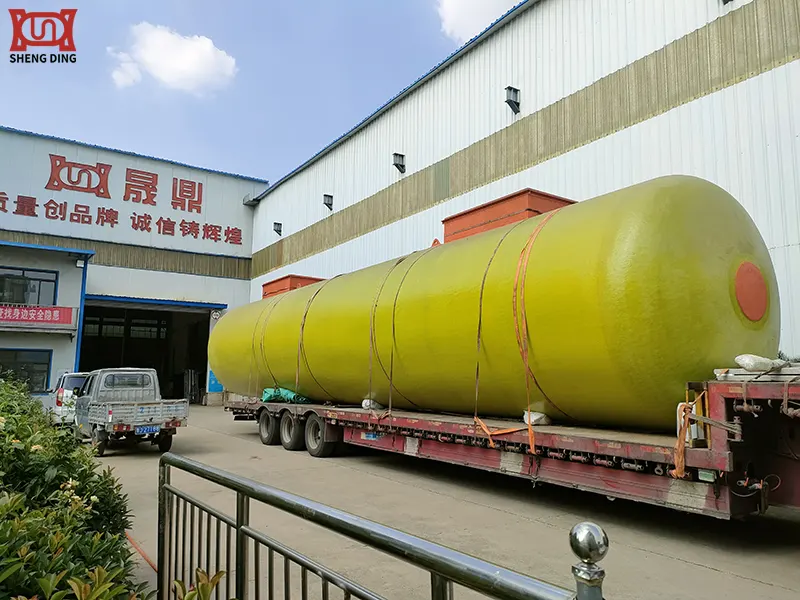
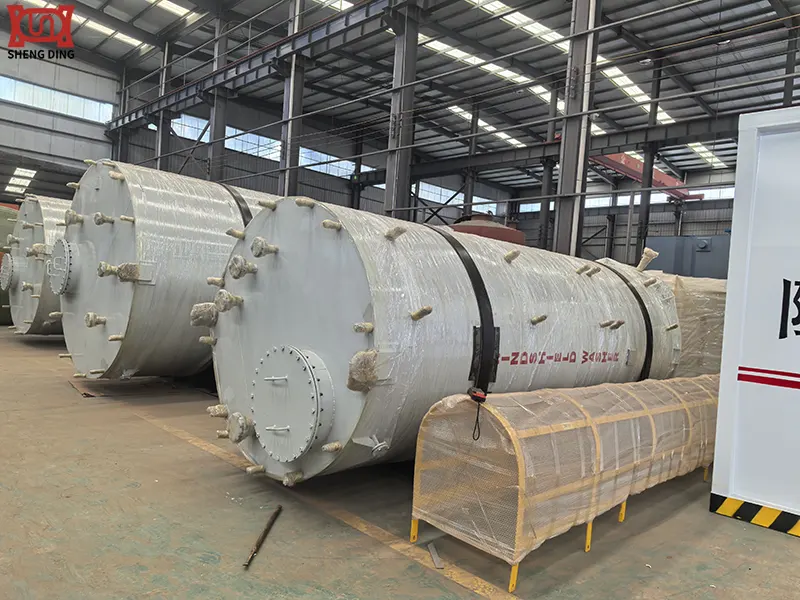
6. Summary and Key Implementation Points
The internal reinforcing plates are the fundamental guarantee for the safe operation of double-walled oil storage tanks. The design must adhere to the principles of standard-first, calculation-supported, material matching, and reliable connection. Key implementation steps:
- 1. Determine the type of oil storage tank (mobile/fixed, above-ground/buried) and select the corresponding standard.
- 2. Calculate the size, spacing, and quantity of reinforcing plates based on tank capacity, pressure, and medium characteristics.
- 3. Ensure the material is consistent with the tank wall, prioritizing commonly used steels such as Q235-B/Q345.
- 4. Strictly control welding quality, ensuring full penetration + signal holes (reinforcing plates) + double-sided welding.
- 5. Conduct hydrostatic testing and non-destructive testing after completion to verify the reinforcement effect.
The design of the internal reinforcing plates for double-walled oil storage tanks is not arbitrary; it must strictly follow industry-specific standards and undergo rigorous calculations and verification based on relevant international specifications. From material selection, specification determination, and location arrangement to welding processes and non-destructive testing, every step has clear standard requirements to ensure the safe and reliable operation of the oil storage tank throughout its entire life cycle and prevent safety accidents and environmental pollution caused by structural failure.
Written by
TAIAN SHENGDING METAL CONTAINER MANUFACTURING CO., LTD.
Editor Wang
WhatsApp:+86 152 5486 3111
Email:shengdingtank@126.com


- WhatsApp
- E-MailE-Mail:shengdingtank@126.com
- WeChatWeChat:15254863111