Basic Functions and Common Malfunctions of Fuel and Gas Transfer Pumps in Mobile Fuel Station


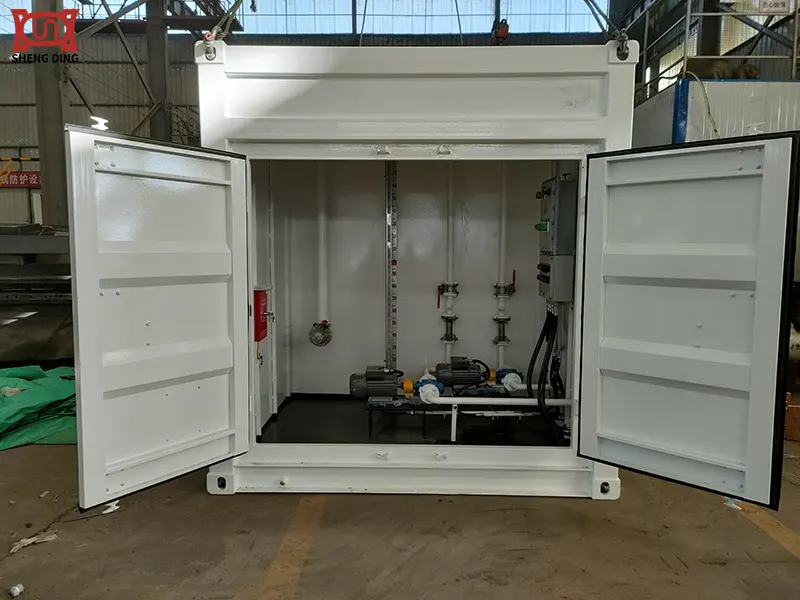
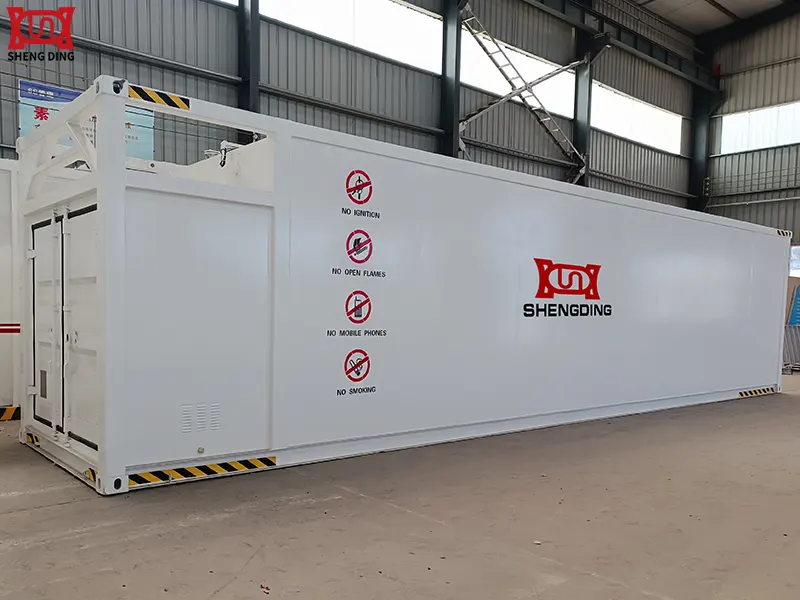
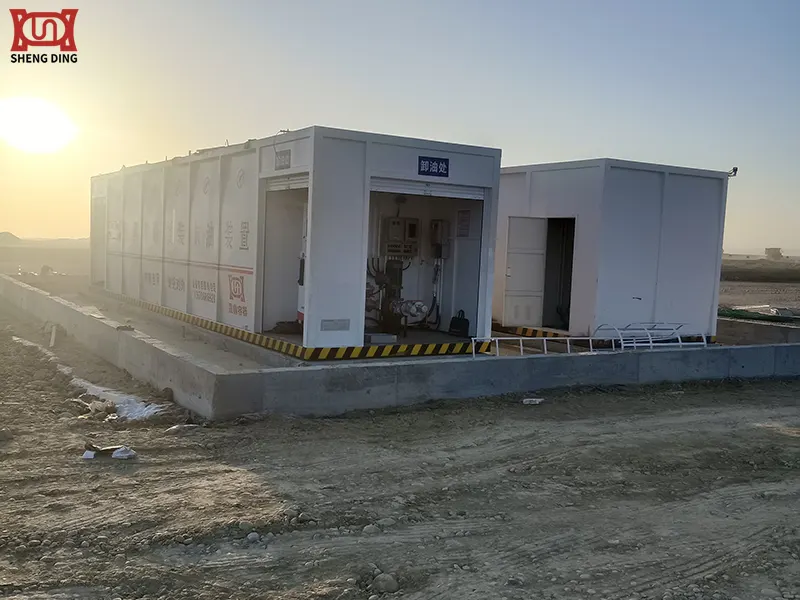
The fuel and vapor transfer pump in a mobile fuel station is the core power unit of the entire system, responsible for transferring fuel or recovered vapor from the storage tank to vehicles or other destinations. Its performance directly affects the operational efficiency and safety of the refueling station. The core equipment is an explosion-proof fuel transfer pump, usually a positive displacement pump (such as a gear pump or screw pump) or a centrifugal pump. The following is a detailed description of its basic functions and common faults.
1. Basic Functions
The core task of the fuel transfer pump in a mobile fuel station is to safely, efficiently, and accurately transfer and dispense fuel. Specific functions include:
1.1. Fuel Transfer and Dispensing:
- Transferring fuel from the storage tank (the skid-mounted station's own buried tank or tanker truck) to the vehicle's fuel tank.
- Transferring or circulating fuel between different internal storage tanks.
1.2. Flow Control and Metering Linkage:
- Providing fuel to the fuel dispenser with stable pressure and flow rate to ensure accurate metering and stable refueling speed.
- Usually linked with the pulse generator (flow meter) and electronic control system of the fuel dispenser to achieve automatic control of "start pumping when opened, stop when closed".
1.3. Maintaining System Pressure and Self-Priming:
- Having sufficient self-priming capability to draw fuel from low-level storage tanks.
- Establishing and maintaining a stable working pressure in the pipeline, overcoming pipeline resistance, and ensuring smooth refueling.
1.4. Safety Protection:
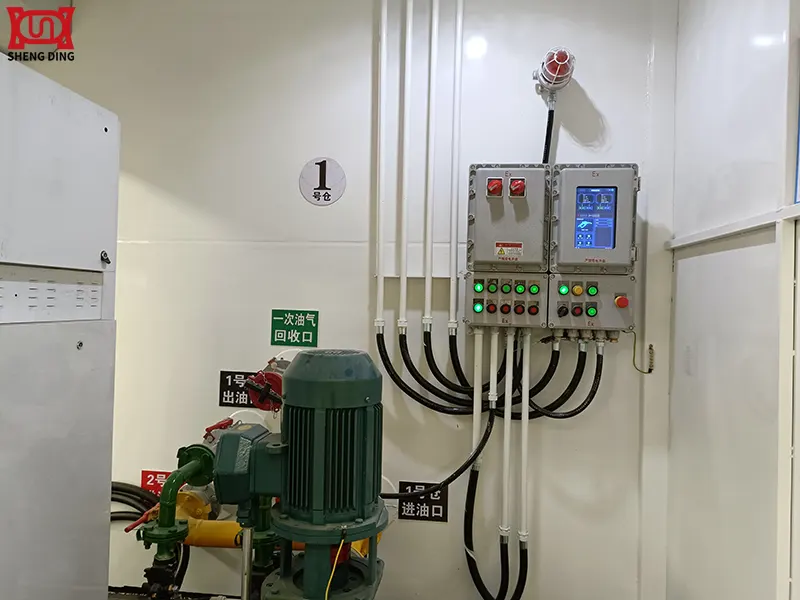
- Explosion-proof design: A core requirement. The motor, junction box, etc., are all explosion-proof to prevent electrical sparks from igniting explosive fuel-air mixtures.
- Overload protection: The motor is usually equipped with thermal overload protection to prevent burnout due to jamming or overload operation.
- Dry-running protection: Some pumps are designed with a function to prevent dry running, avoiding pump body wear and high-temperature hazards caused by lack of oil.
- Emergency shutdown: Linked with emergency stop buttons, liquid level alarms, and other safety systems, it can immediately stop operation in case of emergencies.
1.5. Adaptability and Durability:
- Able to adapt to fuels of different viscosities (such as gasoline and diesel).
- Robust structure, suitable for frequent use in outdoor mobile or semi-mobile environments.
2. Pump Fails to Start or Starts with Difficulty
2.1. Phenomenon:
- The pump does not work when the start button is pressed.
Causes:
- Power supply failure (power outage, insufficient voltage, phase loss).
- Electrical control failure (emergency stop button not reset, relay/contactor damage, circuit break).
- Motor overheat protector tripped.
- Explosion-proof junction box is not properly sealed, causing internal moisture and short circuit.
Troubleshooting:
- Check the main power supply, fuses, and circuit breakers.
- Check and reset the emergency stop button and thermal protector.
- Use a multimeter to check the control circuit and components.
- Contact an electrician to check the explosion-proof electrical components.
2.2. Phenomenon:
- The pump makes a humming sound but does not rotate (stalled).
Causes:
- The pump is severely jammed by impurities (rust, gum).
- Due to long-term disuse, the internal rotor is stuck due to oil solidification.
- Bearing damage.
Troubleshooting:
- Do not force power on! First, try manual rotation (if the pump design includes a manual rotation device).
- Disassemble the inlet and outlet pipes, check and clean the pump cavity.
- For pumps with solidified oil, gently heat the pump body with hot water or hot air.
- Replace the bearing or the entire pump core.
3. Pump Runs but No Oil or Insufficient Flow
Phenomenon:
- The pump runs normally, but the fuel dispenser does not dispense oil or dispenses oil slowly.
Causes:
- Air ingress (cavitation): The suction pipe is not properly sealed, and there are air leaks (most common fault). Cracks in joints, flanges, or hoses.
- Filter blockage: The coarse filter or fine filter on the suction pipe is blocked.
- Low liquid level: The oil level in the storage tank is below the pump's suction inlet, causing air to be drawn in.
- Pipe blockage or bending: The suction or discharge pipe is flattened or blocked.
- Internal pump wear: Gears, screws, or blades are worn, resulting in severe internal leakage and a decrease in pressure and flow.
- Motor reverse rotation: The power supply phase sequence is reversed, causing the pump to rotate in reverse (for pumps with directional requirements).
- Safety valve (relief valve) malfunction: The set pressure is too low or the valve core is stuck in the open position, causing the oil to flow back directly.
Troubleshooting:
- Focus on checking airtightness: Apply soapy water to all connections from the tank outlet to the pump inlet and observe for bubbles.
- Clean or replace the filter element.
- Confirm that the tank has sufficient oil.
- Check that the pipelines are unobstructed and intact.
- Test the pump outlet pressure; if the pressure is below normal, it may be due to pump wear or a safety valve problem. Repair or replace the pump head assembly/safety valve.
- Swap any two power lines to check the motor rotation direction.
4. Abnormal Noise and Vibration
Phenomenon:
- The pump runs with loud noise and severe vibration.
Causes:
- Cavitation: Similar to the "no oil output" cause, this is a common source of noise.
- Bearing wear: Produces a regular "clattering" sound.
- Coupling misalignment or damage (if applicable).
- Dry friction between the rotor and stator inside the pump (lack of oil or oil is too thin).
- Loose fixing bolts: Loose pump or motor mounting bolts.
Troubleshooting:
- Prioritize eliminating the possibility of air intake/cavitation.
- Stop the machine and check the condition of the bearings and coupling.
- Check if the correct oil is used and confirm that the pump is operating in a suction state.
- Tighten all fixing bolts.
5. Pump Body Oil Leakage
Phenomenon:
- Oil leakage from the pump body or connections.
Causes:
- Mechanical seal damage: Oil leakage at the shaft seal is the main form, caused by wear, aging, or dry running.
- O-ring or gasket aging: Failure of static sealing points.
- Shell cracks or pinholes.
Troubleshooting:
- Stop the machine immediately; leakage at a gas station is a major safety hazard.
- Replace the mechanical seal assembly or related sealing parts.
- In severe cases, replace the pump body or the entire pump.
6. Pump Body Overheating
Phenomenon:
- The pump body or motor temperature rises abnormally.
Causes:
- Prolonged dry running or operation without sufficient oil.
- Severe internal wear, generating heat from friction.
- High oil viscosity, resulting in high pumping resistance.
- Motor malfunction or overload.
Troubleshooting:
- Stop the machine immediately and find the cause.
- Ensure the pump is filled with oil to avoid dry running.
- Check the oil's suitability. Check the load on the pump and motor.
7. Maintenance and Preventive Suggestions
7.1. Daily Inspection:
- Listen to the sound, check the pressure, check for leaks, and smell for unusual odors.
7.2. Regular Maintenance:
- Regularly clean or replace the oil suction filter.
- Regularly check the airtightness of the pipelines (especially hoses and connectors).
- Perform regular disassembly and maintenance of the pump according to the manufacturer's requirements.
7.3. Standard Operation:
- Before starting, ensure that the oil suction pipeline valve is open and the system is filled with oil.
- Avoid running the pump without oil.
- Use clean oil that meets the specifications.
7.4. Professional Repair:
- When dealing with explosion-proof electrical equipment and precision internal components of the pump, qualified professional personnel should be hired for repairs. Do not disassemble or assemble the equipment yourself to ensure safety.
The above are the basic functions and common faults of the mobile fuel station oil and gas transfer pump. We hope that the above information will be helpful to you when using mobile fuel stations in the future. From the above, we can see that maintaining airtight pipelines and preventing air ingress are key to avoiding most faults in mobile fuel station oil pumps. If a fault occurs, follow the principle of "checking the external components first (power supply, pipelines, filters), then diagnosing the internal components (pump body, seals)" for troubleshooting. Tai'an Shengding Container Co., Ltd. specializes in the production of mobile fuel stations and has rich experience in related issues concerning transfer pumps. Please feel free to contact us for consultation.
Written by
TAIAN SHENGDING METAL CONTAINER MANUFACTURING CO., LTD.
Editor Wang
WhatsApp:+86 152 5486 3111
Email:shengdingtank@126.com


- WhatsApp
- E-MailE-Mail:shengdingtank@126.com
- WeChatWeChat:15254863111