Importing Mobile Fuel Stations: 9 Mistakes to Avoid


A container fuel station leaves the factory with fresh paint and a full test report. Six weeks later it sits in a bonded warehouse at the destination port - because the electrical panel lacks the certification mark required by local authorities, and the shipping documents classify the unit incorrectly. Demurrage fees accumulate by the day. The buyer, the supplier, and the freight forwarder all point at each other.
This is not a rare scenario. Importing mobile fuel stations involves far more than paying for equipment and waiting for delivery. It requires navigating certification, dangerous goods regulations, customs classification, and site compliance across two jurisdictions. Here are the 9 most common mistakes - and how to avoid them.
Introduction: Why Mobile Fuel Station Imports Go Wrong
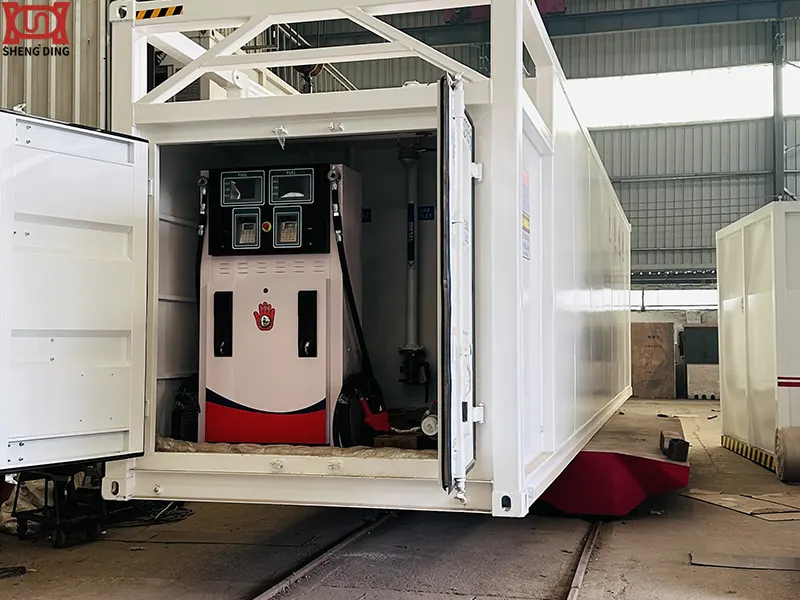
Mobile fuel stations - container units, skid-mounted systems, and self bunded tanks - are increasingly imported across borders. China remains the largest manufacturing hub, exporting barrier explosion-proof skid-mounted units, containerized fuel stations, and self bunded tanks to Southeast Asia, Africa, the Middle East, Europe, and the Americas.
In 2025, China's exports of barrier explosion-proof skid-mounted fuel stations grew by 41% year-over-year. That growth means more buyers are navigating international trade for the first time - and more are learning the hard way that a mobile fuel station is not an ordinary commodity.
Unlike a standard piece of industrial equipment, a mobile fuel station:
- Contains or has contained flammable liquids
- Includes electrical components in hazardous areas
- Falls under dangerous goods regulations for shipping
- Requires local regulatory approval at the destination
- May need certification marks that vary by country
Each of these characteristics creates a potential failure point. The 9 mistakes below cover the most common - and most expensive - ones.
Mistake 1: Assuming One Certification Fits All Markets
The single most common mistake when importing mobile fuel stations is assuming the equipment only needs "international standards" certification.
In reality, each target market has its own requirements:
| Market | Required Certification | Scope |
| European Union | CE Marking | Pressure Equipment Directive, ATEX Directive |
| Eurasian Economic Union | EAC Mark | TR CU 032/2013 on pressure equipment |
| North America | UL, ASME, NFPA | Tank design, electrical safety, fire safety |
| International (70+ countries) | IECEx | Explosion-proof equipment |
A unit certified for the European market will not automatically clear customs in Indonesia. A unit with IECEx certification may still require local electrical approval in the Philippines.
The fix: specify every target market at the procurement stage. Reputable suppliers design core components to the highest common denominator - such as ATEX and ASME - then manage specific certifications for the destination.
Red flag: A supplier who says "our products meet international standards" but cannot produce original ATEX, IECEx, or UL certificates with matching serial numbers.
Mistake 2: Misclassifying the Unit for Dangerous Goods Shipping
This mistake causes more port delays than any other.
A mobile fuel station contains or has contained flammable liquid. Even after emptying and cleaning, fuel residues may remain in tanks, piping, pumps, and seals. The unit may therefore fall under the International Maritime Dangerous Goods Code (IMDG Code).
Common errors include:
- Declaring the unit as general cargo when it should be classified as Class 3 flammable liquid
- Failing to provide a gas-free certificate after purging the tank
- Omitting the UN number, proper shipping name, or packing group from the shipping documents
- Not providing a Material Safety Data Sheet for the fuel type
The consequence: the container is held at the port, the buyer pays demurrage, and the shipment may require re-export or on-site purging at the destination.
Mistake 3: Overlooking the CSC Plate for Container Units
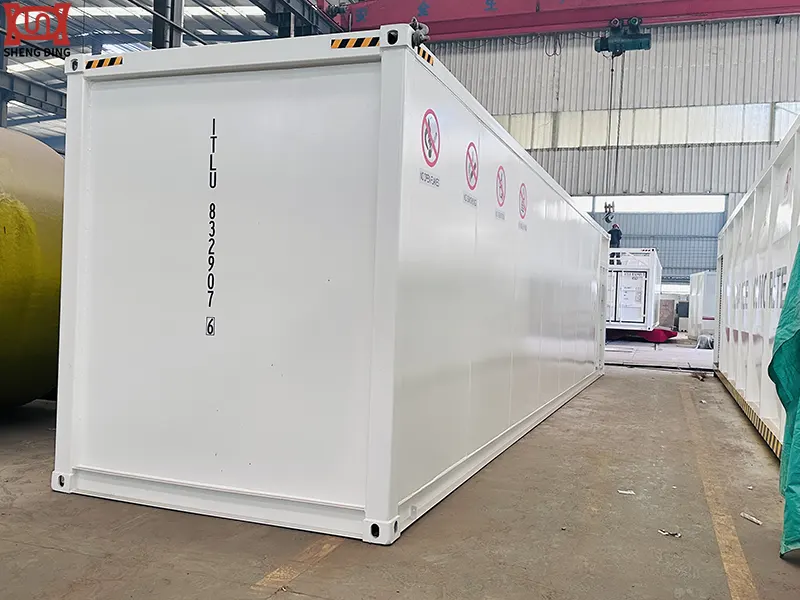
If the mobile fuel station is built inside a modified ISO container, the container itself must hold a valid CSC (Container Safety Convention) plate.
The CSC plate certifies that the container meets international structural safety standards. Without it:
- Shipping lines may refuse to load the unit
- Port authorities can reject the container
- Insurance coverage may be void in case of damage
- The unit cannot legally be used as a shipping container again
Some manufacturers modify containers without renewing the CSC certification. Always verify that the plate is present, valid, and matches the container serial number.
Mistake 4: Ignoring Local Site Regulations at the Destination
Certification gets the equipment through customs. Local site regulations determine whether it can legally operate.
Many buyers focus entirely on the import process and only discover site compliance issues after the unit arrives. Common problems:
- The destination country restricts mobile fuel stations to industrial land only - and the site is zoned commercial
- Local fire codes require separation distances the site cannot accommodate
- The station's dispensing flow rate exceeds local limits
- Vapor recovery is required locally but was not specified at purchase
- The local utility will not approve the electrical installation
The fix: before ordering, consult with the local fire department, environmental agency, and emergency management bureau. Confirm the site meets all separation, capacity, and safety requirements. Getting this wrong after arrival can mean relocating the unit or paying for costly retrofits.
Mistake 5: Underestimating Landed Cost
Buyers often compare only the equipment price - FOB, CIF, or EXW - and treat shipping, duties, and destination charges as an afterthought.
Shipping can represent 10% to 25% of the total landed cost for an imported mobile fuel station. Common costs that are missed:
| Cost Category | Typical Range |
| Ocean freight | USD 1,500 - 6,000 per 20ft unit |
| Marine insurance | 0.3% - 1% of cargo value |
| Import duties | Varies by country and HS code |
| Port handling and THC | USD 300 - 800 per unit |
| Customs brokerage | USD 200 - 600 per shipment |
| Inland transport | USD 500 - 3,000 depending on distance |
| Demurrage (if delayed) | USD 50 - 200 per day |
A unit quoted at USD 30,000 FOB can easily land at USD 40,000 or more once all destination costs are included.
The fix: request a complete landed cost breakdown from your supplier and freight forwarder before signing the purchase order. Confirm the HS code, duty rate, and any applicable anti-dumping or safeguard duties.
Mistake 6: Choosing a Supplier Based Only on Price
The lowest quotation rarely delivers the lowest total cost of ownership.
Assembly shops with no manufacturing depth can quote aggressively because they outsource key components, skip certifications, and provide minimal after-sales support. The consequences show up later:
- Safety systems that fail inspection
- Replacement parts that do not match international specifications
- No warranty support across borders
- Documentation that does not satisfy customs or local regulators
Industry data shows that manufacturers with full-chain capabilities - from raw material processing to complete equipment integration - have a market survival rate 4.2 times higher and customer repurchase rates 3.8 times higher than pure assembly operations.
The fix: evaluate suppliers on manufacturing depth, certification completeness, export track record, and after-sales capability - not just unit price.
Mistake 7: Failing to Specify the Fuel Type and Capacity Correctly
Diesel and gasoline have fundamentally different regulatory and engineering requirements.
Gasoline has a flash point below -40oC and is classified as a Class I flammable liquid. Diesel has a flash point between 52oC and 96oC and is classified as a Class II combustible liquid. This difference drives requirements for:
- Barrier explosion-proof fill (mandatory for gasoline in many jurisdictions)
- Vapor recovery systems (required for gasoline, often not for diesel)
- Electrical area classification
- Tank venting and flame arrestors
Buyers who order a "mobile fuel station" without specifying the fuel type often receive equipment unsuitable for their application - or equipment that fails local compliance because it was designed for the wrong liquid classification.
The fix: specify the exact fuel type, blend, and capacity at the procurement stage. If both diesel and gasoline are needed, specify a dual-compartment unit with separate dispensing systems.
Mistake 8: Skipping Pre-Shipment Inspection
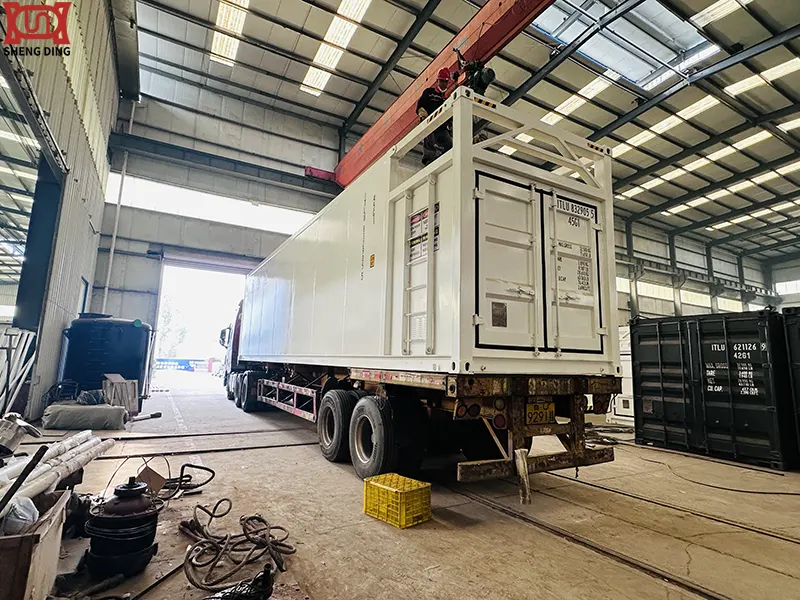
Once the unit leaves the factory and arrives at the destination port, resolving defects becomes dramatically more expensive.
Common problems discovered too late:
- Missing or damaged components
- Electrical panels that do not match the specification
- Incorrect certification documents
- Paint or coating damage from inadequate packaging
- Serial numbers that do not match shipping documents
The fix: arrange a pre-shipment inspection - either through a third-party inspection company or by sending a representative to the factory. Verify:
- Equipment matches the approved drawings and specification
- All certifications and test reports are present and correct
- Packaging is suitable for ocean transport
- Serial numbers and shipping marks are correct
Mistake 9: No Plan for Installation and Commissioning
The unit arrives, clears customs, and reaches the site. Then what?
Buyers who do not plan for installation and commissioning often discover that:
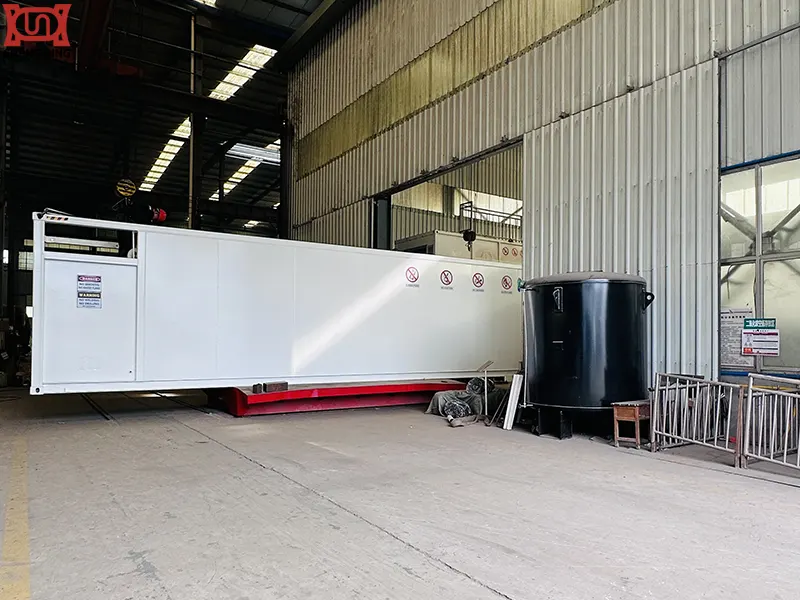
- The site is not ready - no foundation, no power, no access for the crane
- Local technicians are unfamiliar with the equipment
- The supplier offers no remote support for troubleshooting
- Commissioning documentation is incomplete or in a language no one on site reads
- Staff have not been trained on safe operation
A standard mobile fuel station installation takes 7 to 15 days from pad readiness, but complications can stretch the timeline considerably. Getting to first dispense requires coordination between the supplier, the buyer, and local authorities.
The fix: confirm upfront what the supplier provides - installation drawings, foundation specifications, remote or on-site commissioning support, training materials, and documentation in the appropriate language. Arrange for local regulatory inspection well in advance.
Summary: 9 Mistakes at a Glance
| # | Mistake | Consequence |
| 1 | Assuming one certification fits all markets | Customs rejection, forced re-export |
| 2 | Misclassifying for dangerous goods shipping | Port delays, demurrage fees |
| 3 | Overlooking the CSC plate | Shipping line refusal, void insurance |
| 4 | Ignoring local site regulations | Relocation or costly retrofits |
| 5 | Underestimating landed cost | Budget overrun of 25-40% |
| 6 | Choosing a supplier based only on price | Failed inspections, no after-sales support |
| 7 | Failing to specify fuel type and capacity | Equipment unsuitable or non-compliant |
| 8 | Skipping pre-shipment inspection | Expensive fixes at destination |
| 9 | No plan for installation and commissioning | Equipment idle on site for weeks |
Conclusion
Importing mobile fuel stations is a manageable process - when the risks are understood in advance. The 9 mistakes covered here are not rare edge cases. They are the routine failures that turn a straightforward equipment purchase into a months-long customs and compliance ordeal.
The common thread across all nine is preparation. Specify your target market and fuel type at the procurement stage. Confirm certifications and shipping documentation before the unit leaves the factory. Plan for site compliance and commissioning before the container arrives at port.
Buyers who follow these steps consistently report smoother imports, faster commissioning, and lower total landed costs than those who treat a mobile fuel station like an ordinary piece of industrial equipment.
Importing a mobile fuel station for the first time?
Shengding Container provides export-ready container and skid-mounted fuel stations with full certification documentation, dangerous goods shipping support, and destination compliance guidance.
Written by
TAIAN SHENGDING METAL CONTAINER MANUFACTURING CO., LTD.
Editor Wang
WhatsApp:+86 152 5486 3111
Email:shengdingtank@126.com


- WhatsApp
- E-MailE-Mail:shengdingtank@126.com
- WeChatWeChat:15254863111