Container Fuel Station for Remote Work Zones: 5 Key Benefits for Off-Grid Operations


A mining camp 300 km from the nearest paved road. A construction site beyond the grid. A disaster recovery zone where power lines are down and fuel trucks can't reach. In remote work zones, fuel isn't just a convenience - it's the lifeline that keeps generators running, equipment moving, and operations alive. Here are the 5 key benefits that make container fuel stations the smartest choice for off-grid operations.
Introduction: The Fuel Challenge in Remote Work Zones
Remote work zones share a common set of challenges:
- No grid power - operations depend entirely on diesel generators and fuel-powered equipment
- Long supply lines - fuel must be trucked in over rough terrain, often taking days
- Harsh environments - extreme temperatures, dust, salt air, and unpredictable weather
- Limited infrastructure - no permanent buildings, no municipal services, no spare parts nearby
- High labor costs - every hour of downtime costs money, and every manual task adds up
Traditional fuel storage - underground tanks, above-ground bulk tanks with separate concrete bunds, or even drums and jerrycans - creates problems in these environments:
- Underground tanks require excavation in ground that may be permafrost, rock, or swamp
- Above-ground tanks need separate secondary containment, which means more construction
- Drums and jerrycans create fire hazards, spill risks, and logistical nightmares
- All traditional options are permanent - when the project ends, you leave behind a liability
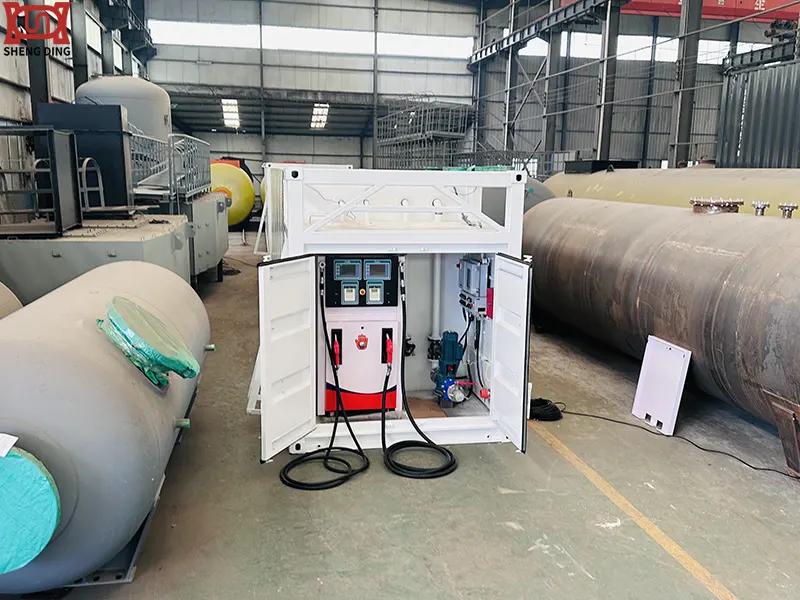
A container fuel station solves these problems by integrating fuel storage, dispensing, safety systems, and environmental protection into a single, transportable unit. Here's why it's the ideal solution for off-grid operations.
Benefit 1: Rapid Deployment - Operational in Days, Not Months
The Remote Site Reality
In remote work zones, time is the most expensive resource. Every day of delay means idle equipment, idle workers, and mounting costs. A traditional fuel storage facility requires:
- Site survey and geotechnical assessment
- Excavation or foundation construction
- Concrete pouring and curing (7-28 days)
- Tank installation and piping
- Electrical connections and safety system integration
- Regulatory inspection and approval
Total timeline: 3-6 months, or more.
In permafrost regions, construction is even more challenging - excavation must be timed with seasonal conditions, and foundations must be engineered to prevent thawing and settling.
The Container Station Advantage
A container fuel station arrives pre-assembled, pre-tested, and ready to operate. It requires only:
- A compacted gravel pad or simple concrete slab
- A crane or heavy forklift to position the unit
- Connection of fuel lines and power (if using a powered dispensing system)
Typical commissioning time: 1-3 days.
The Arctic fuel network demonstrates this perfectly: in permafrost conditions where traditional underground tanks were technically impossible, containerized above-ground stations were commissioned and started up in no more than two months - which, for fuel station construction, is exceptionally short.
For emergency response and disaster recovery operations, this speed advantage is even more critical. Container stations can be deployed to disaster zones within days, providing an immediate fuel supply for rescue vehicles, generators, and heavy equipment.
The takeaway: Container fuel stations deploy 10-50 times faster than traditional fuel storage - a decisive advantage when every day of delay costs money.
Benefit 2: Built-In Environmental Protection - No Excavation, No Contamination Risk
The Problem with Traditional Storage
In remote work zones, environmental protection is both a regulatory requirement and a practical necessity. Fuel spills can:
- Contaminate soil and groundwater in areas with limited remediation capability
- Trigger environmental fines and clean-up costs exceeding $250,000
- Damage fragile ecosystems in pristine wilderness areas
- Create health hazards for workers and local communities
Traditional underground tanks are particularly problematic in remote areas:
- They require excavation, which is expensive and difficult in permafrost, rock, or swamp
- Leaks go undetected for extended periods because the tank is buried
- Remediation requires excavation of contaminated soil - a massive logistical challenge
Traditional above-ground tanks require separate concrete bunds or earth berms, which means additional construction, land clearing, and civil works.
The Container Station Advantage
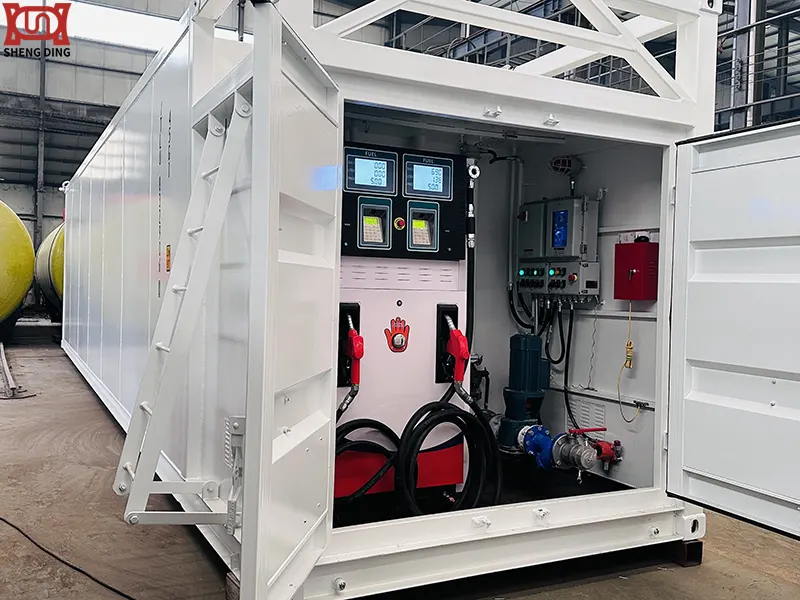
Container fuel stations use double-walled construction as standard:
- The inner tank holds the fuel
- The outer tank (or the container walls themselves) provides secondary containment
- The interstitial space is continuously monitored for leaks
This means:
- No excavation required - the station sits above ground
- No separate bund construction - secondary containment is built in
- Early leak detection - problems are identified before fuel reaches the environment
- Zero soil contamination risk - any spill is retained within the container
Regulatory requirements typically mandate that secondary containment systems hold 110% of the largest tank's volume. Container stations meet this by design - no additional civil work required.
The takeaway: Container fuel stations provide factory-built environmental protection that eliminates excavation, prevents contamination, and simplifies compliance.
Benefit 3: All-Weather Durability - Built for the Harshest Environments
The Remote Site Reality
Remote work zones expose equipment to some of the harshest conditions on Earth:
| Environment | Challenge |
| Desert | 50¡ãC+ temperatures, blowing sand, UV degradation |
| Arctic | -40¡ãC temperatures, permafrost, snow load |
| Coastal | Salt air, high humidity, corrosion |
| Tropical | Monsoon rains, high humidity, mold |
| High altitude | Low pressure, temperature swings, UV |
Traditional tanks - whether underground or above-ground - are vulnerable to these conditions. Above-ground tanks rust. Underground tanks corrode. Dispensing equipment freezes, jams, or degrades.
The Container Station Advantage
Container fuel stations are built to survive:
- Steel container enclosure shields tanks, pumps, and electronics from rain, dust, sand, salt air, and temperature extremes
- Weather-tight design protects against corrosion - a common problem with exposed tanks
- Insulation options for Arctic and desert environments
- Heating systems for cold-weather operation - essential for diesel, which can gel at low temperatures
- Explosion-proof electrical components rated for hazardous areas
The container format also provides physical protection - the equipment isn't exposed to falling debris, vehicle impacts, or wildlife.
The takeaway: Container fuel stations are engineered for extreme environments - protecting equipment from the elements and ensuring reliable operation in any climate.
Benefit 4: Mobility & Redeployability - An Asset That Moves With Your Operations
The Remote Site Reality
Remote work zones are rarely permanent. Mining operations move to new deposits. Construction projects progress along a route. Disaster recovery zones evolve. Exploration camps relocate.
Traditional fuel storage is a permanent fixture:
- Underground tanks cannot be moved - they are abandoned in place
- Above-ground tanks with concrete bunds require demolition and disposal
- Decommissioning costs can equal the original installation cost
- Environmental remediation may be required, adding further expense
When the project ends, the investment is lost - and the liability remains.
The Container Station Advantage
A container fuel station is a relocatable asset:
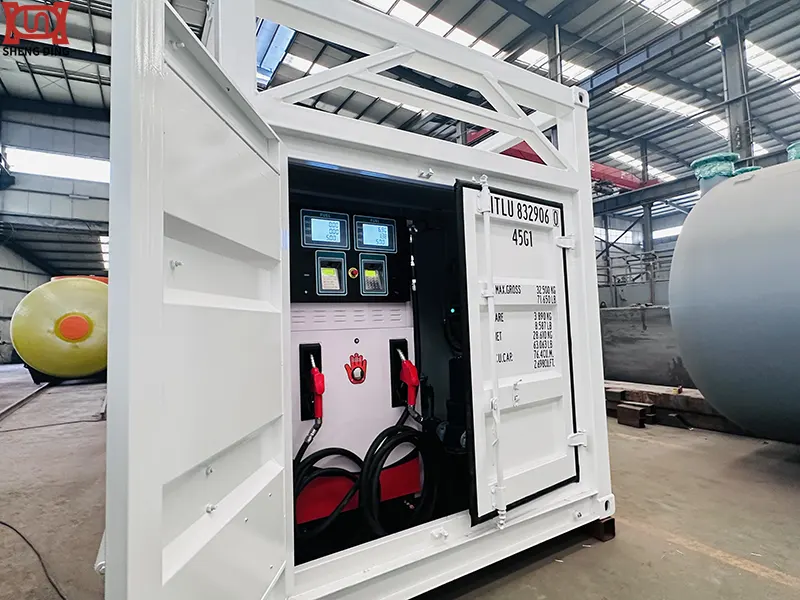
- Standard ISO corner castings allow lifting with any container crane
- CSC certification enables shipping as standard ocean freight
- Forklift pockets allow smaller units to be moved without a crane
- Units can be dismantled and reused at the next site
This mobility transforms fuel storage from a sunk cost into a redeployable asset. A container station purchased for a three-year construction project can be relocated to the next project - retaining its value and eliminating decommissioning costs.
For multi-site operations, container stations enable a hub-and-spoke model: one large container station serves as a central fuel depot, with smaller units deployed to individual work zones as needed.
The takeaway: Container fuel stations are assets that move with your operations - traditional tanks are sunk costs left behind.
Benefit 5: Integrated Security - Protecting Fuel in Unmonitored Areas
The Remote Site Reality
Fuel theft is a serious problem in remote work zones:
- Sites are often unmonitored, especially at night
- Security personnel are expensive to deploy and maintain
- Local communities may lack alternative fuel sources
- Fuel is a high-value commodity - a single tanker load can be worth tens of thousands of dollars
Traditional fuel storage is vulnerable:
- Above-ground tanks have exposed pumps, meters, and valves
- Underground tanks require open access for fuel delivery
- Drums and jerrycans are easily stolen
- Dispensing equipment can be tampered with or siphoned
The Container Station Advantage
Container fuel stations offer built-in security:
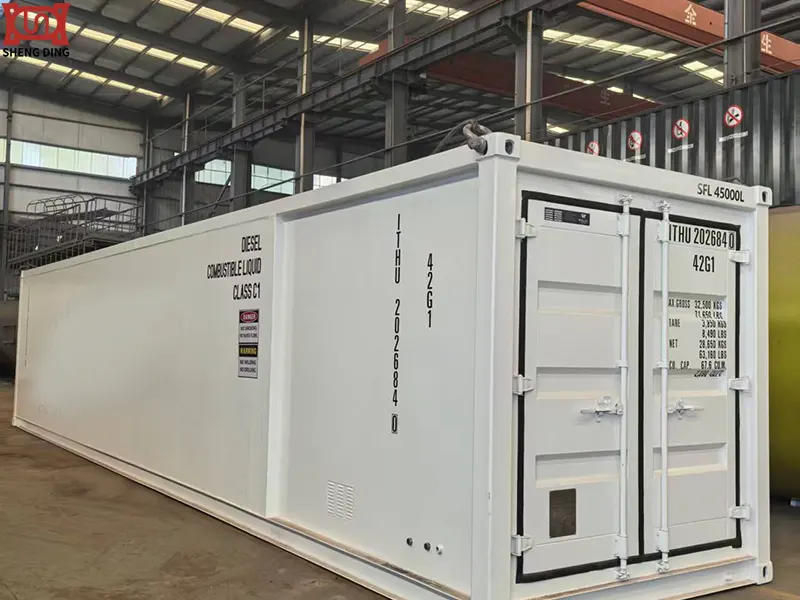
- Lockable doors and solid steel walls - equipment is hidden from view and protected behind locked container doors
- Integrated access control - cardlock, RFID, or PIN systems restrict who can dispense fuel
- Fuel management systems - track every liter dispensed, by user, vehicle, or time period
- Surveillance camera integration - monitor activity remotely
- Motorized roller shutters - provide additional protection
Many modern container stations also include remote monitoring:
- Real-time fuel level tracking
- Leak detection alerts
- Unauthorized access notifications
- Consumption analytics
This combination of physical security and digital monitoring makes fuel theft significantly harder - and provides an audit trail when theft does occur.
The takeaway: Container fuel stations provide factory-integrated security that protects fuel and equipment in unmonitored remote areas.
Summary: 5 Benefits at a Glance
| Benefit | What It Delivers |
| Rapid Deployment | Operational in 1-3 days vs. 3-6 months for traditional storage |
| Built-In Environmental Protection | Double-wall containment, no excavation, zero contamination risk |
| All-Weather Durability | Engineered for extreme temperatures, dust, salt air, and humidity |
| Mobility & Redeployability | Relocatable asset that retains value across projects |
| Integrated Security | Lockable enclosure, access control, remote monitoring |
When to Choose a Container Fuel Station for Remote Operations
| Your Scenario | Recommended Solution |
| Mining camp in remote wilderness | Container station - all-weather protection, security, mobility |
| Construction site beyond the grid | Container station - rapid deployment, no grid power required |
| Disaster recovery zone | Container station - deploy within days, self-contained |
| Arctic or desert exploration | Container station - engineered for extreme climates |
| Multi-site operation with moving work zones | Container station - redeployable, retains value |
| Temporary project (1-3 years) | Container station - no sunk cost, no decommissioning |
Conclusion
Remote work zones demand fuel solutions that are fast to deploy, tough enough to survive, and flexible enough to move with your operations. Container fuel stations deliver all three - plus built-in environmental protection and security that traditional storage can't match.
The 5 key benefits covered here - rapid deployment, built-in environmental protection, all-weather durability, mobility, and integrated security - make container fuel stations the clear choice for off-grid operations.
Whether you're fueling a mining camp in the Arctic, a construction site in the desert, or a disaster recovery zone in the tropics, a container fuel station ensures you have reliable fuel - when and where you need it.
Written by
TAIAN SHENGDING METAL CONTAINER MANUFACTURING CO., LTD.
Editor Wang
WhatsApp:+86 152 5486 3111
Email:shengdingtank@126.com


- WhatsApp
- E-MailE-Mail:shengdingtank@126.com
- WeChatWeChat:15254863111