Seven Key Details for Mobile Fuel Stations to Filter Impurities in Fuel


Mobile fuel stations (skid-mounted gas stations) employ multi-stage filtration and combination technologies to filter oil impurities. The core process involves unloading filtration --> storage tank sedimentation --> multi-stage filtration during refueling --> circulation purification. With regular maintenance and monitoring, impurities can be controlled below 2-10µm. Its core objective is to remove contaminants such as moisture, solid particles, and colloids from oil during storage and delivery to customers, meeting equipment usage requirements. The following detailed methods and implementation points are summarized by Shengding Containers based on years of production and usage experience, and we hope they will be helpful when using Mobile fuel stations in the future.
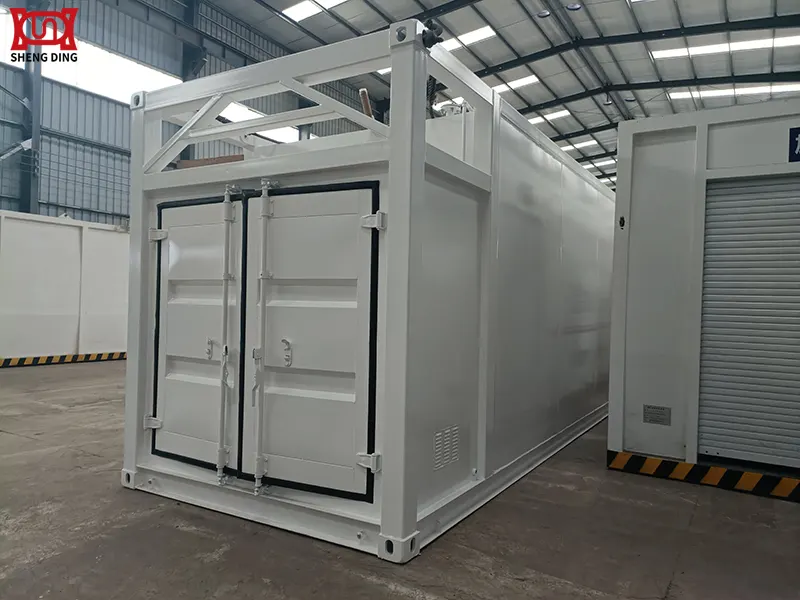
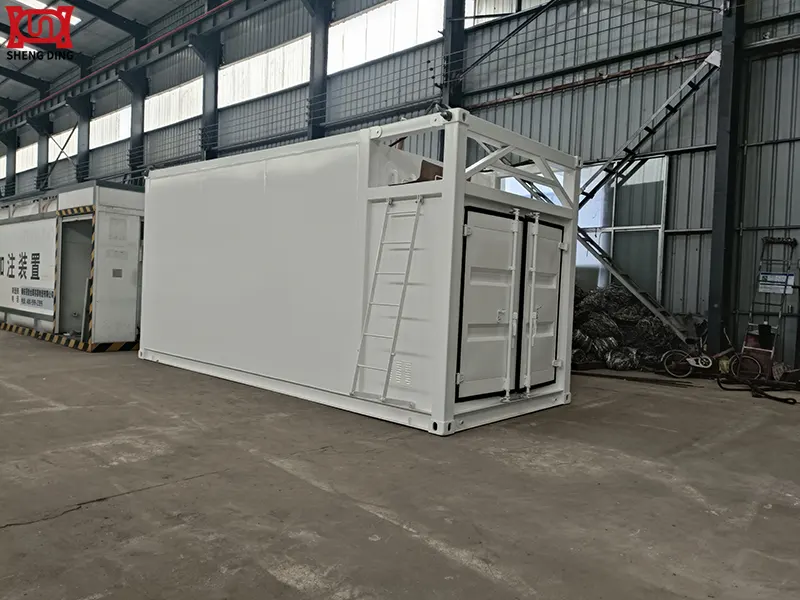
1. Core Filtration System Configuration
The Mobile fuel station filtration system follows a progressively denser filtration principle, achieving efficient impurity removal through multi-layer filtration combinations. Common configurations are as follows:
| Filtration Stage | Location | Filtration Accuracy | Main Function | Common Filter Types |
| Primary Filtration (Coarse Filtration) | Unloading Port/Tank Inlet | 30-50µm | Intercepts large particles, rust, and sediment | Metal mesh filter, synthetic fiber filter |
| Secondary Filtration (Fine Filtration) | Before Pump | 10-20µm | Removes medium-sized particles, protecting the pump | Glass fiber filter, paper filter |
| Tertiary Filtration (Ultra-fine Filtration) | After Pump/Before Fuel Dispenser | 2-10µm | Deep purification, preventing nozzle clogging | Composite filter, coalescing filter |
| Quaternary Filtration (Final Filtration) | Before Fuel Dispenser | 1-5µm | Ultimate Guarantee: Ensuring Clean Fuel Entering the Engine | Nanofilm Filters, Sintered Metal Filters |
2. Detailed Explanation of Mainstream Filtration Technologies
2.1. Physical Filtration (Most Basic Application)
- Working Principle: Intercepts solid impurities of different sizes through the filter element's pore size, following the "sieving effect."
- Key Parameters: Filtration accuracy (absolute accuracy/nominal accuracy), dirt holding capacity, pressure differential limit.
- Application Scenarios: Used in all levels of filters; the basic filtration method in Mobile fuel stations.
2.2. Coalescing Separation Technology (Dual Removal of Oil, Water, and Impurities)
Working Principle:
- 1. Fuel flows through the coalescing filter element, first filtering out solid impurities.
- 2. Tiny water droplets coalesce into larger droplets, settling due to gravity.
- 3. Further water removal occurs through the separation filter element (oleophilic and hydrophobic).
Application Scenarios:
- Fine filtration of fuels such as diesel that easily contain water, efficiently removing water and fine impurities.
2.3. Centrifugal Filtration Technology (Auxiliary Enhancement)
- Working Principle: Utilizes centrifugal force generated by high-speed rotation to separate impurities and oils of different densities.
- Advantages: Fast separation speed, suitable for processing oils with high viscosity and high concentration of impurities.
- Application Scenarios: Cleaning sediment at the bottom of oil tanks, waste oil recovery, etc.
2.4. Adsorption Filtration Technology (Deep Purification)
- Working Principle: Uses adsorption materials such as activated carbon and diatomaceous earth to adsorb tiny particles and colloids.
- Application Scenarios: Fine filtration of light oils such as gasoline, improving oil cleanliness.
3. Key Points for Filtration System Installation and Operation
- 3.1. Installation Sequence: Strictly follow the principle of "coarse before fine" to prevent premature clogging and damage of high-precision filter elements.
- 3.2. Parallel Design: It is recommended to use dual filters in parallel for important filtration stages, allowing filter element replacement without stopping the system and ensuring continuous operation.
- 3.3. Differential Pressure Monitoring: Differential pressure gauges should be installed on each level of filter. When the differential pressure exceeds 0.2 MPa, replace the filter element immediately.
- 3.4. Drainage Design: A drain valve is installed at the bottom of the filter to periodically discharge deposited impurities, recommended 1-2 times daily.
- 3.5. Breathing Valve Filtration: A T.R.A.P.™ deliquescent breather is installed at the tank vent to prevent dust and moisture from entering.
4. Special Purification Methods
4.1. Circulating Filtration Purification
- Equipped with an onboard circulating oil filtration system to periodically circulate and filter the oil in the tank.
- Suitable for long-term storage or situations where oil quality deteriorates. Recommended at least once per quarter, with 2-3 cycles each time.
- Removes sediment and moisture from the bottom of the tank, improving overall oil quality.
4.2. Portable Filtration Equipment Assistance
- Filtration Refueling Truck: Suitable for small mobile refueling stations or emergency refueling scenarios. Integrates a multi-stage filtration system and can be directly connected to the tank for refueling and filtration.
- Oil Filtration Cart: Used for periodically cleaning impurities from the bottom of the tank. Mobile and flexible operation.
5. Key Maintenance Measures
Maintenance of the filtration system directly affects the filtration effect and equipment lifespan. The following measures should be implemented:
5.1. Filter Cart Replacement Cycle
- Under normal operating conditions: Replace the filter cartridge every 5000-8000 liters of oil filtered or every 200 hours of operation.
- High-pollution operating conditions: Replace every 1000-3000 liters.
- Gasoline filter: Recommended replacement every 6-8 months; Diesel filter: Can be replaced every 8-12 months.
5.2. Replacement Procedure
- 5.2.1. Disconnect fuel and power: Turn off the fuel dispenser power and fuel line valves.
- 5.2.2. Release pressure: Discharge residual fuel through the pressure relief valve to prevent splashing.
- 5.2.3. Remove old filter: Check the degree of contamination and analyze the source of impurities.
- 5.2.4. Install new filter: Pay attention to the sealing ring position to avoid oil leakage. It is recommended to apply a small amount of lubricating oil to enhance sealing.
- 5.2.5. Exhaust test: After restarting the equipment, exhaust the gas and check if it is operating normally.
5.3. Regular tank cleaning
- Perform a thorough tank cleaning at least 1-2 times a year to remove bottom sediment and sludge.
- After cleaning, fuel must be refilled through a three-stage filtration system.
6. Impurity Monitoring Methods
- 6.1. Gravimetric method: According to GB/T 1. Standard Sampling: Impurities are separated through solvent dissolution, quantitative filter paper filtration, drying, weighing, and mass percentage calculation with an accuracy of 0.0001g.
- 6.2. Visual Inspection Method: A 100mL glass graduated cylinder is used for static observation. Diesel samples must be clear, transparent, and free of suspended matter. Gasoline products must be free of visible impurities.
- 6.3. Particle Size Distribution Testing: Oils used in critical equipment are tested, with a focus on the content of hard particles larger than 5um, to assess the impact on precision components.
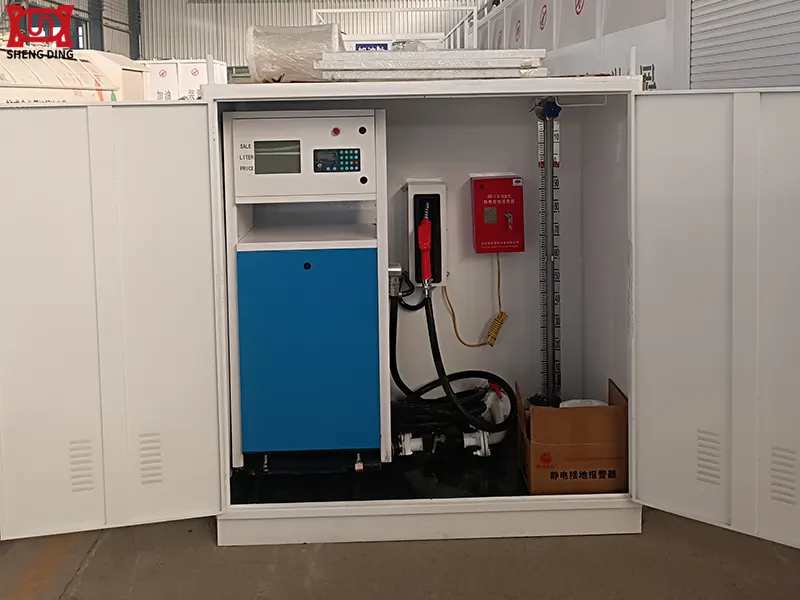
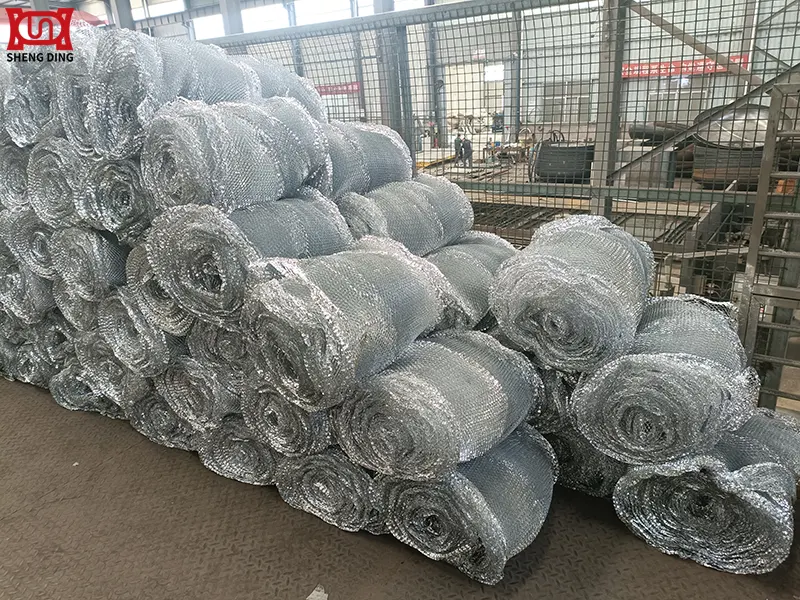
7. Best Practice Recommendations:
- 7.1. Choose filter elements from reputable brands to avoid filter failure and equipment damage caused by inferior products.
- 7.2. Establish a filtration system maintenance log, recording replacement time, differential pressure data, and filtered oil volume.
- 7.3. Perform rigorous inspection upon receiving oil products. Oils that do not meet standards must be filtered before storage.
- 7.4. Configure compact filtration equipment tailored to the characteristics of Mobile fuel stations to ensure efficient use of the overall skid-mounted unit's space.
Through this comprehensive filtration solution, Mobile fuel stations can effectively control oil impurity content, protect downstream equipment, extend its service life, improve fuel efficiency, and reduce emissions. Filtering impurities in fuel at Mobile fuel stations is a systematic project involving "source control + multi-level protection + regular maintenance." The core is equipping the fuel dispenser with a highly efficient coalescing separator or fine filter, and establishing a strict filter replacement and maintenance system. This not only protects customer equipment but also enhances the station's service reputation and avoids disputes arising from fuel quality issues.
Written by
TAIAN SHENGDING METAL CONTAINER MANUFACTURING CO., LTD.
Editor Wang
WhatsApp:+86 152 5486 3111
Email:shengdingtank@126.com


- WhatsApp
- E-MailE-Mail:shengdingtank@126.com
- WeChatWeChat:15254863111