Skid-Mounted Fuel Station Maintenance: 5 Tips to Extend Lifespan


A skid-mounted fuel station is designed to deliver 15 to 20 years of reliable service. But that lifespan does not happen automatically. Neglected maintenance leads to corrosion, pump failure, meter drift, leak detection faults and safety system degradation - problems that create downtime, trigger regulatory non-compliance and shorten the operational life of the entire asset.
The good news is that effective skid-mounted fuel station maintenance does not require complex procedures. It requires consistency. The five tips below cover the highest-impact areas: daily inspection discipline, filter and water management, corrosion protection, safety system testing, and professional servicing.
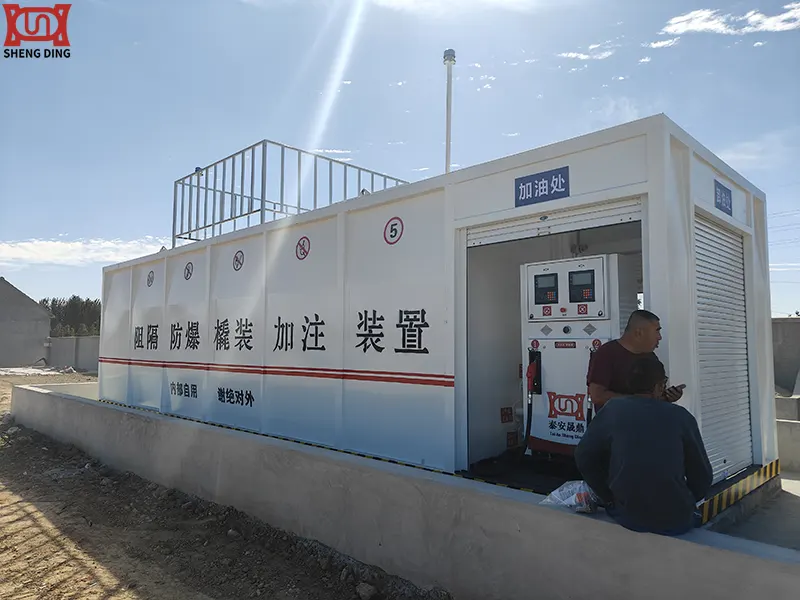
Why Maintenance Determines Lifespan
Skid-mounted fuel stations operate in conditions that accelerate wear: outdoor exposure, fuel chemistry, vibration from pumps, and in many cases, dusty or high-traffic environments. Without a structured maintenance program, small issues compound. A minor seal leak becomes a contaminated fuel batch. A corroded grounding strap becomes a static discharge risk. A clogged filter becomes pump strain and premature failure.
The five tips below are ordered by impact and frequency. Together, they form a practical maintenance framework for any skid-mounted fuel station, whether it serves a construction fleet, a mining operation, or a remote logistics depot.
Tip 1: Establish a Daily Inspection Routine
The most effective maintenance program starts with daily visual inspections. These checks take only 10 to 15 minutes but catch small issues before they become expensive failures.
What to Check Daily
- Exterior of the tank and skid frame for signs of rust, corrosion, or physical damage
- All valve switches for smooth operation - any valve that is stuck, stiff, or severely rusted should be replaced immediately
- Hoses and nozzles for cracks, wear, or fuel residue that indicates a leak
- Fire extinguisher validity period and normal pressure
- Spill kit stocked and accessible
- Fuel stains on the concrete or hardstand, which can indicate a slow leak in piping or connections
- Emergency shut-off devices unobstructed and clearly labeled
- Alarm system integrity - checked daily for proper function
- Fuel tank grounding reliability and breather vent function
A daily inspection log creates a documented record that supports warranty claims and regulatory audits. For fleets operating in dusty or high-traffic environments, increase inspection frequency to twice daily - dust accumulation on electrical components and controller interfaces can cause premature failure if not addressed.
The daily inspection is the foundation of skid-mounted fuel station maintenance. Every other maintenance task depends on knowing the current condition of the equipment.
Tip 2: Manage Filters and Water Contamination
Fuel filters are the first line of defense against contaminated fuel reaching vehicles and equipment. Over time, filters accumulate particulates, water and microbial growth. A clogged filter restricts flow, increases pump strain, and can allow contaminants to pass through to the dispenser.
Filter Replacement
The filter in the fuel dispenser should be replaced according to the manufacturer's recommended interval - typically every 500 to 1,000 operating hours, or more frequently in dusty conditions. If you notice reduced flow rate at the nozzle, increased pump noise, or visible sediment in the filter housing, replace it immediately regardless of the interval.
Water Separation
Fuel storage tanks accumulate condensation over time, particularly in humid climates or where temperature fluctuations are significant. Water in the fuel can cause corrosion inside the tank, promote microbial growth, and damage engine injection systems.
Use water-finding paste on a stick to check for water at the bottom of the tank during every refill. If water is present, pump it out before adding new fuel. Some operators also perform internal cleaning every 6 to 12 months to remove sludge, water, or sediment that could clog filters or contaminate fuel.
| Maintenance Task | Recommended Interval | Key Indicator |
| Filter replacement | Every 500-1,000 operating hours (or sooner in dusty conditions) | Reduced flow, pump noise, visible sediment |
| Water check | Every refill | Water-finding paste discoloration |
| Internal tank cleaning | Every 6-12 months | Sludge or sediment accumulation |
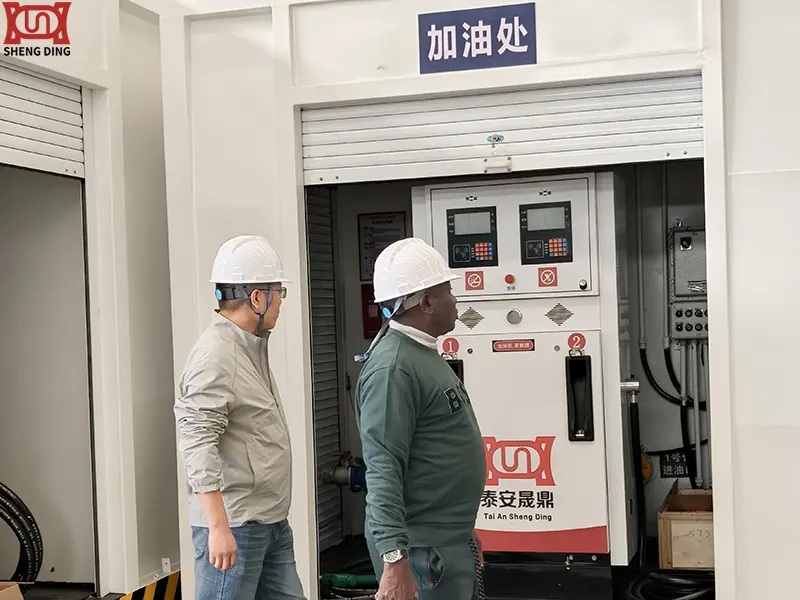
Tip 3: Protect Against Corrosion Inside and Out
Corrosion is the single greatest threat to skid-mounted fuel station longevity. It attacks from two directions: external corrosion from weather and environmental exposure, and internal corrosion from fuel chemistry and condensation.
External Corrosion Protection
External corrosion protection starts with the coating system. Inspect the tank exterior, frame and container shell for scratches, chips, or areas where the paint has worn thin. Touch up damaged areas promptly with compatible primer and topcoat. In coastal or high-humidity environments, consider applying an additional protective wax or coating.
Inspect coating integrity every 6 to 12 months and repair any damage immediately. A corrosion allowance is typically built into the tank wall thickness - for carbon steel tanks, a wall thickness of not less than 6mm provides sufficient corrosion tolerance for mechanical damage and electrochemical corrosion.
Internal Corrosion Protection
Internal corrosion is driven by water accumulation and fuel chemistry. The water management practices in Tip 2 are the first defense. For tanks with internal coatings (such as epoxy phenolic or conductive heavy-duty coatings), inspect the coating condition during internal cleaning and repair any breaches.
Structural and Grounding Corrosion
Check the skid frame and structural supports for corrosion, dents, or weld cracks, especially at seam joints. Inspect grounding straps for corrosion - poor grounding increases static spark risks and is a critical safety issue.
Coastal and high-humidity environments: increase corrosion inspection frequency and consider stainless steel tank construction (316L inner tank, 304 outer tank) where the service environment is severely corrosive.
Tip 4: Test Safety and Leak Detection Systems
Safety systems are only reliable if they are tested. A leak detector that has never been calibrated, or an emergency shut-off valve that has seized from disuse, provides no protection when it is needed.
Leak Detection
Skid-mounted fuel stations use double-walled tanks with interstitial monitoring. The space between the inner and outer tank walls is equipped with leak detectors that trigger an alarm if the inner wall leaks. A double-wall tank without functioning leak monitoring is only using half of its intended protection.
Test the leak detection system regularly - vacuum or pressure monitoring systems should be verified for alarm function, and liquid sensors should be inspected for contamination or obstruction. Monthly leak tests on storage tanks and pipelines using the 0.1 MPa pneumatic method are recommended in some operating protocols.
Safety Devices
- Emergency shut-off valves: weekly testing of both manual and automatic activation
- Overfill prevention sensors: monthly calibration - should halt fuel transfer at 95% capacity
- Fire extinguishers: monthly pressure checks and annual professional servicing
- Explosion-proof junction boxes: check bolts for looseness and missing bolts, ensuring electrical sealing performance
- Static grounding: check piping system static grounding for looseness and inspect the equipment's grounding status
- Dispenser lightning protection: testing every six months
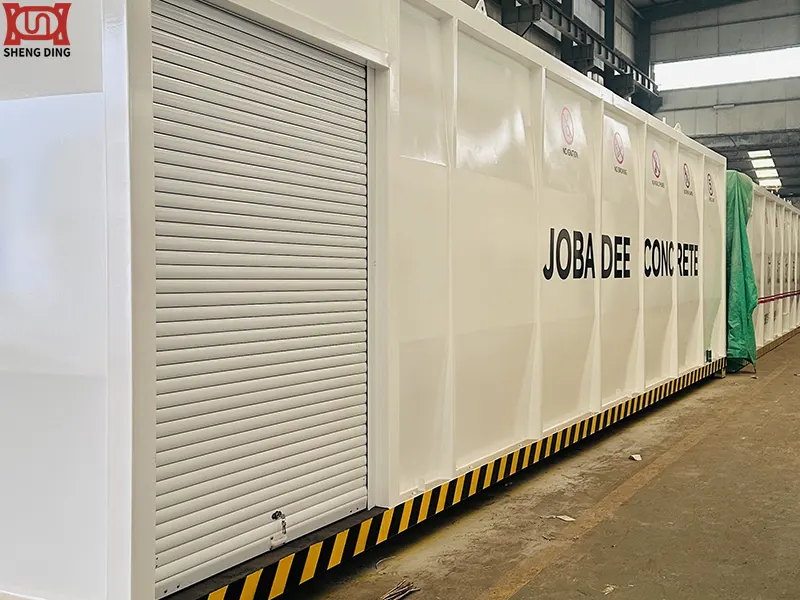
Tip 5: Schedule Professional Servicing and Documentation
Daily and weekly maintenance catches small issues. Professional servicing catches the issues that require specialized tools, calibration equipment, or regulatory certification.
Professional Service Intervals
| Service | Interval | Provider |
| Dispenser inspection | Quarterly | Local Quality and Technical Supervision Bureau (or equivalent) |
| Lightning protection testing | Every 6 months | Certified electrical inspector |
| Pump lubrication and component inspection | Per manufacturer schedule (often every 3 months) | Qualified technician |
| Meter calibration | Per local regulations (often annual) | Accredited calibration service |
Documentation
Maintain detailed maintenance logs documenting all checks, repairs and replacements. This helps track component lifespans, identify recurring issues, and ensure compliance with safety regulations. A well-kept log also supports warranty claims and demonstrates due diligence during regulatory inspections.
Professional servicing is not a replacement for daily maintenance - it is the second layer. The two work together: daily checks identify what needs attention, and professional servicing addresses what requires specialized expertise.
Maintenance Schedule Summary
| Frequency | Key Tasks |
| Daily | Visual inspection of tank, frame, valves, hoses; fire extinguisher check; spill kit check; alarm system check; grounding check |
| Weekly | Dispenser exterior cleaning; hose and nozzle inspection; grounding strap corrosion check |
| Monthly | Leak detection system test; overfill sensor calibration; pressure test; wiring and connector inspection |
| Quarterly | Professional dispenser inspection; pump lubrication; filter replacement (if not interval-based) |
| Every 6 months | Lightning protection testing; coating integrity inspection; internal cleaning (depending on fuel quality) |
| Annually | Full professional service; meter calibration; internal tank inspection |
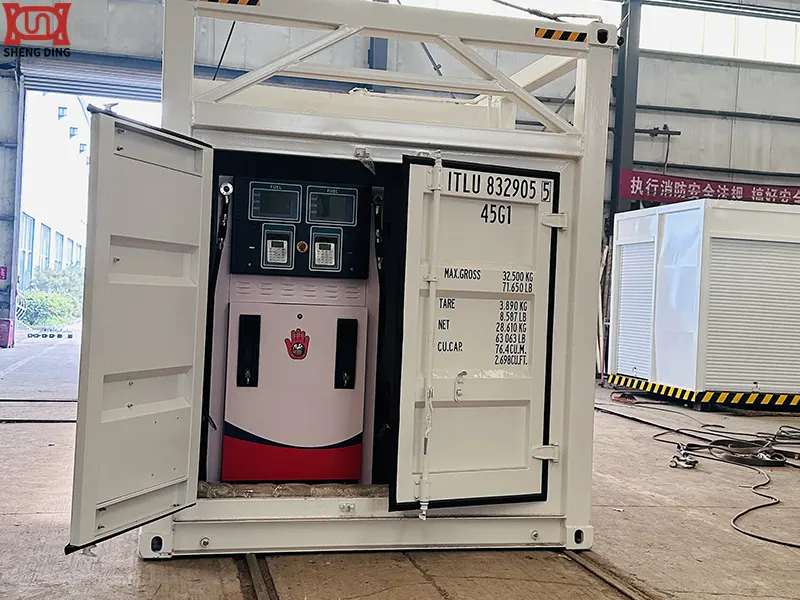
About Shengding Container
Shengding Container (Taian Shengding Metal Container Manufacturing Co., Ltd.) manufactures skid-mounted fuel stations, container fuel stations and self bunded tanks designed for maintainability and long service life. The company's stations incorporate accessible pump bays, removable inspection hatches and factory-documented maintenance schedules to simplify routine servicing.
Shengding Container provides technical support and spare parts for the full service life of its equipment, with 24-hour online support and on-site commissioning personnel available for international projects.
Conclusion
Extending the lifespan of a skid-mounted fuel station is not about one dramatic intervention. It is about five consistent practices: daily inspection discipline, filter and water management, corrosion protection, safety system testing, and professional servicing.
Stations that follow these practices routinely reach the upper end of their 15-to-20-year design life. Stations that neglect them often fail far earlier - with downtime costs that dwarf the maintenance investment.
The single most important step is the first one: establish the daily inspection routine. Everything else follows from there.
Need maintenance guidance or spare parts for your skid-mounted fuel station?
Shengding Container provides factory maintenance schedules, technical documentation and global spare parts support for its skid-mounted and container fuel stations.
Written by
TAIAN SHENGDING METAL CONTAINER MANUFACTURING CO., LTD.
Editor Wang
WhatsApp:+86 152 5486 3111
Email:shengdingtank@126.com


- WhatsApp
- E-MailE-Mail:shengdingtank@126.com
- WeChatWeChat:15254863111