Skid-Mounted Fuel Station Safety Systems: 9 Essential Features


Skid-mounted fuel stations pack a lot of functionality into a small footprint. But with fuel storage and dispensing comes serious responsibility. Here are the 9 essential safety systems every skid-mounted fuel station needs -- and why they matter.
Introduction
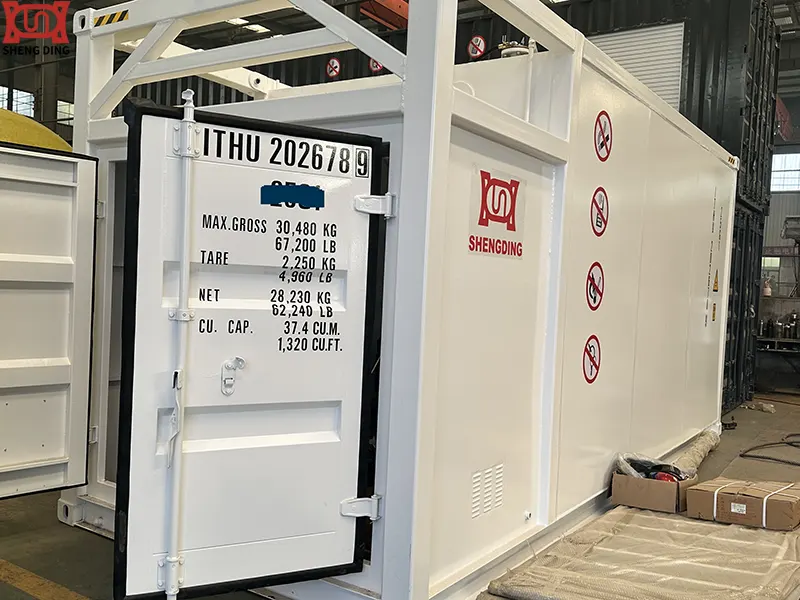
A skid-mounted fuel station -- also known as a mobile fuel station or container fuel station -- is a factory-built fueling system that integrates storage tanks, pumps, dispensers, and safety equipment on a single transportable skid. These units are widely used at construction sites, mining operations, logistics depots, ports, airports, and for emergency response.
But here's the thing: skid-mounted fuel stations are above-ground fuel storage systems. Unlike traditional underground tanks, they're exposed to the elements, vehicle impacts, and potential fire hazards. That's why regulations like GB 50156-2021 and SH/T 3134-2023 require significantly more safety features on skid-mounted units than on buried tanks.
Below are the 9 essential safety systems that separate a compliant, safe skid-mounted fuel station from a dangerous one.
1. Barrier Explosion-Proof Technology
The cornerstone of skid-mounted fuel station safety is barrier explosion-proof technology. This involves filling the storage tank with a special aluminum alloy mesh material that creates a honeycomb structure inside the tank.
How it works:
- The honeycomb structure divides the tank into countless tiny "compartments"
- These compartments stop flame propagation -- if one section ignites, the flame can't spread
- The aluminum alloy mesh has excellent thermal conductivity and static dissipation properties, rapidly absorbing heat from any combustion and preventing pressure buildup
- The tank will not explode even when exposed to open flames, static electricity, welding sparks, gunfire, impacts, or lightning strikes
This technology is so effective that it's the defining feature of skid-mounted fuel stations -- which is why they're often called "barrier explosion-proof skid-mounted fuel stations".
Compliance Note: Barrier explosion-proof devices must be selected and installed in accordance with industry standard AQ 3002.
2. Automatic Fire Suppression System
Because skid-mounted fuel stations sit above ground, they're more vulnerable to fire than buried tanks. An automatic fire suppression system is therefore mandatory.
Key requirements:
- The system automatically activates when temperatures reach a critical threshold
- Activation temperature must not exceed 95oC
- If set too low, the system triggers falsely; if too high, it fails to activate in time
- The system is typically positioned above the dispenser area
In addition to the automatic system, skid-mounted stations must be equipped with portable dry powder extinguishers, wheeled extinguishers, fire sand, and fire blankets at designated locations.
3. Emergency Pressure Relief Device
When a fire occurs near a skid-mounted fuel station, the storage tank can be exposed to intense heat. As the temperature rises, so does the pressure inside the tank. Without a way to release that pressure, the tank could rupture or explode.
The emergency pressure relief device solves this problem by:
- Automatically venting excess pressure when it reaches dangerous levels
- Preventing tank rupture during fire exposure
- Meeting the requirement that tanks withstand 1 hour of standard liquid fire exposure at 90% capacity without leaking or failing
This is a feature that underground tanks typically don't need -- but for above-ground skid-mounted units, it's non-negotiable.
4. Overfill Prevention Device
During fuel unloading, there's always a risk of overfilling the tank. An overfill prevention device -- also called an anti-overflow device or -- stops fuel from spilling out.
How it works:
- A high-level alarm activates when the tank reaches 90% capacity
- An automatic shut-off valve engages at 95% capacity, stopping the fuel flow entirely
- This prevents spills, environmental contamination, and fire hazards
Given that skid-mounted stations typically have total tank volumes of 20m³ to 50m³ (with urban installations limited to 20m³ or less), even a small overfill can create a major safety incident.
5. High-Temperature Automatic Fuel Shut-Off Valve
This is another safety feature unique to above-ground skid-mounted stations. The high-temperature automatic shut-off valve is installed on the fuel outlet pipe.
Why it matters:
- In a fire, the valve automatically closes when it detects dangerously high temperatures
- This cuts off the fuel supply to the dispenser, preventing additional fuel from feeding the fire
- It's a critical fail-safe that underground tanks don't require because they're protected by earth cover
Without this valve, a fire near the dispenser could continue to draw fuel from the tank, turning a small incident into a catastrophic one.
6. Leak Detection System
Environmental protection is just as important as fire safety. Skid-mounted fuel stations use double-walled tanks with a leak detection system in the space between the inner and outer walls.
How it works:
- The gap between the two tank walls is continuously monitored
- If the inner wall leaks, fuel enters the interstitial space and triggers an alarm
- This provides early warning before any fuel reaches the environment
- For single-wall tanks with a protective barrier, a similar monitoring system is installed between the tank and the barrier
Double-walled construction eliminates the risk of fuel leaking into soil or groundwater -- a critical requirement for environmental compliance.
7. Lightning Protection & Static Electricity Grounding
Because skid-mounted fuel stations sit above ground, they're exposed to lightning strikes and static electricity buildup. A robust grounding system is essential.
Requirements:
- Lightning protection and static grounding systems must comply with GB 50156
- Grounding resistance must meet national safety standards
- The system dissipates static charge generated during fuel transfer
- Prevents sparks that could ignite fuel vapors
Many systems also include a grounding alarm interlock -- if the grounding connection is poor, the system alarms and prevents fueling from starting. This ensures operators can't accidentally dispense fuel without proper grounding.
8. Emergency Shutdown System (ESD)
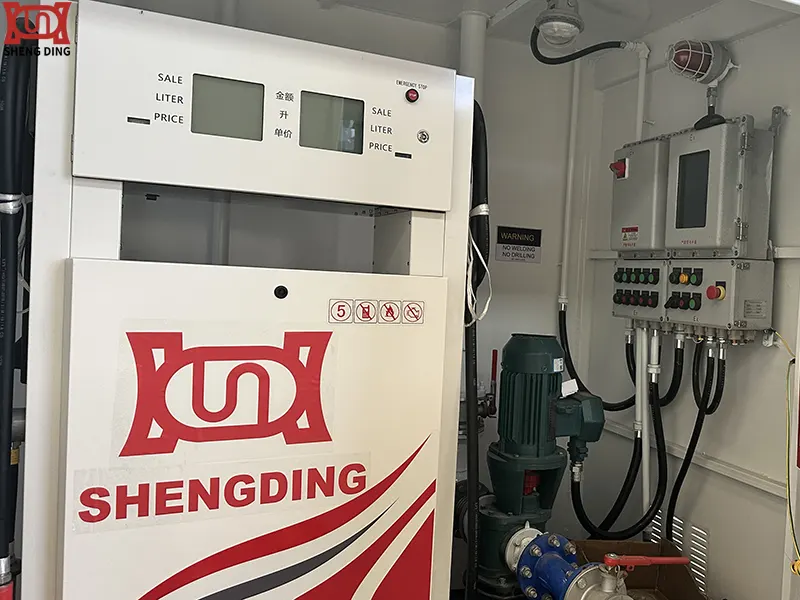
The Emergency Shutdown System (ESD) is the operator's last line of defense. When something goes wrong -- a spill, a fire, an equipment malfunction -- the ESD lets you stop everything immediately.
Key functions:
- A single emergency stop button shuts down the entire system
- Automatically closes all relevant pipeline valves
- Cuts power to pumps and dispensers in an emergency
- Can be triggered manually by operators or automatically by sensors
In many modern systems, the ESD is integrated with intelligent interlock controls that coordinate safety responses across all subsystems.
9. Vapor Recovery System
Fuel vapors are not just an environmental nuisance -- they're a fire and explosion hazard. Skid-mounted fuel stations are required to have vapor recovery systems that capture fuel vapors during unloading and dispensing.
How it works:
- During tanker unloading, vapors displaced from the tank are captured and returned to the tanker
- During vehicle refueling, vapors are drawn back into the storage tank
- This reduces VOC emissions and prevents vapor accumulation around the station
The system includes vapor leak monitoring that triggers audible and visual alarms if a leak is detected. This protects both the environment and the safety of personnel working nearby.
Additional Safety Requirements
Beyond these 9 essential systems, skid-mounted fuel stations must also include:
| Requirement | Detail |
| Secondary containment | A containment berm or oil collection pit with capacity ¡Ý50% of total tank volume |
| Upper filling method | Fuel inlet must be at the top to prevent spillage during unloading |
| Outlet pipe height | Fuel outlet pipe must be ¡Ý0.15m above tank bottom to prevent static buildup from splashing |
| Fire-resistant tank | Must withstand 1 hour of direct flame exposure without exploding |
| Compliance documentation | Third-party test reports, explosion-proof certifications, and factory certificates |
Compliance Standards Reference
Skid-mounted fuel stations must comply with multiple standards:
| Standard | Scope |
| GB 50156-2021 | Technical standard for automobile fueling, gas, and hydrogen stations |
| SH/T 3134-2023 | Technical standard for skid-mounted automobile fueling stations |
| AQ 3002 | Technical requirements for barrier explosion-proof skid-mounted fueling (gas) devices |
| NFPA 30A | (International) Automotive and marine fueling code |
Conclusion
Skid-mounted fuel stations pack extraordinary capability into a small footprint -- but that capability comes with serious responsibility. The 9 essential safety systems outlined above are not optional extras. They're mandatory requirements that protect lives, property, and the environment.
From the barrier explosion-proof technology that prevents tank explosions to the vapor recovery systems that control fire hazards, every safety feature serves a critical purpose. When you're evaluating a skid-mounted fuel station supplier, don't just ask about capacity and price. Ask about every one of these 9 safety systems -- and verify that they're installed, tested, and certified.
Because when it comes to fuel, there's no room for shortcuts.
Need help specifying the right safety systems for your skid-mounted fuel station? Contact Shengding Container for expert guidance, custom solutions, and compliance support.
Written by
TAIAN SHENGDING METAL CONTAINER MANUFACTURING CO., LTD.
Editor Wang
WhatsApp:+86 152 5486 3111
Email:shengdingtank@126.com


- WhatsApp
- E-MailE-Mail:shengdingtank@126.com
- WeChatWeChat:15254863111