The 7 Key Differences Between Container & Skid Mounted Fuel Stations


Container fuel station or skid mounted fuel station? Both store and dispense fuel. Both arrive pre-assembled and can be operational within days. But beneath the surface, these two mobile fueling systems are fundamentally different - in ways that affect your budget, logistics, maintenance, and long-term operations.
Introduction
If you've been shopping for a mobile fuel station, you've probably noticed something confusing: suppliers often use the terms "container fuel station¡± and "skid mounted fuel station¡± interchangeably. Some list the same product under both names. Others treat them as synonyms.
They are not.
A container fuel station is a complete fueling system built inside a modified ISO shipping container. The container itself becomes the enclosure - lockable doors, ventilation, lighting, and fire suppression are all integrated into the box. A skid mounted fuel station, by contrast, is a fuel system assembled on a structural steel frame or skid - open, accessible, and without a built-in enclosure unless one is added.
This distinction ripples through every aspect of ownership: cost, transport, maintenance, security, and suitability for different environments. Below are the 7 key differences that every buyer needs to understand.
Difference 1: Structure & Enclosure
The most visible difference is also the most consequential.
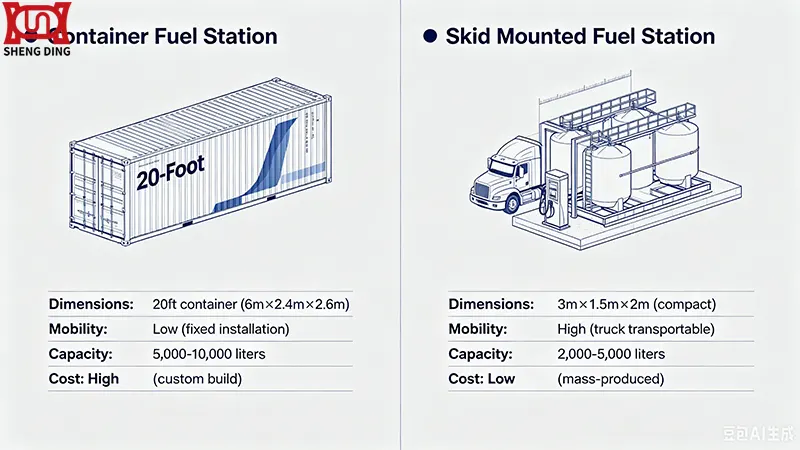
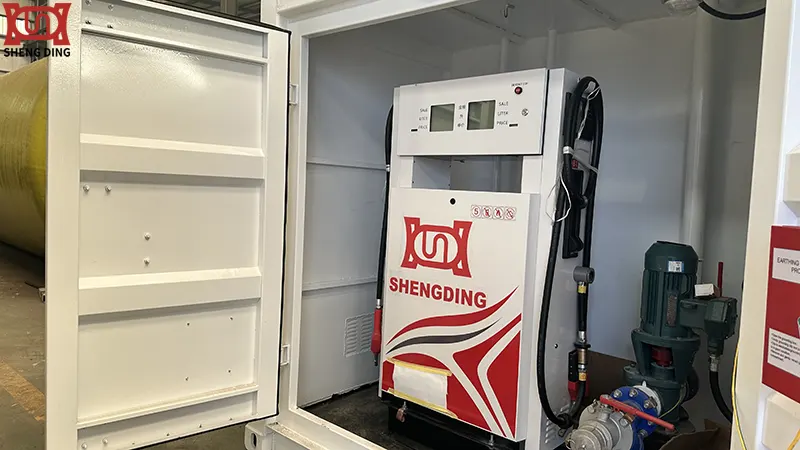
| Container Fuel Station | Skid Mounted Fuel Station | |
| Structure | Modified ISO shipping container enclosure | Welded steel skid/frame, open or partially enclosed |
| Enclosure | Built-in, all-weather | Minimal - no canopy or shelter unless added |
| Appearance | Professional, permanent-looking | Industrial, functional |
A container fuel station is literally a shipping container that has been converted to house tanks, pumps, dispensers, safety equipment, and control systems. The container walls themselves provide secondary containment around the primary tank. Every component lives inside a steel box.
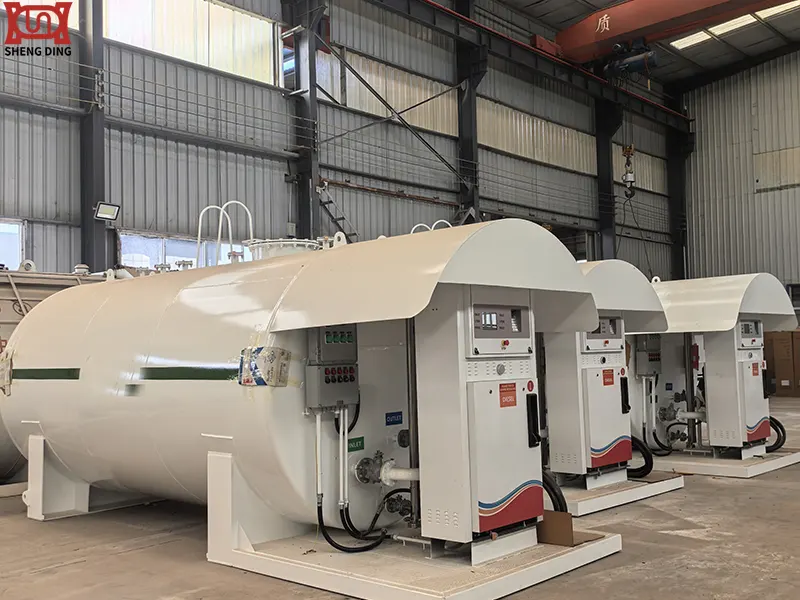
A skid mounted fuel station, on the other hand, mounts everything on an open steel frame. Components are visible and accessible from all sides. Some manufacturers offer a partial canopy or weather cover, but the default is open-frame.
The takeaway: Container = enclosed box. Skid = open frame.
2: Weather Protection & DurabilityThis is where container stations shine - and where skid stations can struggle.
- Container Fuel Station - Built-in, all-weather protection. The steel container shields tanks, pumps, and electronics from rain, dust, sand, salt air, and temperature extremes. This makes container stations ideal for harsh environments: deserts, coastal areas, polar regions, or any site where equipment is exposed to the elements.
- Skid Mounted Fuel Station - Minimal weather protection by default. Pumps, dispensers, and controls are exposed to rain, dust, and temperature swings. In harsh climates, operators must add a canopy, shelter, or enclosure separately - which adds cost and complexity.
For a mining operation in northern Chile, where dust, salt air, and temperature swings are constant challenges, a container station provides the protection that an open skid cannot. For a depot with an existing canopy, a skid may work perfectly well.
Difference 3: Security
- Container Fuel Station - High security, built-in. Lockable doors and solid steel walls reduce theft, vandalism, and unauthorized access. The equipment is hidden from view and protected behind locked container doors.
- Skid Mounted Fuel Station - Exposed equipment is more vulnerable to theft or tampering. Without fencing or additional security measures, pumps, meters, and controls are visible and accessible to anyone on site.
For high-security fuel storage or public retail locations, the container format's lockable enclosure is a clear advantage. For private fleet depots with perimeter fencing, the skid's lower security may be acceptable.
Difference 4: Transport & Logistics
How the station travels affects freight cost, lead time, and handling complexity.
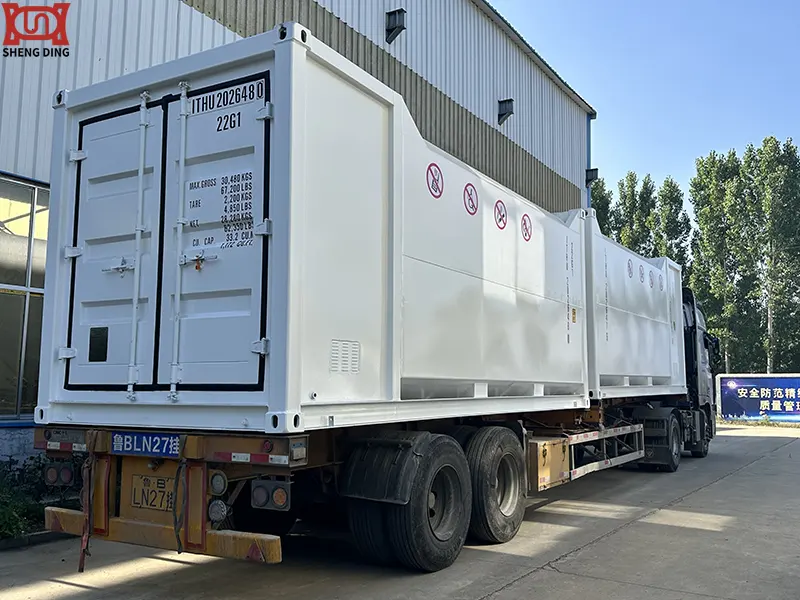
Container Fuel Station - A CSC-certified container fuel station ships as a standard ISO container. This means:
- Lower ocean freight rates (carriers handle it as a normal box)
- Easier port crane handling using standard container spreaders
- Multimodal transport by truck, rail, and ship without special permits
- Simpler customs documentation
Skid Mounted Fuel Station - Offers more transport options but requires more planning. Compact skids may fit inside a 40ft container, but larger units require flat-rack shipping, break-bulk, or RO-RO transport. Each option demands different handling equipment and freight arrangements.
If your project involves ocean freight or multimodal shipping, the container format's standardized logistics are a major advantage.
Difference 5: Capacity Flexibility
- Container Fuel Station - Capacity is constrained by container dimensions. A 20ft container typically holds around 10,000L-33,000L; a 40ft container up to about 60,000L-67,000L. Tank shape and layout must fit inside the box.
- Skid Mounted Fuel Station - Highly flexible. Because the frame is custom-built, tank shape and equipment layout can be optimized for the project rather than constrained by container dimensions. Compact skids start around 1,000L, while large mining or depot skids can exceed 60,000L.
If you need a non-standard capacity or an unusual tank configuration, a skid offers more design freedom.
Difference 6: Maintenance Access
- Container Fuel Station - Tighter maintenance access. Servicing pumps and meters inside a container can be cramped. Technicians work through service doors in a confined space.
- Skid Mounted Fuel Station - Open and easy. The open layout makes inspection, repair, and component replacement straightforward. Technicians can reach every valve and meter without crawling through a container.
For operations with regular maintenance needs or limited technical staff, the skid's easy accessibility is a significant operational advantage.
Difference 7: Cost
The price gap between the two formats is real and consistent.
| Capacity | Container Fuel Station (USD) | Skid Mounted Fuel Station (USD) |
| 1,000L - 5,000L | $15,000-35,000 | $15,000-30,000 |
| 10,000L - 20,000L | $30,000-70,000 | $25,000-60,000 |
| 30,000L - 60,000L | $70,000-150,000+ | $60,000-130,000+ |
Equipment-only estimates. Turnkey installed costs can be two to four times these figures.
- Container Fuel Station - 10-30% higher initial cost than an equivalent open skid. The container shell, insulation, ventilation, and doors add significant material and labor costs.
- Skid Mounted Fuel Station - Lower purchase price. No container enclosure means lower material and labor costs. Lighter weight also reduces transport expenses.
For a logistics depot in Nigeria, choosing a skid over a containerized unit of the same capacity saved roughly 15%. That saving can be substantial at scale.
Quick Comparison Summary
| Factor | Container Fuel Station | Skid Mounted Fuel Station |
| Structure | Modified ISO container enclosure | Welded steel skid/frame |
| Weather protection | Built-in, all-weather | Minimal |
| Security | Lockable, high | Exposed, lower |
| Transport | Standard ISO logistics | Flat-rack, break-bulk, RO-RO |
| Capacity flexibility | Constrained by container | Highly flexible |
| Maintenance access | Tighter | Open and easy |
| Initial cost | 10-30% higher | Lower |
How to Choose: Decision Guide
| Your Scenario | Recommended Format | Reasoning |
| Mining or remote construction | Skid mounted | Lower cost, easy relocation, flexible capacity |
| Public retail or urban site | Container | Security, weatherproofing, professional appearance |
| Maritime, port, or coastal use | Container | CSC/ISO shipping, salt-air protection |
| Frequent relocation between sites | Skid mounted | Lighter, crane and forklift friendly |
| Harsh climate (desert, polar, coastal) | Container | Built-in environmental protection |
| Fleet depot with existing canopy | Skid mounted | Lower cost, easy access |
| High-security fuel storage | Container | Lockable enclosure deters theft |
Conclusion
Container fuel stations and skid mounted fuel stations are not interchangeable. One is a protected, weatherproof, secure box that ships like any ISO container - ideal for harsh environments, public locations, and maritime applications. The other is a flexible, cost-effective, open-frame system that offers easy maintenance and customization - ideal for private fleets, temporary sites, and budget-conscious projects.
The choice comes down to one question: do you need the equipment protected inside a steel box, or do you need the lightest, most flexible frame?
Both formats cost far less than a traditional fixed station - and both are driving rapid growth in the global mobile fuel station market, projected to reach USD 5.8 billion in 2026. Choose wisely, and your mobile fueling solution will deliver years of reliable service.
Still unsure which format fits your project? Contact Shengding Container for expert guidance, custom solutions, and a no-obligation consultation.
Written by
TAIAN SHENGDING METAL CONTAINER MANUFACTURING CO., LTD.
Editor Wang
WhatsApp:+86 152 5486 3111
Email:shengdingtank@126.com


- WhatsApp
- E-MailE-Mail:shengdingtank@126.com
- WeChatWeChat:15254863111