Three Key Steps in Cleaning Sludge from the Bottom of Skid-Mounted Fuel Station Tanks


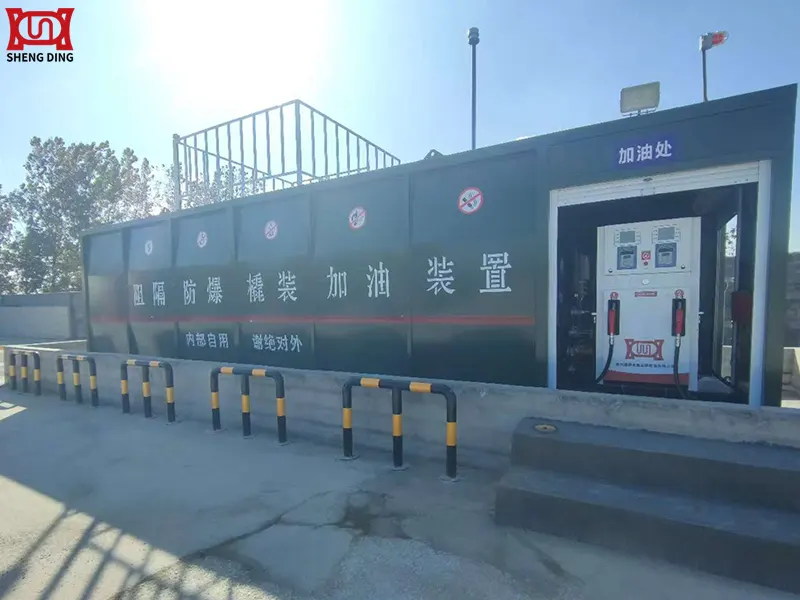
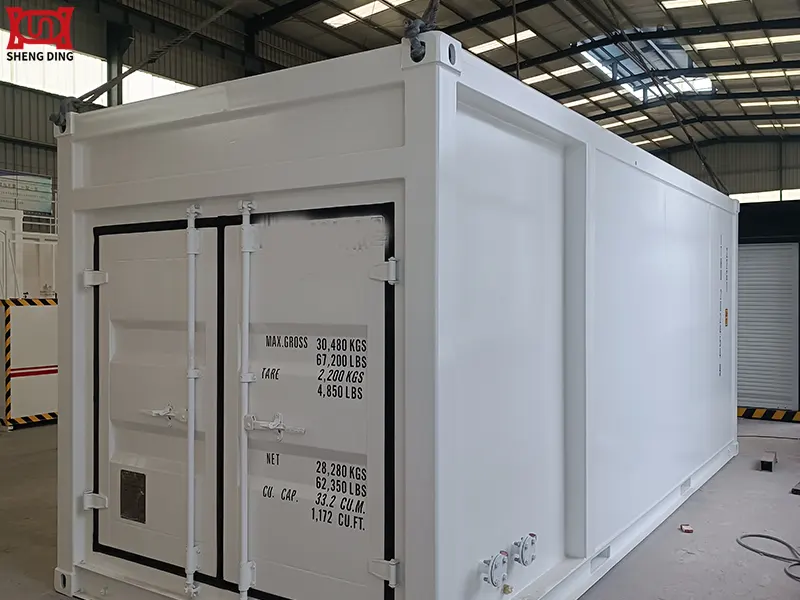
During the operation of skid-mounted fuel stations, a mixture of impurities, gum, and asphalt will form at the bottom of the oil storage tanks over time, commonly known as sludge. If this substance is not cleaned for a long time, it can easily degrade the quality of the stored oil and affect the lifespan of the entire skid-mounted fuel station. Therefore, it is required to clean the tanks regularly according to regulations. Cleaning must follow the core principles of safety control first, then standardized operation, and finally acceptance and restoration. Considering the characteristics of skid-mounted tanks¡ªsealed, modular, and relatively small in volume¡ªappropriate cleaning methods must be adopted, and the entire process must eliminate safety risks such as open flames, static electricity, and poisoning. Today, Shengding Containers will summarize the three key steps and related knowledge for cleaning sludge from the bottom of skid-mounted fuel station tanks.
1. Preliminary Preparations
The core of preliminary preparations consists of four aspects: ensuring safety beforehand, and ensuring all procedures, materials, and site conditions are in place. Skid-mounted tank cleaning is a confined space operation in a flammable and explosive environment. Inadequate preliminary preparations can easily lead to major safety accidents. All the following preparations must be completed before starting the operation.
1.1. Procedures and Approvals
- Obtain a confined space operation permit and a hot work permit (if cutting or welding is involved), clearly identifying the person in charge of the operation, the supervisor, and the operators, with all three parties signing for confirmation.
- Report to the local emergency management and fire departments in advance (required in some areas). Skid-mounted station operators must develop a specific dredging plan and emergency response plan, and organize pre-job training for operators.
1.2. Personnel Allocation and Protection
- Operators: Must hold a confined space operation permit and a special operation permit. <=2 operators per tank, >=1 external supervisor (must remain on duty at all times).
- Protective Equipment: All personnel must wear positive-pressure air respirators (filter-type gas masks are prohibited to prevent oil and gas poisoning), anti-static work clothes, anti-static safety shoes, chemical-resistant gloves, and goggles. Operators must be secured with safety ropes (one end fixed to a secure point outside the tank).
1.3. Material and Equipment Preparation
- Safety Equipment: Combustible gas detector (range 0-100% LEL), oxygen content detector (range 0-25% VOL), explosion-proof lighting (36V and below explosion-proof lamps), explosion-proof fan, static grounding alarm, dry powder fire extinguisher/foam fire extinguisher (sufficient quantity).
- Dredging Equipment: Explosion-proof sludge pump (suitable for sludge viscosity, pneumatic explosion-proof preferred), explosion-proof high-pressure washer (pressure 200-300MPa, with explosion-proof hose), oil-resistant rubber hose, sludge collection tank (sealed, with static grounding), shovel (copper/aluminum, iron prohibited, to prevent sparks from impact), rags (anti-static).
- Auxiliary Materials: Blind flanges, sealant, absorbent cotton, oil collection bags, emergency rescue materials (stretcher, first aid kit, emergency respirator).
1.4. On-site and Tank Pre-treatment
- Disconnection of Material and Energy: Close the inlet valve, outlet valve, and connecting valve of the skid-mounted tank. Disconnect the power supply to all electrical equipment, including the fuel dispenser and submersible pump. Hang a "Do Not Operate, Under Operation" warning sign. Seal valves with blind flanges to prevent oil from entering.
- Evacuation of Residual Oil: Use an explosion-proof oil pump to pump the remaining oil in the tank to a spare skid-mounted tank/oil storage device of the same size. Pump until only a layer of sludge (no free oil) remains at the bottom of the tank. Ensure proper static grounding throughout the process.
- Gas Replacement: Introduce nitrogen or inert gas into the tank for the first replacement, expelling oil and gas until the combustible gas detector shows a concentration < 1% LEL. Then, introduce fresh air for a second replacement until the oxygen content detector shows an oxygen content of 19.5%-23.5% in the tank, and the combustible gas concentration remains < 1% LEL (multiple tests show all points meet the standard).
- On-site isolation: Establish a warning zone around the skid-mounted station, set up warning tape, and place warning signs such as "Flammable and explosive, No entry" and "Confined space, hazardous operation." Open flames, non-explosion-proof equipment, and unauthorized personnel are prohibited from entering the warning zone. The ground in the work area should be covered with an impermeable membrane to prevent oil sludge leakage and contamination of soil/water bodies.
2. Specific methods for cleaning oil sludge at the bottom of the tank
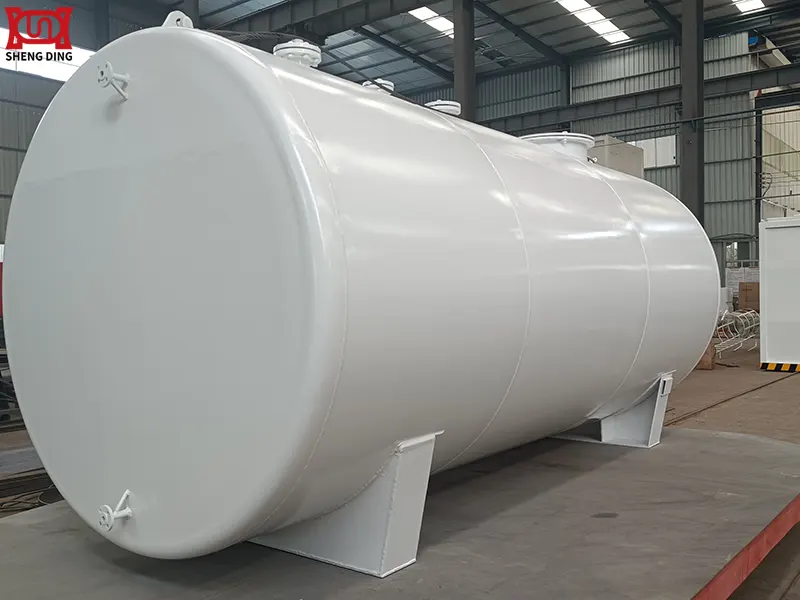
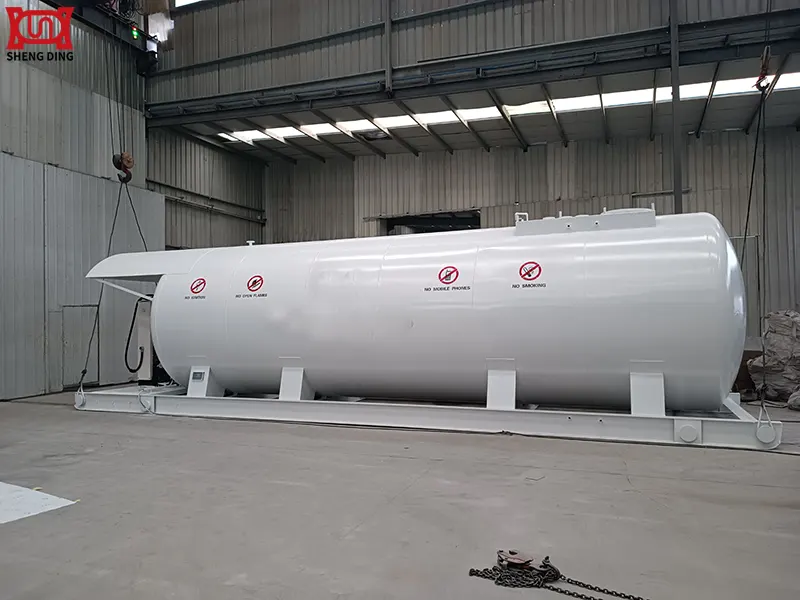
Skid-mounted tanks are mostly horizontal steel tanks with a volume of 5-50 m³ and moderate tank opening sizes. A combination of "sludge pumping + high-pressure cleaning + manual bottom cleaning" is preferred to avoid incomplete cleaning using a single method. Explosion-proof equipment should be used throughout the process, and the operating procedures must be strictly followed.
2.1. Explosion-proof sludge pumping out most of the oil sludge
- Slowly lower the suction pipe of the explosion-proof sludge pump to the bottom of the tank, with the suction port close to the oil sludge layer (avoiding air intake from suspended positions). Connect the discharge pipe to a closed oil sludge collection tank (the collection tank should be properly grounded and maintained at a safe distance of >= 5m from the working tank).
- Start the sludge pump to suction the relatively fluid oily sludge (thin sludge layer) from the bottom of the tank. During the suction process, the monitoring personnel should continuously monitor the oil and gas concentration inside the tank using a combustible gas detector. If the concentration rises to >=1% LEL, immediately stop suction and re-ventilate to replace the sludge.
- Once the pump can no longer extract (remaining viscous oily sludge layer), turn off the sludge pump and remove the suction and discharge pipes from the tank for safekeeping.
2.2. Explosion-proof High-Pressure Washer for Rinsing Viscous Oil Sludge
- Place the explosion-proof hose and cleaning gun of the explosion-proof high-pressure washer into the tank. The operator, wearing a positive-pressure breathing apparatus, enters the tank (an external monitor must maintain a taut safety harness throughout the process and communicate in real-time). Using a "from far to near, from top to bottom" approach, use high-pressure water to rinse the bottom and walls of the tank to remove the viscous oil sludge.
- Control the rinsing pressure at 200-250 MPa to avoid excessive pressure impacting the tank walls, which could cause the anti-corrosion layer to peel off or the tank to deform (skid-mounted tanks are generally 6-10 mm thick; high-pressure rinsing must be done close to the oil sludge layer, avoiding direct blowing onto the tank walls).
- During rinsing, the viscous oil sludge is broken down into a thinner sludge, which is carried by the water flow to the oil collection pit at the bottom of the tank. Simultaneously, use an explosion-proof sludge pump to continuously remove the sludge after rinsing to prevent excessive water/sludge accumulation inside the tank.
2.3. Manual Cleaning with Copper Tools to Remove Residual Oil Sludge
- For any remaining hardened oil sludge (adhering to the bottom and hard-to-reach corners of the tank), workers should gently remove it using copper scrapers and chisels (avoid forcefully striking the tank to prevent sparks). Collect the removed oil sludge in an anti-static oil collection bag.
- For hard-to-reach areas such as bottom crevices and around pipe openings that cannot be reached by high-pressure cleaning, gently wipe with an anti-static cloth dampened with a small amount of unleaded gasoline (or a special degreaser) to remove residual oil (avoid using large amounts of gasoline to prevent increased oil vapor concentration).
- During manual cleaning, an explosion-proof fan should be used for continuous ventilation (the fan duct extends into the bottom of the tank to create convection). A supervisor should check the gas concentration inside the tank every 5 minutes, and workers should rotate every 20 minutes to avoid prolonged work inside the tank that could lead to oxygen deficiency/poisoning.
2.4 Special Case Handling: Severely Hardened Sludge at the Tank Bottom
- If the thickness of the hardened sludge at the bottom of the tank is >5cm, first inject a special oil degumming agent into the tank (add at a ratio of 1:10 by the volume of sludge), soak for 2-4 hours to soften the hardened sludge, then clean according to the above steps of "sludge removal + high-pressure cleaning + manual bottom cleaning". The degumming agent must be explosion-proof and non-corrosive to avoid damaging the anti-corrosion layer of the tank wall.
3. Tank Treatment After Cleaning
After the cleaning work is completed, we must immediately conduct acceptance testing. After passing the acceptance, restore the tank to normal operation as soon as possible to ensure that the skid-mounted fuel station can be put into normal use.
- Tank Inspection and Cleanliness Acceptance: After cleaning, the operators exit the tank, and the explosion-proof fan continuously ventilates for 30 minutes. The person in charge of the operation and the supervisor jointly enter the tank for inspection. The tank bottom and walls must be free of visible sludge and oil stains, there must be no standing water or odor inside the tank, the combustible gas concentration must be < 1%LEL, and the oxygen content must be 19.5%-23.5%. After passing the acceptance, the acceptance record is signed.
- Internal Drying and Corrosion Prevention Inspection: Dry the inside of the tank using an explosion-proof dehumidifier/dryer until no water droplets remain on the inner wall. Simultaneously inspect the anti-corrosion layer (epoxy resin/glass flake anti-corrosion). If any peeling or damage is found, repair it promptly with explosion-proof and anti-corrosion materials to prevent tank corrosion.
- Equipment Reset and Airtightness Test: Remove the blind flanges from the tank valves, restore the inlet valve, outlet valve, and connecting valve, install the submersible pump, refueling machine, and other equipment, and connect the power supply (after passing the explosion-proof test). Conduct an airtightness test on the tank, valves, and pipelines (using nitrogen pressure, at 1.05 times the tank's design pressure, hold for 30 minutes, ensuring no leakage or pressure drop).
- On-site cleanup and environmental disposal: Collected oil sludge must be handed over to a qualified hazardous waste treatment unit for disposal, a hazardous waste disposal agreement must be signed, and transfer manifests must be completed; waste materials such as geomembranes, oil collection bags, and rags in the work area must be collected and disposed of uniformly, and residual oil stains on the ground must be cleaned with oil-absorbing cotton to ensure no leakage and no pollution.
4. Oil Sludge Treatment Methods
Currently, the industry mainly uses the following four compliant terminal disposal processes for oil sludge from fuel stations. Disposal units will select the appropriate process based on the oil content, viscosity, and impurity content of the sludge.
4.1 Pyrolysis Distillation Recovery and Utilization
- Process: The oil sludge is fed into a closed pyrolysis furnace and heated in an oxygen-free/micro-oxygen environment (temperature 300-500oC) to evaporate and condense the mineral oil in the sludge for recovery. The remaining solid residue can be used as building material or landfill after harmless treatment.
- Applicable to: Oil sludge with an oil content >=20%. This process achieves resource recovery and harmless disposal simultaneously and is currently the mainstream compliant process. The recovered oil can be used as industrial fuel oil (returning to the vehicle fuel market is prohibited).
4.2 Solvent Extraction Method
- Process: A specialized environmentally friendly extractant is added to the oily sludge. Mineral oil is separated from the sludge through physical extraction. The extractant is recyclable, the separated oil phase is recovered and reused, and the solid residue is disposed of in compliance with regulations after dehydration and stabilization treatment.
- Applicable to: Oily sludge with high viscosity and medium oil content. The process is mild and produces no secondary waste gas pollution. The extractant must meet national environmental protection standards, and the use of toxic and harmful solvents is prohibited.
4.3 Low-Temperature Thermal Desorption Treatment
- Process: Under low-temperature (150-250oC) and negative pressure conditions, mineral oil and water are desorbed and separated from the oily sludge. The desorbed oil and gas are condensed and recovered. The solid residue, after meeting standards, can be sanitarily landfilled or comprehensively utilized.
- Applicable to: Oily sludge with low oil content and high impurity content. High treatment efficiency, suitable for batch disposal.
4.4. Solidification and Stabilization + Safe Landfill
- Process: A solidifying agent (such as cement, fly ash, or bentonite) and a stabilizing agent are added to the oily sludge. Through physicochemical action, the toxic and hazardous substances in the sludge are fixed within the solidified body. After testing and confirming compliance with standards, it is sent to a dedicated safe landfill for hazardous waste.
- Applicable to: Oily sludge with extremely low oil content ( <= 5%) and no recycling value. This is a fallback disposal process. It is essential to ensure that all indicators of the solidified body (leaching toxicity, compressive strength) comply with the "Standards for Pollution Control of Hazardous Waste Landfill".
5. Core Precautions Throughout the Process
Throughout the entire cleanup operation, safety, operation, and environmental protection must be the core principles. The risks during the cleanup process are concentrated in confined space poisoning and asphyxiation, flammable and explosive gas explosions, static electricity ignition, and oil pollution. All precautions must be strictly followed throughout the process, with monitoring personnel supervising the entire operation. Any violations must result in immediate cessation of work.
5.1. Safety Precautions (Top Priority, Prevent Accidents)
- Continuous Gas Detection: Gas levels inside the tank must be checked before, during, and after operation. Combustible gas concentration < 1% LEL and oxygen content 19.5%-23.5% are considered safe. Entry into the tank is strictly prohibited if concentrations do not meet these standards. During operation, check every 5-10 minutes. If the concentration rises, immediately stop operation, evacuate personnel, and re-ventilate and replace the gas.
- All Equipment Explosion-Proof: All equipment entering the work area (sludge pumps, high-pressure washers, lighting, fans, walkie-talkies) must be explosion-proof (Ex d ¢òB T4 and above). The use of non-explosion-proof equipment is prohibited. All wiring connections must be sealed to prevent electrical sparks. All tools used by operators must be made of copper/aluminum; iron tools are prohibited from being placed inside the tank.
- Comprehensive Static Electricity Protection: All equipment, including tanks, sludge collection tanks, high-pressure cleaners, and sludge pumps, must be reliably grounded with a grounding resistance <=10¦¸. All equipment must be connected by grounding wires to achieve equipotential. Workers must wear anti-static work clothes and shoes; synthetic fiber clothing is prohibited. Removing protective equipment inside the tank is forbidden to prevent static electricity generation.
- Confined Space Operation Standards: Personnel entering the tank must wear safety ropes. External monitoring personnel must remain on duty and be familiar with emergency rescue methods. Each work session inside the tank should not exceed 20 minutes. Personnel must rotate shifts; single-person entry is strictly prohibited. In case of poisoning or suffocation, immediately activate the emergency plan and pull the person out with a safety rope. Blindly entering the tank for rescue is prohibited.
- No Open Flames or High Temperatures: Smoking, open flames, welding, and cutting are prohibited within the restricted area. Carrying any source of ignition is also prohibited. Electrical equipment in the work area must not be overloaded to prevent overheating. Summer work should avoid the midday heat to prevent the tank temperature from rising and causing oil and gas evaporation.
5.2. Operating Procedures (Protect the Tank, Ensure Thorough Cleaning)
- Do not use high-pressure water jets to directly blow onto weak points such as welds, flanges, and pipe openings of the skid-mounted tank, as this can cause seal failure and weld cracking due to impact.
- When manually cleaning the bottom, use moderate force with the scraper and putty knife to avoid damaging the anti-corrosion layer on the inner wall of the tank. Repair any damage to the anti-corrosion layer promptly, otherwise, it will accelerate tank corrosion and affect the service life of the skid-mounted tank.
- Use oil degumming agents and degreasing agents compatible with the oil in the tank (specifically for gasoline/diesel tanks). Do not use highly corrosive solvents to prevent damage to the tank and equipment.
- During ventilation and purging, the blower and duct must extend into the bottom of the tank to create convection airflow with air entering from the bottom and exiting from the top, preventing incomplete gas replacement and the formation of "dead zones."
5.3. Environmental Protection and Compliance Precautions (Avoid Pollution, Meet Regulatory Requirements)
- Oil sludge is classified as hazardous waste (HW08 waste mineral oil and mineral oil-containing waste). Indiscriminate dumping and burial are strictly prohibited. It must be handled by a qualified hazardous waste disposal unit. Hazardous waste transfer manifests must be completed throughout the process, and disposal records must be maintained for inspection by regulatory authorities.
- An impermeable membrane must be laid in the work area to prevent oil sludge and flushing water from seeping into the soil and groundwater. If leakage occurs, immediately seal it with absorbent cotton and sand, collect the leachate, and hand it over to the hazardous waste disposal unit for treatment.
- Flushing water generated from dredging contains oil and must be treated by an oil-water separator to meet standards before discharge. Direct discharge into municipal pipe networks, rivers, and soil is prohibited.
- After the operation is completed, compile and archive the dredging plan, work permit, gas detection records, acceptance records, hazardous waste disposal records, and other relevant documents for inspection by emergency management, fire protection, and environmental protection departments.
6. Daily Tips for Preventing Sludge Deposits (Reducing Dredging Frequency and Lowering Operational Risks)
Regular Bottom Drainage of Skid-Mounted Tanks: Open the bottom drain valve of the tank weekly to remove small amounts of deposited impurities and water. Drain until clean oil flows out each time to prevent long-term accumulation of impurities and the formation of sludge.
- Control Fuel Quality: Fuel used must meet national standards. Avoid using fuels containing excessive impurities or gum content to reduce sludge formation at the source.
- Install Filtration Equipment: Install high-precision filters (filtration accuracy >=100¦Ìm) at the inlet of the skid-mounted tank and the outlet of the fuel dispenser to intercept impurities in the fuel.
- Regular Dredging: Based on the operating load of the skid-mounted station, dredge once a year for lightly loaded stations and once every 6 months for heavily loaded stations to prevent excessive sludge buildup and hardening, which increases cleaning difficulty and risk.
7. Conclusion
Cleaning the bottom of skid-mounted fuel station tanks to remove sludge is a high-risk operation involving flammable and explosive environments, toxic and harmful gases, and confined space risks. Strict adherence to safety procedures is mandatory, and all work must be carried out by qualified professionals under thorough preparation and supervision. For large tanks or those with severe sludge buildup, it is strongly recommended to hire a professional tank cleaning company. They possess more specialized equipment, experience, and insurance, minimizing risks. The entire operation must adhere to the principles of meticulous planning, adequate protection, effective monitoring, and compliant handling. Safety and environmental protection are paramount throughout the entire process. Shengding Containers has been specializing in the production and maintenance of skid-mounted refueling stations for many years. For related inquiries, please contact us.
Written by
TAIAN SHENGDING METAL CONTAINER MANUFACTURING CO., LTD.
Editor Wang
WhatsApp:+86 152 5486 3111
Email:shengdingtank@126.com


- WhatsApp
- E-MailE-Mail:shengdingtank@126.com
- WeChatWeChat:15254863111