The Six Most Important Corrosion Prevention Measures for Skid-Mounted Fuel Stations


When operating a skid-mounted fuel station, we must not only ensure its safe operation but also extend its service life as much as possible. Corrosion prevention is paramount in extending its service life. So, what specific anti-corrosion measures are available for skid-mounted fuel stations? Today, Shengding Containers will explain six major anti-corrosion measures for skid-mounted fuel station applications. Anti-corrosion measures for skid-mounted fuel stations need to cover core components such as storage tanks, process pipelines, metal structural parts, and pump and valve assemblies. They must be combined with the characteristics of the substrate and the operating environment (such as outdoor, coastal, or humid soil), employing a comprehensive anti-corrosion system of "pretreatment + coating protection + cathodic protection + daily maintenance."
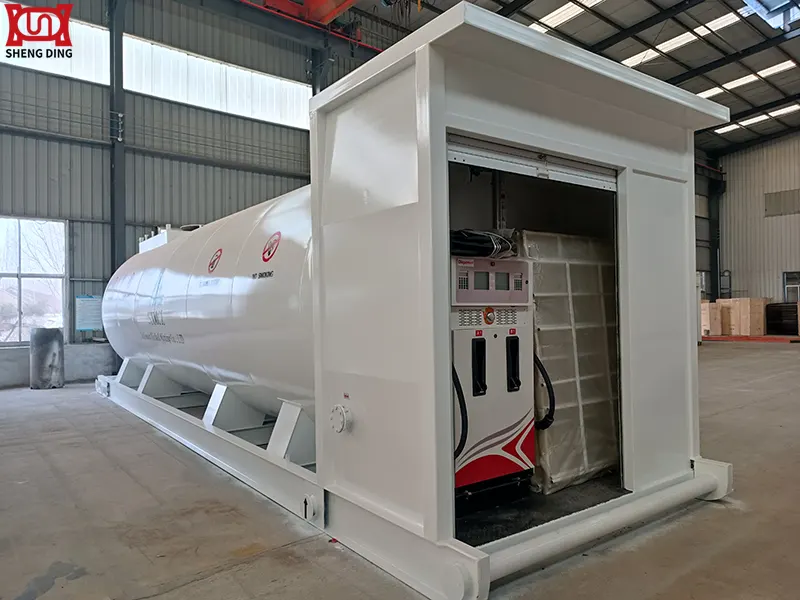
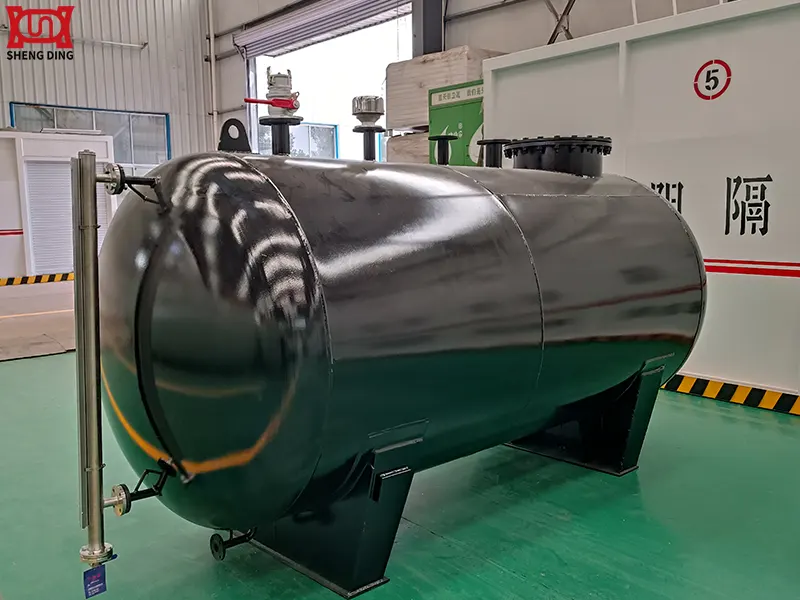
1. The Importance of Corrosion Prevention in Skid-mounted fuel Stations
1.1. Preventing Safety Accidents and Avoiding Major Risks
- The core components of a skid-mounted fuel station (storage tanks, process pipelines) directly store and transport flammable and explosive oil products such as gasoline and diesel. Corrosion of the metal substrate can lead to defects such as pitting, perforation, and weld cracking, which can easily cause oil leaks.
- Leaked oil, after evaporating, mixes with air to form an explosive mixture, which can ignite or explode upon contact with open flames or static electricity. Simultaneously, oil leaks can also lead to the inhalation of toxic fumes, causing poisoning. Effective corrosion prevention can prevent leaks caused by corrosion at the source, serving as the first line of defense for the safe operation of skid-mounted fuel stations.
1.2. Extending Equipment Lifespan and Reducing Operating Costs
- Skidned gas stations are integrated special equipment. The replacement and maintenance of components such as tanks, pipelines, pumps, and valves are costly, and maintenance requires station shutdown, resulting in additional production losses.
- Metal components without effective corrosion protection typically show significant corrosion damage within 2-3 years under outdoor conditions of sun, rain, and soil corrosion. A comprehensive corrosion protection system (coating + cathodic protection) can extend the equipment's lifespan to 15-20 years, significantly reducing equipment replacement frequency and maintenance costs. Furthermore, corrosion protection reduces the number of repairs required for precision components such as pumps, valves, and instruments due to corrosion jamming or malfunction, improving equipment operational stability.
1.3. Ensuring Fuel Quality and Preventing Secondary Pollution
- Corrosion of the inner wall of fuel storage tanks allows impurities such as rust and scale to contaminate the fuel, leading to increased color, excessive mechanical impurities, impaired combustion performance, and even damage to downstream vehicle engines.
- For special fuels such as alcohol-containing gasoline, the inner wall anti-corrosion coating prevents paint swelling and peeling, ensuring compliance with national standards. Furthermore, corrosion and leaks in buried pipelines can cause soil and groundwater pollution, with subsequent environmental remediation costs far exceeding the initial anti-corrosion investment, and resulting in penalties from environmental protection departments.
1.4. Meeting Compliance Requirements and Passing Safety Acceptance
- Skidney-mounted fuel stations are hazardous chemical storage facilities, and their anti-corrosion design and construction must strictly adhere to international and industry standards.
- During project acceptance, coating thickness, surface resistivity, and cathodic protection potential are mandatory inspection items. Substandard anti-corrosion measures will result in failure to pass acceptance and prohibit operation. In daily supervision, relevant departments will also conduct spot checks on anti-corrosion conditions; non-compliant skid-mounted stations will be ordered to rectify or even shut down.
1.5. Avoiding Chain Reaction Failures and Ensuring System Reliability
- Skid-mounted refueling stations are highly integrated systems with strong interrelationships between components. Corrosion failure of one component (such as a flange or pipe) can trigger a chain reaction. For example, pipeline corrosion and leakage can cause pumps to run dry and become damaged; tank corrosion and deformation can affect the normal operation of accessories such as level gauges and safety valves, ultimately paralyzing the entire skid-mounted station. Good corrosion prevention measures can ensure the coordinated operation of all components and improve the overall reliability of the system.
2. Substrate Surface Pretreatment (Corrosion Prevention Foundation)
The cleanliness and roughness of the substrate surface directly determine the coating adhesion and are the core pre-process for corrosion prevention, requiring strict adherence to industrial standards.
2.1. Surface Cleaning
- Degreasing: Use alkaline washing, solvent cleaning, or ultrasonic cleaning to remove oil, grease, dust, and other impurities from the substrate surface to avoid affecting coating adhesion.
- Rust and Scale Removal: Sa2.5 grade sandblasting (high industrial corrosion protection standard) is preferred to thoroughly remove rust, scale, and old coatings, exposing the metallic luster of the substrate surface. For difficult-to-treat areas such as corners and welds, manual grinding or power tool rust removal (achieving St3 grade) can be used as supplementary methods.
2.2. Roughness Control
- The surface roughness of the substrate after sandblasting should be controlled between 30-75µm to form a uniform anchor pattern, enhancing the mechanical adhesion between the coating and the substrate.
2.3. Post-Treatment Protection
- Primer should be applied within 4 hours after rust removal to prevent re-oxidation of the substrate. If the ambient humidity is greater than 85% or the substrate surface temperature is below the dew point by 3oC, construction must be suspended.
3. Coating Corrosion Protection (Core Protection Method)
Select coating systems with different performance characteristics according to the component's usage scenario (internal contact medium, external exposure environment) to meet requirements such as oil resistance, weather resistance, and chemical corrosion resistance.
3.1. Internal Corrosion Protection of Oil Storage Tanks
The inner wall of the oil storage tank comes into direct contact with gasoline and diesel fuel, requiring a balance of oil resistance, static electricity conductivity, and chemical resistance:
- Coating Type: Epoxy conductive anti-corrosion coating should be used. This coating combines oil resistance and static electricity conductivity to prevent the accumulation of static electricity caused by oil friction, thus preventing safety hazards.
- Application Requirements: Apply in two coats: primer and topcoat. The total dry film thickness should not be less than 200µm. After application, the surface resistivity must be tested to ensure it is within the range of (10^6 - 10^8 Omega).
- Special Requirements: If storing alcohol-containing gasoline (such as E10 ethanol gasoline), an alcohol-resistant epoxy conductive coating must be used to prevent coating swelling and peeling.
3.2. Corrosion Protection of External Oil Storage Tanks and Metal Structures
Tanks, supports, guardrails, etc., exposed to the outdoors must resist corrosion from sunlight, rain, and salt spray. A composite coating system is used:
- Standard System: Epoxy zinc-rich primer (80µm) + Epoxy micaceous iron oxide intermediate coat (100µm) + Polyurethane topcoat (60µm), with a total dry film thickness of not less than 240µm.
- Functional Description: The epoxy zinc-rich primer provides cathodic protection; the epoxy micaceous iron oxide intermediate coat enhances shielding; and the polyurethane topcoat offers strong weather resistance and color and gloss retention.
- Special Environmental Adjustments: In coastal areas with high salt spray, the intermediate coat thickness can be increased to 120µm, or a fluorocarbon topcoat can be selected to improve salt spray resistance; in cold regions, low-temperature resistant coatings should be used to prevent coating cracking caused by freeze-thaw cycles.
3.3 Corrosion Protection for Process Piping
- Buried Pipelines: A three-layer polyethylene (3PE) anti-corrosion coating is used: a bottom layer of epoxy powder, a middle layer of adhesive, and an outer layer of polyethylene. This provides resistance to soil corrosion and mechanical damage. Alternatively, epoxy coal tar coating (primer + topcoat + fiberglass cloth wrapping) can be used, which is less expensive and suitable for non-saline-alkali soil environments.
- Overhead Pipelines: The same coating system as the tank exterior is used, with a focus on welds, flanges, and other connection points, sealed with anti-corrosion tape or anti-corrosion putty.
4. Cathodic Protection (Auxiliary Corrosion Protection Method, for Buried/Submerged Components)
For buried pipelines and tank bottoms in contact with soil, coating alone cannot completely prevent corrosion. Cathodic protection is necessary to prevent localized corrosion at coating damage points.
4.1. Sacrificial Anode Method (Suitable for Small Skid-Mounted Stations)
- Anode Material: Zinc or magnesium anodes are used, installed around the buried pipeline or in the tank bottom area in contact with the soil.
- Installation Requirements: The anode is electrically connected to the protected metal (pipeline/tank bottom). Through its own corrosion consumption, the anode provides cathodic polarization to the protected metal, inhibiting corrosion. Anode wear should be checked regularly, and it should generally be replaced every 3-5 years.
4.2. Impressed Current Method (Suitable for large skid-mounted stations or highly corrosive environments)
- System Composition: Consists of a potentiostat, auxiliary anode, and reference electrode. The potentiostat outputs current to maintain the potential of the protected metal below the corrosion potential.
- Applicable Scenarios: Skid-mounted station pipelines with high soil resistivity (e.g., saline-alkali land) and long buried distances require regular monitoring of potential parameters and adjustment of current output by professionals.
5. Structural Design and Material Optimization (Source Corrosion Prevention)
5.1. Structural Optimization
- The tank body and supports adopt a rounded corner design to avoid stress concentration and water accumulation at sharp corners and edges, reducing crevice corrosion.
- Welding should be used instead of bolts at metal component connections to eliminate gaps; if bolt connections are necessary, anti-corrosion gaskets should be installed and anti-corrosion sealant applied.
- A drainage slope is installed at the bottom of the skid-mounted station to prevent rainwater and oil stains from accumulating on the surface of structural components.
5.2. Selection of Corrosion-Resistant Materials
- Critical components (such as pumps, valves, and flanges) can be made of stainless steel (304/316) to reduce the risk of corrosion; Q235B carbon steel with anti-corrosion coating is the preferred cost-effective option for oil storage tanks.
- Buried components can use fiberglass reinforced plastic (FRP) pipes to completely avoid metal corrosion.
6. Routine Maintenance and Monitoring (Extending Corrosion Protection Life)
6.1. Regular Coating Inspection
- The coating thickness should be checked annually using a coating thickness gauge. If the thickness in any area is less than 80% of the standard value, recoating is required. A spark leak detector should be used to check for pinholes and damage in the coating any leaks should be repaired promptly.
- An internal tank cleaning inspection should be conducted every 3-5 years to assess the integrity of the inner wall coating; recoating should be performed if necessary.
6.2. Cathodic Protection System Monitoring
- Sacrificial Anode Method: Monitor anode potential and loss every six months. Replace the anode promptly if the potential deviates from the standard value.
- Impressed Current Method: Monitor the output current and voltage of the potentiostat monthly to ensure the protected body potential is maintained at (-0.85 sim -1.20 V) (relative to the copper sulfate reference electrode).
6.3. Environmental Management
- Keep the area around the skid-mounted station clean and dry. Promptly remove accumulated water, oil, and acidic or alkaline substances. In coastal areas, regularly rinse metal surfaces with fresh water to reduce salt spray adhesion.
- Avoid storing corrosive chemicals around the skid-mounted station to prevent soil or air pollution.
7. Special Environment Corrosion Prevention Supplements
| Environment Type | Additional Corrosion Prevention Measures |
| Coastal High Salt Spray | Increase coating thickness to 280um; use fluorocarbon topcoat; reduce sacrificial anode spacing to 70% of the conventional value |
| Cold Freeze-Thaw Zones | Select low-temperature resistant (-40oC) coatings; add an external insulation layer to the tank to reduce damage to the coating from drastic temperature changes |
| Saline-Alkali Soil Zones | Buried pipelines use 3PE anti-corrosion + impressed current cathodic protection; lay an anti-corrosion insulating pad at the bottom of the tank |
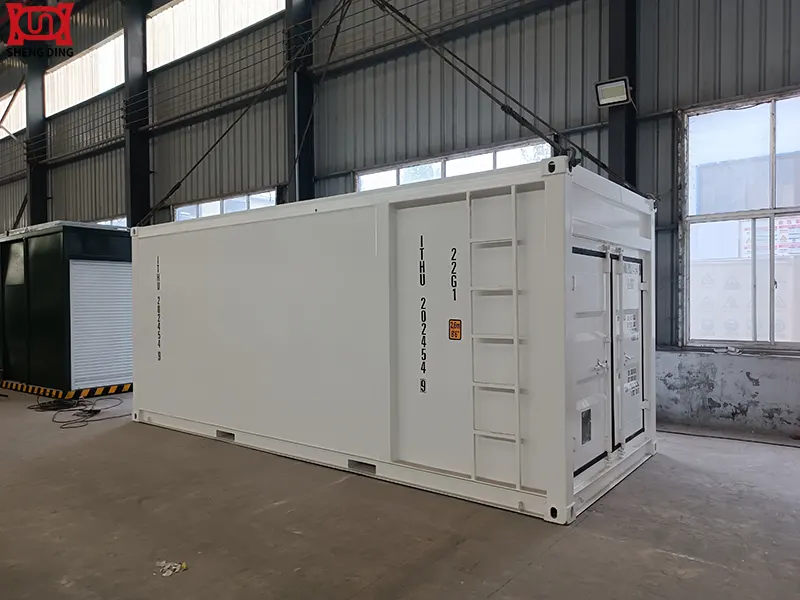
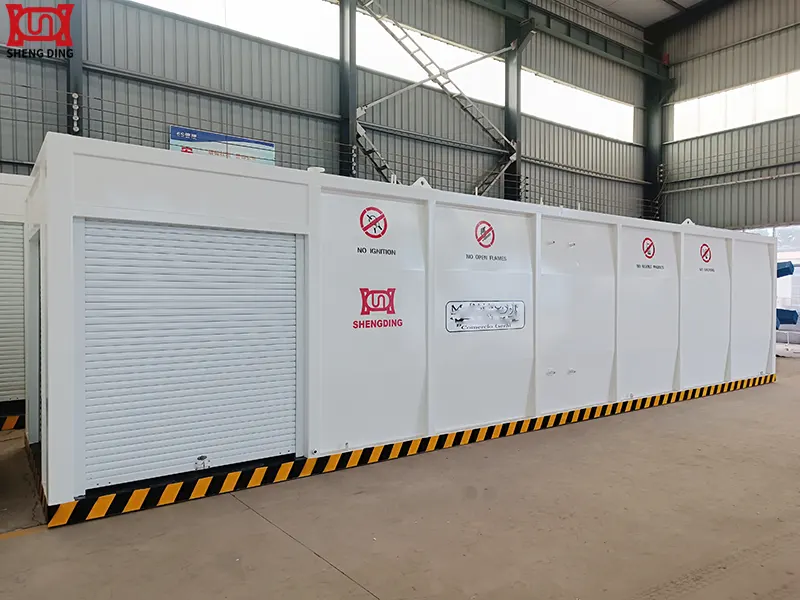
8. Shengding Skid-mounted fuel Station Corrosion Prevention
Shengding Containers has been engaged in the production, R&D, and sales of skid-mounted fuel stations for many years. It possesses a relatively complete and systematic system for corrosion prevention of skid-mounted fuel stations. In addition to the measures explained above, Shengding Containers has summarized two other important methods.
- The bottom and walls of the explosion-proof tanks in skid-mounted fuel stations are in prolonged contact with the fuel, thus experiencing a relatively high degree of corrosion. Therefore, to prevent corrosion at the bottom of the tanks, an anti-corrosion coating should be applied beforehand to reduce damage.
- Secondly, the tank walls are also crucial, as they are in direct contact with the fuel. Any leaks can lead to fuel deterioration and subsequent corrosion of the tank walls. Therefore, anti-corrosion measures for the tank walls are extremely important. Furthermore, the chosen coating must ensure it does not impair fuel quality or contaminate the fuel.
Conclusion
For skid-mounted fuel stations, corrosion prevention is not an optional "cosmetic" project, but a core element ensuring safe, stable, and compliant operation, directly impacting equipment lifespan, operating costs, and environmental safety. Neglecting corrosion prevention is like planting a time bomb for future major safety, environmental, and economic accidents. Therefore, systematic corrosion prevention measures must be implemented and managed as a top priority throughout the entire lifecycle of design, construction, and operation. The above are the anti-corrosion measures for skid-mounted fuel stations compiled and released by Shengding Containers. We hope that the above information can be helpful for you in the future maintenance of skid-mounted fuel stations.
Written by
TAIAN SHENGDING METAL CONTAINER MANUFACTURING CO., LTD.
Editor Wang
WhatsApp:+86 152 5486 3111
Email:shengdingtank@126.com


- WhatsApp
- E-MailE-Mail:shengdingtank@126.com
- WeChatWeChat:15254863111