Relevant measures and importance of anti-static measures for mobile fuel stations


Mobile fuel stations, due to their high mobility and open-air operation, are widely used in the oil storage field. However, they also have the highest safety requirements, especially regarding electrostatic discharge (ESD) protection. This is mainly because static electricity is one of the main ignition sources for fires and explosions during the operation of mobile fuel stations. Today, Shengding Containers will share the relevant measures and importance of ESD prevention for mobile fuel stations, hoping that the following explanation will be helpful for your future use of mobile fuel stations.
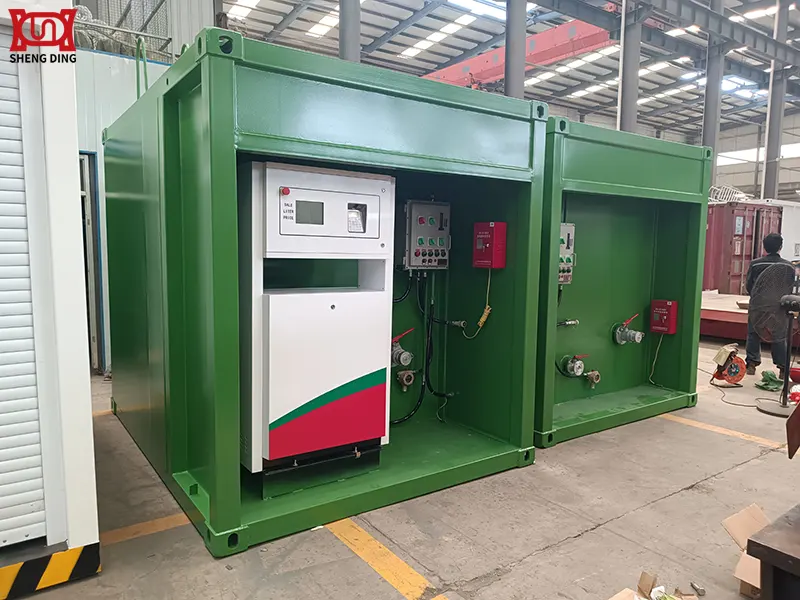
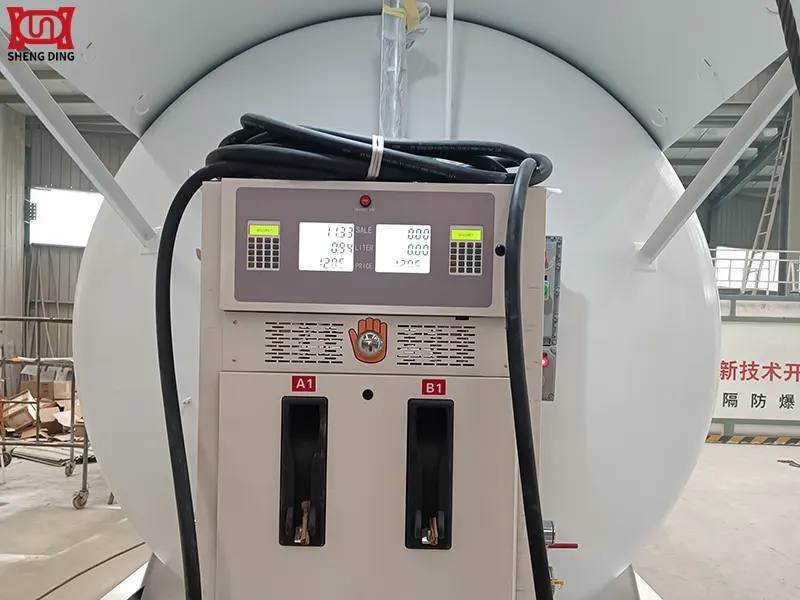
1. Core Safety Principles
1.1. Equipotential Bonding and Grounding:
This is the most critical measure. Ensure that all metal components (tanks, fuel dispensers, pipelines, vehicle body) are reliably connected via copper wires and ultimately connected to a dedicated grounding rod.
- Grounding Rod: It should be driven into moist soil at least 1.5 meters deep. The grounding resistance value is generally required to be less than 10 ohms (subject to confirmation according to local regulations). In dry sandy areas, salt water can be poured in to reduce resistance.
- Mobile Connection: Before each operation, the grounding wire must be connected and its effectiveness confirmed before proceeding with any work. After the operation is completed, disconnect the oil pipe and then remove the grounding wire.
1.2. Controlling the oil unloading and refueling flow rate:
- The initial flow rate should be controlled within 1 m/s to prevent the rapid generation of static charge. Once the oil pipe outlet is submerged in liquid, the flow rate can be appropriately increased, but the entire process should be smooth.
- Use a refueling machine with automatic flow rate control.
2. Equipment and Process Measures
2.1. Anti-static Measures for Tank and Chassis
Anti-static grounding system
- The mobile refueling station tank must be equipped with a dedicated grounding electrode. The grounding resistance value must be <=10ohm (standard value for anti-static grounding in flammable and explosive locations). The grounding electrode should be made of galvanized angle steel or copper rod, buried at a depth of not less than 2.5m, ensuring reliable conductivity with the earth.
- A copper braided strip (cross-sectional area ¡Ý16mm²) must be used to bridge the tank and chassis frame to eliminate potential differences between different metal parts and prevent the generation of electrostatic sparks.
- When a mobile refueling station is parked and operating, a temporary grounding stake must be connected. Refueling and unloading operations are strictly prohibited without grounding.
Tank Structure Optimization
- The inner wall of the tank is coated with a conductive, anti-corrosion coating (volume resistivity <= 10ohm) to prevent the accumulation of static charge generated by friction between the fuel and the tank wall.
- An elliptical head + baffle design is adopted to reduce turbulent friction during vehicle movement or fuel sloshing, thus reducing static electricity generation.
2.2. Anti-static Measures for the Delivery and Refueling System
Anti-static Measures for Pipelines and Valves
- Conductive rubber hoses or rigid metal pipes are used for fuel delivery pipelines; insulating plastic pipes are strictly prohibited. Copper braided straps are used to bridge different sections of the pipeline to ensure the conductive continuity of the entire delivery pipeline.
- Valves, filters, and other fittings are made of metal and reliably grounded to the pipeline to eliminate potential differences between the fittings and the pipeline.
Anti-static Design of Refueling Gun
- An anti-static refueling gun must be used. The gun head has a built-in conductive spring. During refueling, the metal part of the gun head contacts the vehicle's fuel tank opening first, achieving equipotential bonding and preventing discharge due to potential differences during refueling.
- The refueling hose has a built-in conductive steel wire to ensure that static electricity on the inner and outer layers of the hose can be conducted to the grounding system.
Control of Delivery Flow Rate
- The delivery flow rate for gasoline should be <=4.5m/s, and for diesel <= 6m/s to avoid generating large amounts of static electricity from high-speed turbulence. Bottom-entry refueling should be used during unloading and refueling to reduce fuel splashing and mixing with air, thus lowering the probability of static electricity generation.
2.3. Environmental and Equipment Maintenance Anti-static Measures
Control of Ambient Humidity
- The relative humidity of the mobile refueling station operating area should be maintained between 45% and 65%. Higher humidity increases air conductivity, accelerating static electricity dissipation. Humidification can be achieved through spraying during dry seasons.
Regular Inspection and Maintenance
- Check the anti-static grounding resistance monthly, and inspect the integrity of the copper braided bridging tape and conductive hose quarterly. Replace any broken or aged parts immediately.
- Regularly clean impurities and moisture from the tank to prevent friction between impurities and oil from exacerbating static electricity generation.
Install Static Electricity Monitoring Devices
- Install static electricity potential monitors on the tank and at the filling nozzle to monitor static electricity potential changes in real time. When the potential exceeds the safe threshold (generally 1kV), an automatic alarm will sound and the power to the delivery pump will be cut off.
3. Personnel Operation and Protective Measures
- 3.1. Proper Attire: Operators must wear anti-static work clothes and anti-static shoes. Wearing synthetic fiber clothing or shoes with insulated soles is strictly prohibited.
- 3.2. Human Body Static Electricity Discharge: Install a separate human body static electricity discharge device (touch ball). Before operation, especially before getting on or off vehicles or touching refueling equipment, the discharge device must be touched to eliminate static electricity carried by the body.
- 3.3. Prohibited Dangerous Behaviors:
- During operation, it is strictly forbidden to remove clothing, pat clothes, or comb hair.
- The use of non-explosion-proof communication tools (mobile phones) and electronic devices is prohibited.
- Vehicle repair, hammering, or other operations that may generate sparks are strictly prohibited at the work site.
- 3.4. Certification and Training: Operators must undergo professional training, understand the hazards of static electricity and prevention measures, and pass the assessment before being allowed to work.
4. Environmental and Site Management
- 4.1. Weather Monitoring: In thunderstorms or lightning, all refueling and unloading operations must be immediately stopped.
- 4.2. Fire Emergency Preparedness: Sufficient and suitable dry powder fire extinguishers, fire blankets, and fire sand must be available on site. Operators should be familiar with their location and usage.
- 4.3. Demarcation of Warning Zones: Warning lines and signs should be set up at the work site to prohibit unauthorized personnel and vehicles from entering.
- 4.4. Maintain Cleanliness: Clean up oil stains on the ground promptly to prevent oil and gas accumulation.
5. Special Precautions for Mobile Refueling Trucks
- 5.1. Vehicle Itself: The tank must have a reliable electrostatic discharge connection to the chassis. 5.1. Static Electricity Discharge During Operation: Static electricity generated during operation is released via conductive rubber straps.
- 5.2. Operational Stability: When parking for operation, a firm, level surface should be selected, and the handbrake should be engaged to prevent the grounding wire or oil pipe from being broken due to vehicle movement.
- 5.3. Dual Grounding: In addition to the vehicle's own grounding, during unloading, the tanker truck and the mobile refueling truck should be independently grounded, and then connected using a conductive jumper cable to ensure consistent potential.
6. The Core Importance of Static Electricity Prevention
6.1. Eliminating the Root Cause of Fire and Explosion Accidents
- The minimum ignition energy of gasoline is only 0.2 mJ. During the fuel transportation, vehicle refueling, and tank shaking processes at mobile refueling stations, the friction between the fuel and the pipes, valves, and the inner wall of the refueling nozzle, as well as the turbulent movement of the fuel itself, generate a large amount of static charge. If static charge cannot be discharged in time, it will accumulate to a certain potential and cause electrostatic discharge. The resulting electric spark is enough to ignite the explosive mixture formed by fuel volatilization (gasoline vapor mixed with air at a concentration of 1.4%~7.6% will explode upon contact with an ignition source), causing major safety accidents such as equipment damage and personnel casualties.
6.2. Ensuring Equipment and Personnel Safety
- Besides causing combustion and explosion, static electricity can also cause electrostatic breakdown in the electronic control system of mobile fuel stations (such as level sensors and explosion-proof frequency converters), leading to equipment malfunction. Simultaneously, static electricity carried by the human body can discharge upon contact with metal parts such as refueling nozzles and tanks, potentially causing electric shock injuries to operators and affecting operational stability.
6.3. Compliance with Regulations and Standards
- My country's Technical Standard for Automobile Fueling, Gas Filling, and Hydrogen Refueling Stations (GB 50156-2021) and General Guidelines for Preventing Static Electricity Accidents (GB 12158-2006) clearly require that flammable and explosive liquid storage and transportation facilities must be equipped with complete anti-static grounding and bridging devices. Mobile refueling stations with inadequate anti-static measures are strictly prohibited from operation.
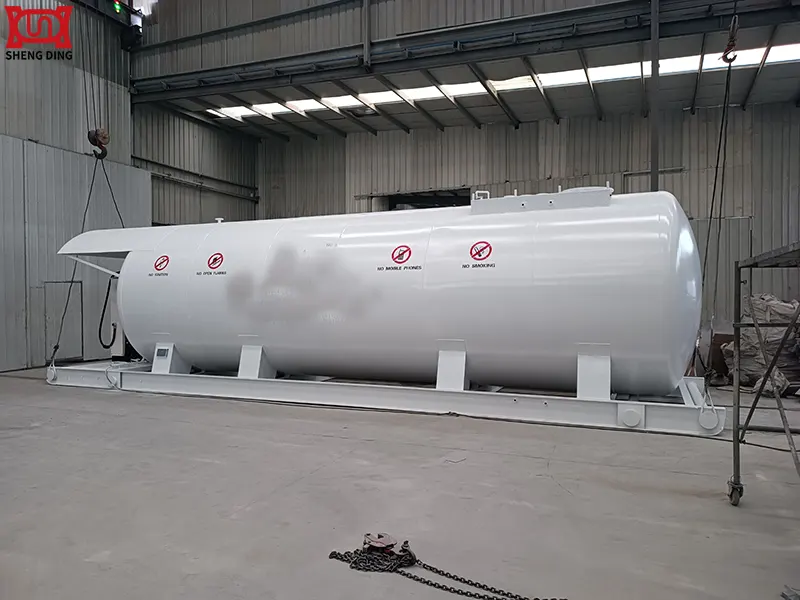
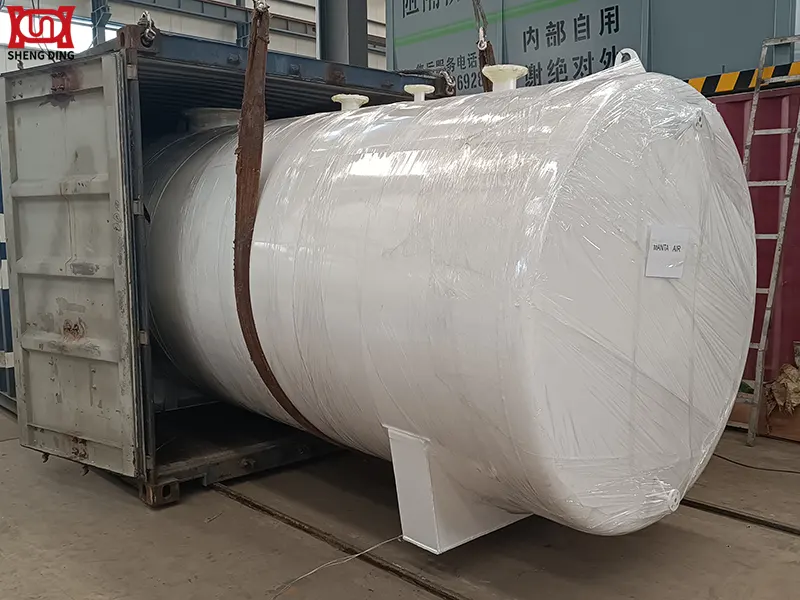
7. Key Summary:
- Ground First, Then Operate: The grounding wire is the "lifeline" and must be connected and its effectiveness confirmed first.
- Start Slowly, Prevent Splashing: Control the initial flow rate and use immersion refueling/unloading.
- Wear Anti-static Protective Equipment, Touch Release Device: Personnel should take personal protective measures and release static electricity from their bodies before operation.
- Check Equipment, Maintain Regularly: Regularly check the static electricity conduction path and grounding resistance.
- Observe Weather, Prepare for Firefighting: Close operations during severe weather; keep firefighting equipment readily available.
8. Conclusion
Mobile fuel stations are flammable and explosive hazardous chemical storage and transportation facilities. Their operating media are low-flashpoint hydrocarbon fuels such as gasoline and diesel. During loading, unloading, refueling, and transportation, static electricity accumulation and discharge can easily cause fires and explosions. Therefore, static electricity prevention is one of the core aspects of mobile fuel station safety management. Its safety management must strictly comply with the relevant local regulations and standards, and establish and strictly implement the unit's safety operating procedures and emergency plans. Safety is paramount; static electricity prevention measures must be implemented in every detail. Shengding Container Co., Ltd. specializes in producing various models of mobile fuel stations and can customize production according to customer needs, fully complying with relevant local standards. Please contact us for inquiries.
Written by
TAIAN SHENGDING METAL CONTAINER MANUFACTURING CO., LTD.
Editor Wang
WhatsApp:+86 152 5486 3111
Email:shengdingtank@126.com


- WhatsApp
- E-MailE-Mail:shengdingtank@126.com
- WeChatWeChat:15254863111