6 Fastest-Growing Markets for Skid-Mounted Fuel Stations in 2026


The global skid-mounted gas station market is projected to grow from US$899 million in 2025 to US$1,317 million by 2032, a compound annual growth rate of 5.7%. That headline figure, however, masks a far more uneven reality. Growth is not spread evenly across the globe. It is concentrating in specific markets where infrastructure gaps, regulatory reform and large-scale industrial projects are colliding at the same time.
This analysis examines the six fastest-growing markets for skid-mounted fuel stations in 2026, using market data, deployment cases and regulatory developments to identify where demand is accelerating fastest - and why.
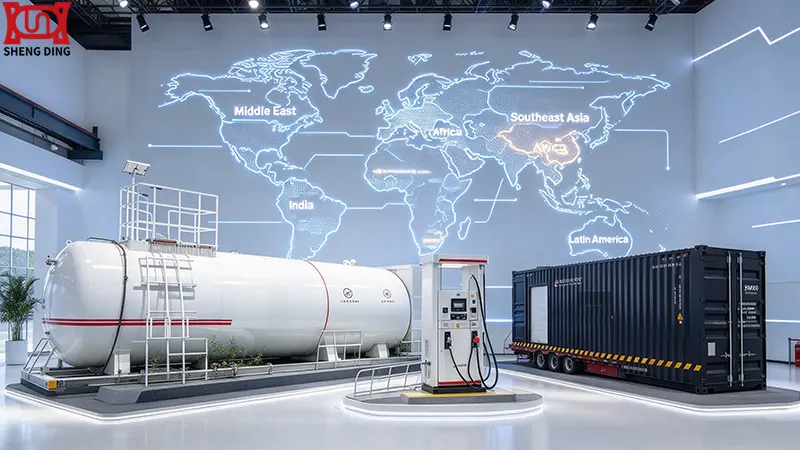
Global Market Context: A Steady Base, Concentrated Growth
Before examining individual markets, it helps to establish the baseline.
Within China, the domestic market for barrier explosion-proof skid-mounted fueling devices is projected to reach approximately RMB 8 billion (over USD 1.1 billion) in 2026, with an annual growth rate of 15% to 18% and annual shipments exceeding 8,000 units. That is significantly faster than the global average, reflecting China's role as both the largest manufacturing hub and an active deployment market.
The broader portable fuel station market - which includes skid-mounted and containerized systems - was valued at US$1,503 million in 2025, projected to reach US$1,967 million by 2032 at a 3.9% CAGR. Skid-mounted and containerized systems constitute the core commercial product formats within that total.
What separates the fastest-growing markets from the rest is not simply economic growth. It is the presence of a specific combination: infrastructure gaps that make permanent stations uneconomical, large-scale projects that require fuel in remote locations, and regulatory frameworks that are actively opening space for mobile solutions.
| Metric | 2025 | 2026 | Forecast | CAGR |
| Global skid-mounted gas station market | US$899M | - | US$1,317M (2032) | 5.7% |
| Portable fuel station market | US$1,503M | - | US$1,967M (2032) | 3.9% |
| China barrier explosion-proof skid market | - | ~RMB 8B | 8,000+ units/year | 15-18% |
Market 1: Africa - Mining Demand Meets Regulatory Modernisation
Africa's growth is driven by a combination of resource extraction and the practical impossibility of permanent construction in many operating locations.
A mining contractor in Zambia winning a 12-month copper extraction contract needs diesel on site within three weeks. Permanent construction is impossible, and every day without fuel costs the project thousands of dollars in lost productivity. A 40,000L skid-mounted unit can drop onto a prepared pad, connect to power and start pumping within five days.
This is not an isolated case. Deployment reports reference a three-unit skid fleet for a Sudan gold mine with dual diesel and lubricant compartments, alongside remote iron ore mines in West Africa that lack roads, land title and environmental permits on day one. Average site readiness to first fuel in these deployments is 48 hours after the skid is set on compacted gravel.
The growth driver is structural. Fixed fuel depots require infrastructure that simply does not exist at the point of use. Skid-mounted units turn fuel supply from a construction project into a logistics operation.
Africa's fastest-growing segments are mining, construction and remote logistics - applications where the alternative to a skid-mounted station is not a traditional station, but no fuel supply at all.
Market 2: Southeast Asia - Industrial Expansion and Port Infrastructure
Southeast Asia's demand is less about resource extraction and more about the speed of industrial and infrastructure development.
Island port projects in Indonesia represent a recurring use case: locations that have none of the prerequisites for a fixed fuel depot on day one, but require reliable fuel supply for construction and operations. A 40ft container fuel station for a Philippine reclamation project illustrates the scale of infrastructure-driven demand in the region.
The regional market structure reflects this. ASEAN mobile container fuel stations are tracked as a distinct market segment, with forecasts extending through 2032. The demand is not speculative - it is tied to projects that are already funded and underway.
| Country | Primary Application | Typical Deployment |
| Indonesia | Island port construction | 40ft container stations |
| Philippines | Land reclamation projects | 40ft container stations |
| Vietnam | Industrial parks and logistics | Skid-mounted units |
| Thailand | LNG/CNG infrastructure | Prefabricated skid units |
What makes Southeast Asia fast-growing is the compressed timeline. A logistics operator adding a fleet of vehicles or a port project moving into a new phase cannot wait 12 to 18 months for a permanent station. Skid-mounted and containerized units compress that timeline to days or weeks.
Market 3: Middle East (GCC) - Giga-Projects and the Economics of Mobility
The Gulf Cooperation Council states are undergoing a structural shift in fuel distribution, driven by the scale and geography of current investment.
Building a traditional fuel station in the GCC is capital-intensive: land acquisition, regulatory approvals, civil works, utility connections and long construction timelines. For distribution companies, this creates a high fixed-cost model that is difficult to justify for remote or temporary demand.
Urban expansion, logistics growth, construction activity, fleet operations and remote industrial projects have increased the need for fuel availability beyond conventional petrol stations. Mobile fuel stations allow suppliers to deploy based on demand, move between locations and serve both planned and emergency requirements - without committing to fixed infrastructure.
Saudi Arabia's fuel station market alone is projected at US$45.01 billion in 2026, growing to US$54.89 billion by 2031 at a 4.05% CAGR. Within that total, the mobile segment is capturing share precisely because it avoids the fixed-cost burden of permanent construction.
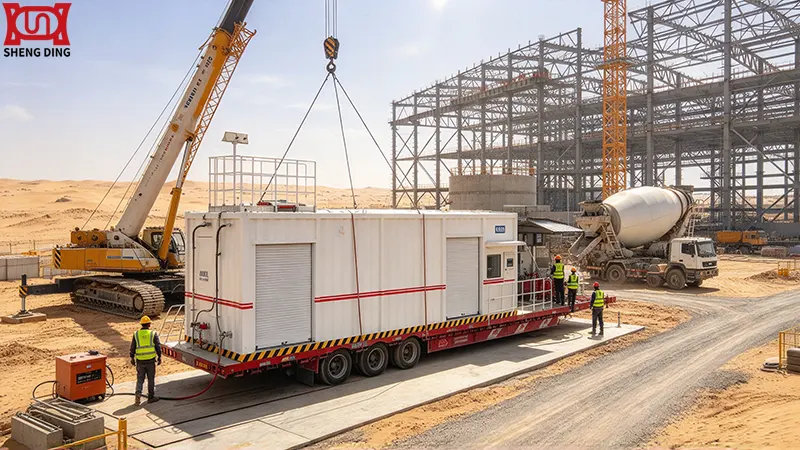
Market 4: Latin America - Regulatory Reform Unlocks a Latent Market
Latin America's growth story in 2026 is defined by a single regulatory change: Argentina's decision to formally recognise mobile and modular fuel stations.
In December 2025, the Argentine government incorporated mobile service stations into the official registry of fuel retail outlets, enabling localities without fixed stations - or where fixed stations have deteriorated - to access fuel through rapidly deployable units. The framework, established under Resolution 504/2025, requires compliance with international standards including NFPA 385 and UL-2085, mandating double-walled tanks, automatic shut-off and leak detection systems, spill control kits and certified extinguishers.
The immediate market response was swift. YPF, Argentina's state energy company, launched the country's first mobile service station in January 2026 under the new framework. Industry participants view the regulation as opening new market opportunities rather than simply formalising existing practice.
The significance extends beyond Argentina. A major Latin American economy creating a compliant, standards-based pathway for mobile fuel stations signals to the rest of the region that the model is viable at scale. For manufacturers with certified double-walled skid-mounted units, the addressable market has expanded materially.
Market 5: Central Asia - Steady, Infrastructure-Driven Growth
Central Asia is a different kind of fast-growing market: less explosive, but structurally durable.
The regional petrol and oil dispensing pump market is poised for a decade of moderated growth, technological upgrading and increasing stratification from 2026 to 2035. Growth will not be explosive in volume terms, but will compound steadily, driven by economic development, fleet renewal and the replacement of obsolete infrastructure.
| Country | Growth Character | Key Application |
| Kazakhstan | Anchors absolute volume | Mining and oil & gas operations |
| Uzbekistan | Highest percentage growth | Retail fuel network maturation |
| Kyrgyzstan | Moderate percentage growth | Border-road construction camps |
| Turkmenistan | Resource-driven | Remote extraction sites |
Kazakhstan anchors absolute volume, but the highest percentage growth rates are anticipated in Uzbekistan and, to a lesser extent, Kyrgyzstan as their retail fuel networks mature. Border-road construction camps in Central Asia represent a recurring skid-mounted use case: locations lacking roads, land title and environmental permits on day one, where a factory-integrated unit shipped in a 40ft frame provides immediate fuel access.
For skid-mounted suppliers, Central Asia's opportunity is less about displacing fixed stations and more about serving remote industrial and infrastructure demand that fixed networks will never reach economically.
Market 6: India - Scale, Policy Shift and the Mobile CNG Opportunity
India's growth is driven by scale and a policy environment that is actively removing barriers to mobile refuelling.
The estimated market potential for doorstep fuel delivery in India is projected to be approximately US$1.25 billion by 2026, with the segment in a significant growth phase. Separately, India will require an estimated 180,000 petrol pumps by 2035, with a large proportion in rural and semi-urban areas where the economics do not support permanent station construction.
The most significant policy development is the notification of rules allowing mobile refuelling units to carry CNG and compressed biogas dispensing equipment to approved locations, including mines, ports and heavy machinery that cannot be brought to a conventional filling station. The rules specifically permit refuelling of non-transport vehicles in mines and notified ports, Indian Railways locomotives, approved vessels and heavy equipment subject to safeguards and risk assessments.
This is a structural unlock. Mobile CNG refuelling removes one of the largest infrastructure barriers to switching captive fleets from diesel to cleaner gas-based fuels. For skid-mounted and containerized fuel station manufacturers, India represents a market where policy is moving faster than fixed infrastructure can be built.
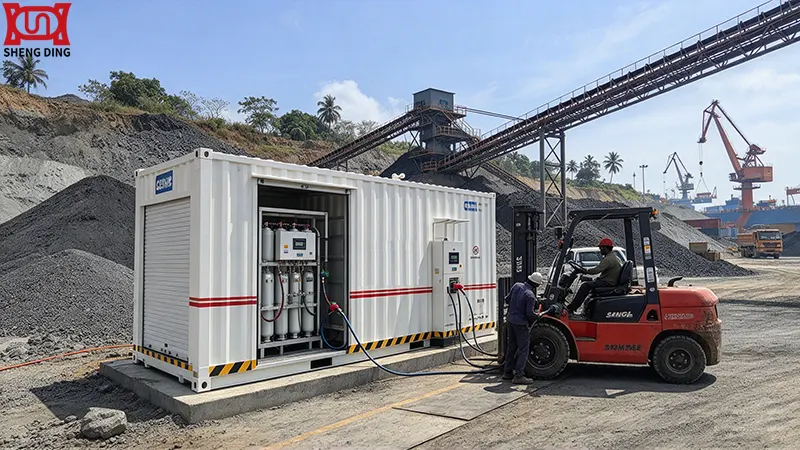
Comparative Overview: 6 Fastest-Growing Markets in 2026
| Market | Primary Growth Driver | Key Data Point | Growth Rate / Scale | Demand Character |
| Africa | Mining and remote construction | 48-hour site readiness to first fuel | Project-driven, high urgency | Acute |
| Southeast Asia | Port and industrial infrastructure | ASEAN tracked as distinct segment through 2032 | Compressed project timelines | Compressed |
| Middle East (GCC) | Giga-projects and fixed-cost avoidance | Saudi market US$45.01B (2026) --> US$54.89B (2031) | 4.05% CAGR in Saudi | High-value |
| Latin America | Regulatory reform (Resolution 504/2025) | YPF launched first mobile station Jan 2026 | Policy-unlocked, early-stage | Policy-driven |
| Central Asia | Infrastructure and fleet renewal | Steady CAGR through 2035; Uzbekistan fastest % | Moderated, compounding | Steady |
| India | Policy shift and doorstep delivery scale | US$1.25B doorstep market (2026) | 180,000 pumps needed by 2035 | Scale + policy |
Growth Rate Comparison: How the Six Markets Stack Up
| Market | Growth Indicator | Value | Relative Ranking |
| Africa | Mining project mobilisation speed | 3 weeks to first fuel | 1 (Fastest deployment) |
| India | Doorstep fuel market size (2026) | US$1.25B | 2 (Largest addressable) |
| Middle East (GCC) | Saudi fuel station market CAGR | 4.05% (2026-2031) | 3 (Highest absolute value) |
| Latin America | Regulatory unlock timeframe | Q4 2025 - Q1 2026 | 4 (Newest market) |
| Southeast Asia | Project timeline compression | Days vs. 12-18 months | 5 (Most compressed) |
| Central Asia | Market maturity horizon | 2026-2035 | 6 (Most durable) |
What Distinguishes the Fastest-Growing Markets
Across all six markets, a common pattern emerges. The fastest growth is not occurring where fuel demand is highest in absolute terms. It is occurring where the gap between fuel demand and fixed infrastructure capability is widest.
In each case, three conditions align:
- A large-scale project or industrial demand centre exists in a location where permanent station construction is uneconomical or impossible.
- A regulatory or policy pathway allows mobile or skid-mounted units to operate legally and access financing or formal markets.
- The economics of fuel logistics - downtime, deadhead travel, theft risk - are severe enough that the payback period for a skid-mounted station is measured in months rather than years.
Where these conditions are absent, growth is slower. Where they coincide - as they do in African mining regions, GCC giga-projects and post-reform Argentina - adoption accelerates sharply.
For manufacturers and exporters, the implication is clear: the fastest-growing skid-mounted fuel station markets are not necessarily the largest economies, but the ones where fixed infrastructure is structurally unable to keep pace with industrial demand.
Conclusion
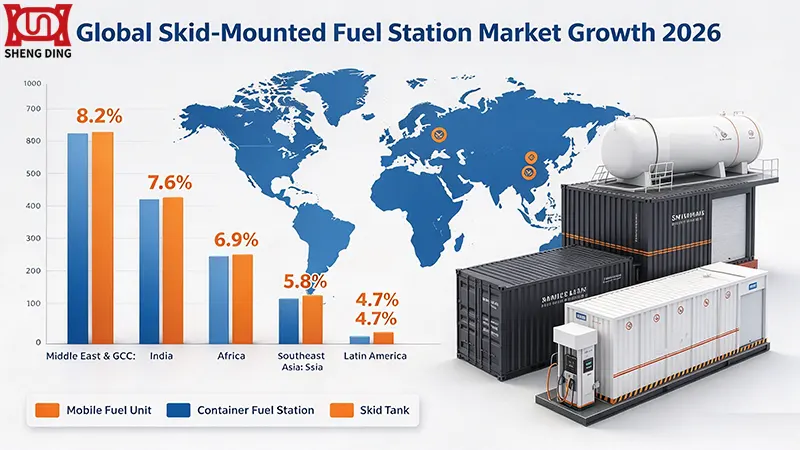
The global skid-mounted fuel station market is growing at 5.7% CAGR, but the real opportunity lies in the markets outpacing that average. Africa, Southeast Asia, the Middle East, Latin America, Central Asia and India each present a distinct growth profile - from mining-driven urgency to regulatory unlock to policy-driven scale.
What they share is a structural gap: fixed fuel infrastructure cannot reach where industrial demand is going, and cannot be built fast enough to keep up. Skid-mounted fuel stations fill that gap, and the data shows that demand is accelerating fastest precisely where the gap is widest.
Exploring opportunities in these fast-growing markets?
Shengding Container manufactures export-ready skid-mounted and container fuel stations with full certification documentation, regional compliance support and global shipping logistics.
Written by
TAIAN SHENGDING METAL CONTAINER MANUFACTURING CO., LTD.
Editor Wang
WhatsApp:+86 152 5486 3111
Email:shengdingtank@126.com


- WhatsApp
- E-MailE-Mail:shengdingtank@126.com
- WeChatWeChat:15254863111