Skid-Mounted Fuel Station Explosion-Proof Technology: 7 Safety Features Buyers Must Verify


The tank arrived at the port with a fresh coat of paint and a compliance certificate tucked inside the control cabinet. But when the site engineer opened the panel, there was no ATEX certification for the electrical components. The leak detector displayed a factory test code no one knew how to reset. The buyer had purchased an explosion-proof skid-mounted fuel station - but not the proof that it was actually safe.
This scenario happens more often than it should. Buyers compare tank volumes, flow rates, and prices, then treat safety systems as background features. In reality, these systems are the difference between a station that passes inspection and one that sits idle while permits are rejected.
Here are the 7 safety features every buyer must verify before signing the purchase order.
Introduction: Why Explosion-Proof Technology Matters
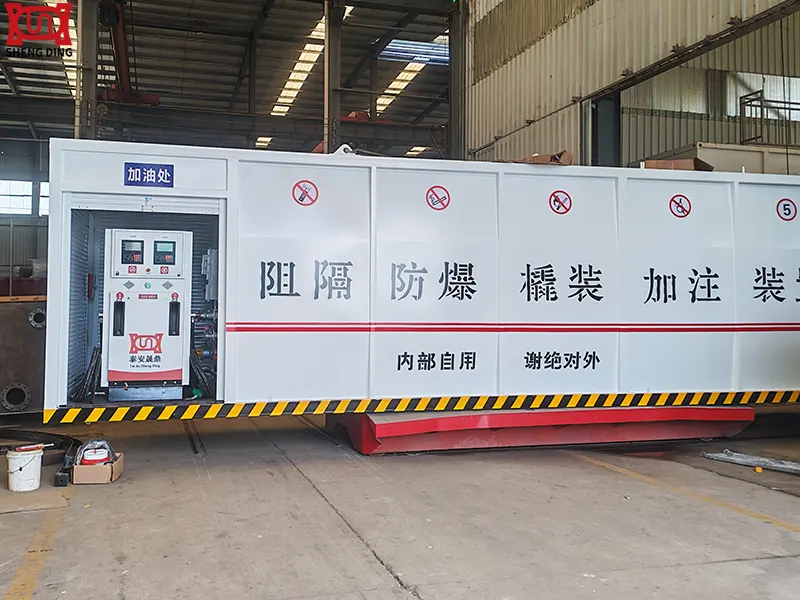
A skid-mounted fuel station - also known as a barrier explosion-proof skid-mounted fueling device - is a factory-built, transportable fueling system that integrates storage tanks, pumps, dispensers, and safety equipment on a single steel frame. Unlike traditional underground tanks, these units sit above ground, exposed to the elements, vehicle impacts, and potential fire hazards. That's why they require significantly more safety features than buried tanks.
The core technology that makes skid-mounted stations viable is barrier explosion-proof technology - a system that prevents tank explosions even under extreme conditions. According to AQ/T 3002-2021, the industry standard for barrier explosion-proof skid-mounted fueling devices, all such units must meet specific technical requirements for design, manufacturing, and installation. GB 50156-2021, China's technical standard for automobile fueling stations, further mandates that skid-mounted units must be equipped with explosion-proof devices or materials.
In 2026, the domestic market for barrier explosion-proof skid-mounted fueling devices in China is projected to reach approximately RMB 8 billion (over USD 1.1 billion), with an annual growth rate of 15% to 18% and annual shipments exceeding 8,000 units. But with rapid growth comes a flood of suppliers - some with genuine manufacturing depth, others little more than assembly shops. Verifying these 7 safety features is your best defense against buying a station that fails inspection - or worse, creates a catastrophic safety incident.
Safety Feature 1: Barrier Explosion-Proof Tank Fill
What It Is
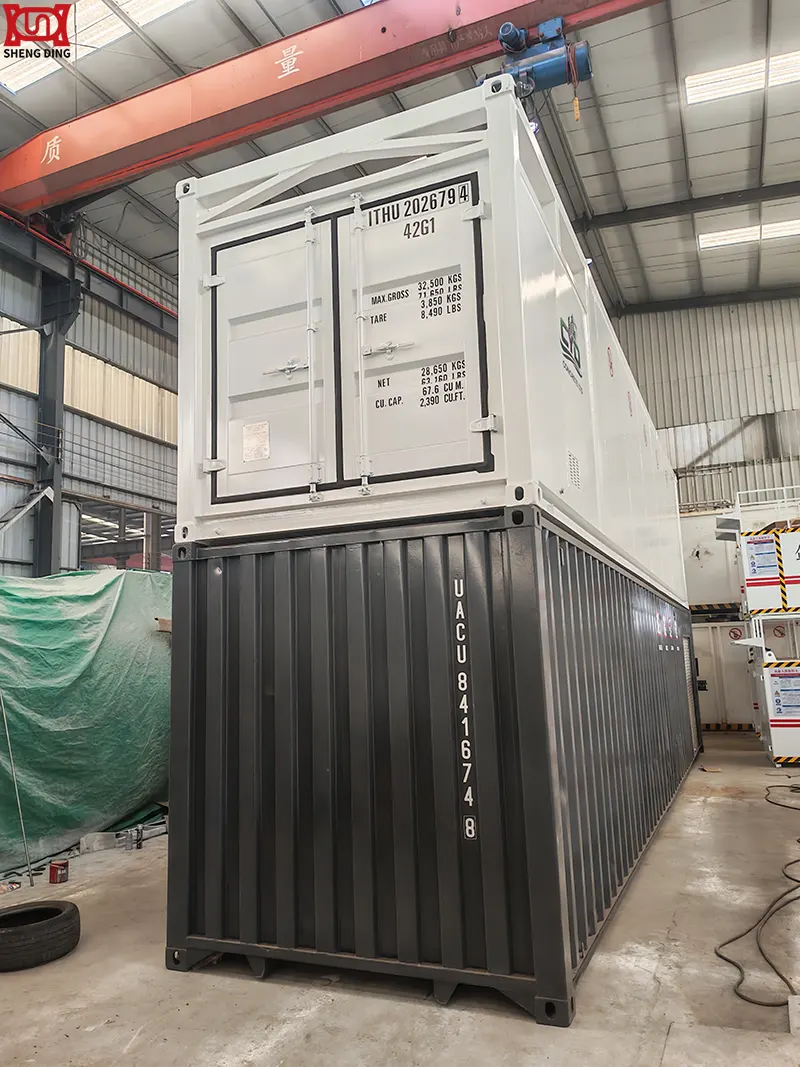
Barrier explosion-proof technology involves filling the storage tank with a honeycomb aluminum alloy mesh material. This material creates a cellular structure inside the tank that stops flame propagation - if one section ignites, the flame cannot spread to the rest of the tank.
How It Works
The aluminum alloy mesh has two critical properties:
- Thermal conductivity - rapidly absorbs heat from any combustion, preventing pressure buildup
- Static dissipation - prevents static charge accumulation that could ignite fuel vapors
When a tank is filled with this material, it will not explode even when exposed to:
- Open flames
- Static electricity
- Welding sparks
- Gunfire
- Impacts
- Lightning strikes
What to Verify
- Does the tank contain certified barrier explosion-proof material?
- Is the material installed according to AQ 3002 specifications?
- Has the manufacturer provided third-party test reports confirming the material's effectiveness?
- Does the tank meet the explosion pressure rise value requirement of <=0.05MPa?
Red flag: "We use explosion-proof materials" - but the supplier cannot name the certification standard or provide test reports.
Safety Feature 2: Double-Walled Tank with Continuous Leak Detection
What It Is
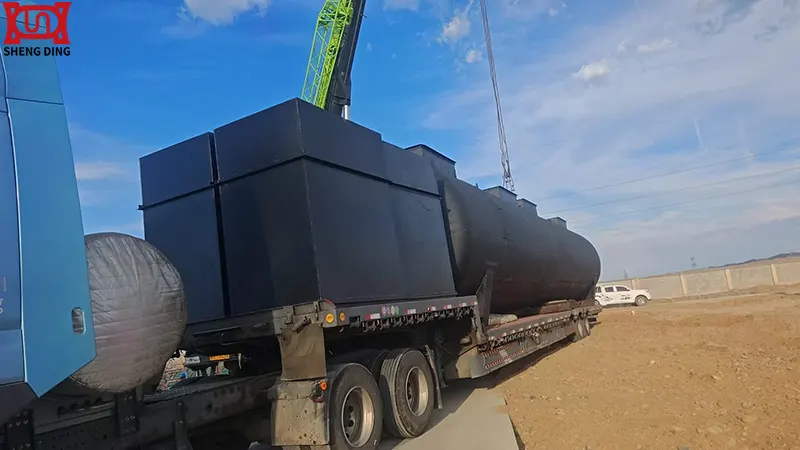
Modern skid-mounted fuel stations use double-walled steel tanks - an inner tank that holds the fuel and an outer tank that serves as secondary containment. The space between the two walls (the interstitial space) is continuously monitored for leaks.
Why It Matters
If the inner wall develops a crack or pinhole leak, fuel enters the interstitial space and triggers an alarm before any fuel reaches the environment. This provides early warning and prevents soil and groundwater contamination - a critical requirement for environmental compliance.
Technical Requirements
According to GB 50156-2021:
- The inner tank design pressure must be >=0.8MPa
- The outer tank can be designed for atmospheric pressure
- Leak detection must be capable of identifying leaks at any point on either the inner or outer wall
What to Verify
- Is the tank double-walled steel construction?
- Is there a continuous leak detection system monitoring the interstitial space?
- Will the system trigger an audible and visual alarm upon detecting a leak?
- Has the system been tested and calibrated before shipment?
Red flag: Single-wall tanks or double-wall tanks without functioning leak detection.
Safety Feature 3: Automatic Fire Suppression System
What It Is
Because skid-mounted stations sit above ground, they are more vulnerable to fire than buried tanks. An automatic fire suppression system is therefore mandatory. The system is typically positioned above the dispenser area and activates automatically when temperatures reach a critical threshold.
Technical Requirements
According to AQ 3002:
- The activation temperature must not exceed 95oC
- If set too low, the system triggers false alarms
- If set too high, it fails to activate in time during a real fire
What to Verify
- Is an automatic fire extinguisher installed above the dispenser?
- Is the activation temperature <=95oC?
- Are portable dry powder extinguishers, wheeled extinguishers, fire sand, and fire blankets provided at designated locations?
- Has the system been tested and does it have a certification?
Red flag: "You can buy fire extinguishers locally" - automatic, integrated systems are not optional.
Safety Feature 4: Emergency Pressure Relief Device
What It Is
When a fire occurs near a skid-mounted fuel station, the storage tank can be exposed to intense heat. As temperature rises, so does the pressure inside the tank. Without a way to release that pressure, the tank could rupture or explode.
The emergency pressure relief device automatically vents excess pressure when it reaches dangerous levels, preventing tank rupture during fire exposure.
Technical Requirements
GB 50156-2021 requires:
- Tanks must withstand 1 hour of standard liquid fire exposure at 90% capacity without leaking or failing
- Emergency pressure relief must function automatically without operator intervention
What to Verify
- Is an emergency pressure relief device installed on the tank?
- Has the tank passed fire exposure testing (1-hour standard liquid fire)?
- Are there test reports from an accredited third-party laboratory?
Red flag: "Our tanks are strong enough without relief devices" - this is not compliant with any major standard.
Safety Feature 5: Overfill Prevention & High-Temperature Shut-Off
What It Is
Two critical safety devices work together to prevent fuel spills and fire escalation:
Overfill Prevention Device
- A high-level alarm activates when the tank reaches 90% capacity
- An automatic shut-off valve engages at 95% capacity, stopping fuel flow entirely
High-Temperature Automatic Shut-Off Valve
- Installed on the fuel outlet pipe
- Automatically closes when it detects dangerously high temperatures
- Cuts off the fuel supply to the dispenser, preventing additional fuel from feeding a fire
Why Both Matter
Overfill prevention stops spills during unloading. The high-temperature shut-off valve stops fuel from continuing to flow to a fire. Together, they prevent small incidents from becoming catastrophic ones.
What to Verify
- Does the system include a 90% capacity warning alarm?
- Does the system include a 95% capacity automatic shut-off valve?
- Is there a high-temperature automatic shut-off valve on the outlet pipe?
- Have these devices been tested and calibrated?
Red flag: "We don't include automatic shut-off - the operator can just stop the pump."
Safety Feature 6: Vapor Recovery System
What It Is
Fuel vapors are not just an environmental nuisance - they are a fire and explosion hazard. Skid-mounted fuel stations are required to have vapor recovery systems that capture fuel vapors during both unloading and dispensing.
How It Works
- During tanker unloading: Vapors displaced from the tank are captured and returned to the tanker
- During vehicle refueling: Vapors are drawn back into the storage tank
- The system reduces VOC emissions and prevents vapor accumulation around the station
Technical Requirements
GB 50156-2021 explicitly requires that gasoline equipment in skid-mounted stations use both unloading vapor recovery and dispensing vapor recovery systems.
What to Verify
- Does the system include both unloading and dispensing vapor recovery?
- Does it include vapor leak monitoring with audible and visual alarms?
- Has the system been tested for vapor recovery efficiency?
- Does the system meet local environmental emission standards?
Red flag: "Vapor recovery is optional" - it is not optional under GB 50156-2021.
Safety Feature 7: Lightning Protection, Static Grounding & ESD
What It Is
Because skid-mounted fuel stations sit above ground and handle flammable liquids, they are exposed to lightning strikes and static electricity buildup - two of the most common ignition sources at fueling sites.
Three Critical Sub-Systems
Lightning Protection
- Lightning rods and grounding systems protect the station from direct strikes
- Must comply with QX/T450-2018 (Technical specification for lightning protection of barrier explosion-proof skid-mounted fueling devices)
Static Electricity Grounding
- Dissipates static charge generated during fuel transfer
- Prevents sparks that could ignite fuel vapors
- Many systems include a grounding alarm interlock - if the grounding connection is poor, the system alarms and prevents fueling from starting
Emergency Shutdown System
- A single emergency stop button shuts down the entire system
- Automatically closes all relevant pipeline valves
- Cuts power to pumps and dispensers in an emergency
- Can be triggered manually by operators or automatically by sensors
What to Verify
- Does the system include lightning protection meeting QX/T450-2018?
- Is there a static grounding system with an alarm interlock?
- Is there a clearly labeled emergency stop button accessible to operators?
- Has the grounding resistance been tested and documented?
- Are all electrical components in hazardous areas explosion-proof rated (e.g., Ex d IIBT4)?
Red flag: "The electrician can handle grounding on-site" - grounding must be designed and tested as an integrated system.
Bonus: Additional Safety Requirements
Beyond these 7 core features, buyers should also verify:
| Requirement | Standard Reference |
| Secondary containment- capacity >=50% of total tank volume | GB 50156-2021 6.4.10 |
| Upper filling method - fuel inlet at the top to prevent spillage | AQ 3002 |
| Outlet pipe height - >=0.15m above tank bottom | AQ 3002 |
| Fire-resistant tank - withstands 1 hour of direct flame exposure | GB 50156 |
| Self-sealing quick-connect couplings for hose connections | AQ 3002 |
| Vent pipe - >=4m above ground, >=1.5m above tank top, with flame arrestor and breather valve | GB 50156-2021 6.4.5 |
| Impact protection - crash barriers on the roadside | GB 50156-2021 6.4.11 |
Quick Reference: 7 Safety Features Verification Checklist
| # | Safety Feature | Key Verification Point |
| 1 | Barrier Explosion-Proof Tank Fill | Honeycomb aluminum alloy; Combustion boost value <=0.05MPa; AQ 3002 certified |
| 2 | Double-Walled Tank + Leak Detection | Double-wall steel; continuous interstitial monitoring; alarm on any leak |
| 3 | Automatic Fire Suppression | Above dispenser; activation <=95oC; portable extinguishers provided |
| 4 | Emergency Pressure Relief | Automatic venting; 1-hour fire exposure tested |
| 5 | Overfill Prevention + High-Temp Shut-Off | 90% alarm; 95% auto shut-off; high-temp valve on outlet |
| 6 | Vapor Recovery System | Both unloading and dispensing recovery; leak monitoring |
| 7 | Lightning Protection + Grounding + ESD | QX/T450 compliant; grounding interlock; emergency stop button |
Conclusion
Barrier explosion-proof technology is the defining feature of skid-mounted fuel stations. It's what makes above-ground fuel storage safe in environments where traditional stations cannot be built. But the technology is only as good as the systems that implement it - and those systems are only as reliable as the supplier who builds them.
When evaluating a skid-mounted fuel station, don't just ask about capacity and price. Ask about every one of these 7 safety features. Request certificates, test reports, and third-party verification. Visit the factory if possible. And get everything in writing.
A compliant, properly equipped skid-mounted fuel station delivers 15% fuel cost savings and 80% less downtime for refueling logistics. A non-compliant station delivers inspection failures, regulatory fines, and unacceptable safety risks.
Choose wisely. Verify thoroughly. And never compromise on safety.
Ready to specify a skid-mounted fuel station with verified safety systems? Contact Shengding Container for transparent documentation, factory tours, and customized solutions backed by full-chain manufacturing expertise.
Written by
TAIAN SHENGDING METAL CONTAINER MANUFACTURING CO., LTD.
Editor Wang
WhatsApp:+86 152 5486 3111
Email:shengdingtank@126.com


- WhatsApp
- E-MailE-Mail:shengdingtank@126.com
- WeChatWeChat:15254863111