The 7 Specific Requirements for the Installation Environment of Skid-Mounted Fuel Stations in Africa


Africa's climate is complex and changeable, characterized by high temperatures and intense sunlight, torrential rains and floods, frequent sandstorms, and frequent thunderstorms. Furthermore, land policies, safety regulations, and environmental standards differ significantly from those in China. Additionally, the limited construction conditions at project sites such as mining areas and industrial parks impose more stringent requirements on the installation environment of skid-mounted fuel stations. To ensure compliant installation and safe and stable operation of skid-mounted fuel stations, and to mitigate geological hazards, climate risks, compliance loopholes, and safety accidents, while adhering to local African safety supervision, environmental protection, and land management regulations, and based on practical experience from overseas projects, the seven core specific requirements for the installation environment of skid-mounted fuel stations in Africa are specified below.
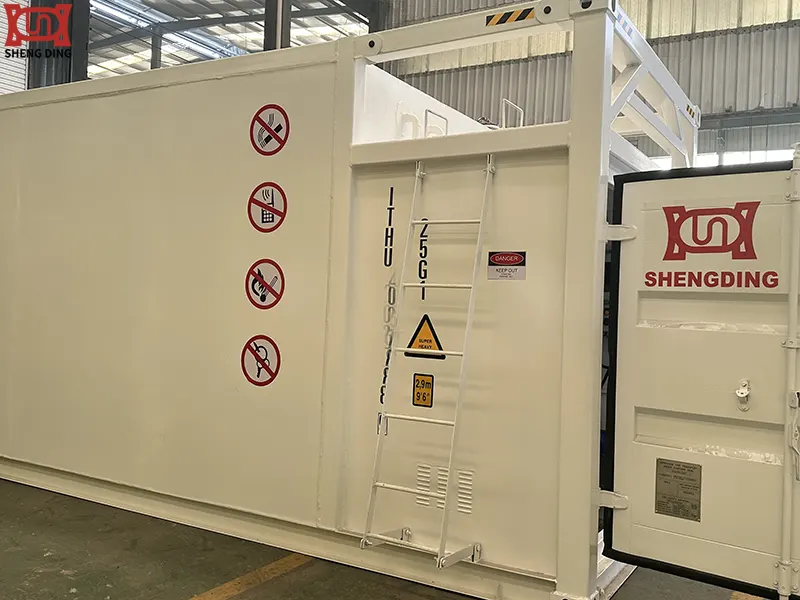
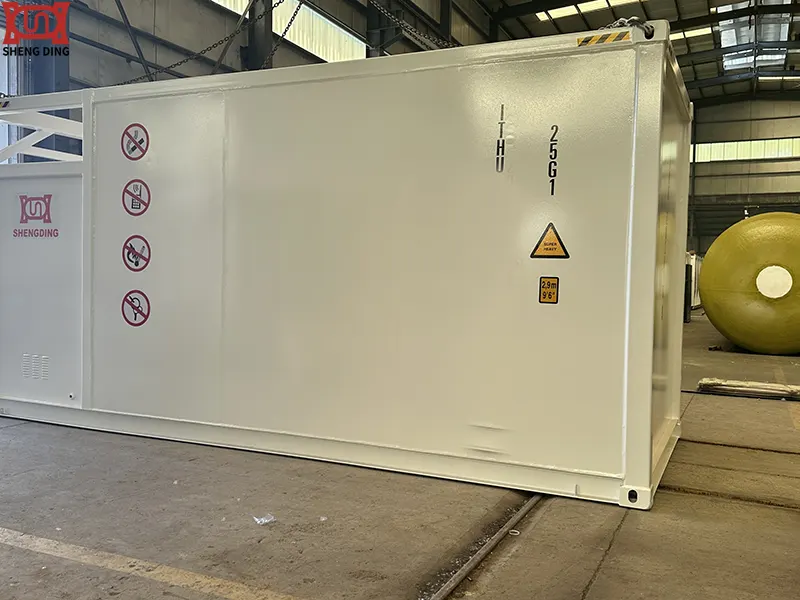
1. Land Use and Planning Requirements
1.1. Core Land Use (Hard Red Line)
1.1.1. Preferred: Industrial Land
- Applicable Scenarios: Mines, construction sites, factories, logistics parks, and skid-mounted stations for self-use in mining areas (most common and easiest to approve).
- Requirements: Planned use is industrial/warehousing/logistics, not agricultural or residential; government planning boundary map available.
1.1.2. Secondary Option: Commercial/Business Service Land
- Applicable Scenarios: For enterprise self-use and internal services, or as a refueling point for industrial parks.
- Sub-categories: B13 retail commercial land (including gas stations), classified as "service land" in some countries.
1.1.3. Strictly Prohibited Land (Absolutely Prohibited)
- Agricultural land/arable land/farmland (including basic farmland, forest land, and wetlands).
- Ecologically Sensitive Areas: Water source protection areas, national parks, forests, riverbanks, wildlife reserves.
- Residential land, core residential areas (some countries allow for the edge, but must be >=200 meters away).
- Untitled "customary land" or "tribal land" (without official land certificates).
1.2. Ownership and Leasing Rules (Common in Africa)
1.2.1. Foreign Investment Generally Lacks Permanent Ownership
- Nigeria, Ghana, Kenya, Angola, etc.: Land is state-owned/owned by chiefs; foreign investors can only lease long-term (Leasehold), not purchase freehold (Freehold).
- Standard lease term: 50-99 years (99 years is common for industrial/commercial leases, renewable).
1.2.2. Must Have a "Clean Title"
- No mortgages, no disputes, no third-party rights; provide a land certificate/leasehold certificate/occupancy permit (C of O).
- Verbal agreements and unauthorized subletting are prohibited; government registration and notarization are required.
1.2.3. Differences in Land Use for Self-Use vs. Business Operations
- For company self-use (internal fleet): Industrial land is sufficient; approval is simple.
- For external business operations (commercial retail): Commercial land and a refined oil business license are required; most countries require special approval from the Ministry of Commerce/Ministry of Energy.
1.3. Land Requirements for Key Countries
- Nigeria: Foreign investment is prohibited; land must be held by a local company; 99-year lease for industrial/commercial land; >=200 meters away from residential areas.
- Kenya: Priority given to industrial/warehousing land; lease term >=50 years; >=200 meters from schools/hospitals.
- Ghana: Coexistence of state-owned, chieftain, and private land; 50-year lease for foreign investment; priority given to industrial parks.
- Angola: State-owned land, maximum 60-year usage rights; construction permits required for industrial/commercial land.
- Uganda: Prohibited in sensitive areas; >=200 meters from schools/hospitals; environmental assessment (NEMA) required.
2. Safety Distances (Fire and Explosion Prevention, Stricter Standards Generally Approved in Africa)
2.1. Open Flames/Hot Work Areas/Boilers/Welding Areas
- Standard: >=30 m (National Standard SH/T3134: 25 m; Stricter standards generally applied in Africa)
2.2. General Factory Buildings, Warehouses, Office Buildings, Guardhouses
- Standard: >=15 m
2.3. Residential Buildings, Villages, Edges of Residential Areas
- General: >=50 m
- East Africa (Kenya/Uganda): >=200 m
- Nigeria: >=50 m
2.4. Schools, Hospitals, Churches, Public Assembly Areas
- General: >=100 m
- East Africa: >=200 m
- Ghana: >=50 m
- Nigeria: >=90-100 m
2.5. Municipal/Factory Main Roads, Highways
- Standard: >=8 mm (consistent with national standards)
2.6. Railway Lines
- Standard: >=22 m
2.7. Overhead High-Voltage Lines (10kV and above)
- Standard: >=1 pole height, and >=15 m; cables are strictly prohibited from crossing skid-mounted stations.
2.8. Water Sources, Rivers, Lakes, and Wells
- Standard: >=100 m (environmental protection + seepage prevention requirements)
2.9. Other Gas Stations (for external operation)
- Nigeria: >=400 m (on the same side of the road).
- Ghana: >=500 m
2.10. Tank Capacity <=20 m3
- Important Public Buildings: 50 m
- Open Flame/Spark Point: 25 m
- Class I Protected Objects: 16 m
- Class II Protected Objects: 12 m
- Class III Protected Objects: 10 m
2.11. Tank Capacity >20 m3
- Important Public Buildings: 100 m
- Open flame/sparking point: 50 m
- Class I protected structures: 40 m
- Class II protected structures: 32 m
- Class III protected structures: 24 m
3. Geological and Foundation Conditions
- Bearing capacity: Ground >= 10 t/m2, no settlement, no cracks, no loose soil.
- Drainage: High-lying, dry, no water accumulation; avoid low-lying areas, flood zones, and debris flow zones.
- Foundation: Reinforced concrete monolithic casting, dimensions slightly larger than the base; horizontal error <= 3mm; seepage prevention + cofferdam required in rainy areas of Africa.
4. Electrical Explosion-proof and Power Supply (High Temperature and Humidity + Lightning Protection)
- Power supply: Stable 380V/220V, independent circuit, explosion-proof switch + leakage protection.
- Explosion-proof rating: All electrical components Ex d IIB T4 and above (mostly IEC is used in Africa).
- Grounding and Static Electricity Prevention: All equipment must be uniformly grounded, with a grounding resistance <= 4ohm. Equipotential bonding should be applied to the tank, fuel dispenser, and pipelines.
- Protection Against High-Electricity Interference: Keep away from substations, high-frequency equipment, and large motors.
5. Ventilation and Adaptability to Extreme Climates (African High Temperatures/Heavy Rain/Dust Storms)
- Installation Location: Outdoor, open, and fully ventilated; indoor, shed, or semi-enclosed spaces are strictly prohibited.
- Unobstructed Location: No high walls or large trees should obstruct the surrounding area to ensure oil and gas dispersion.
- High-Temperature Protection: Equipped with a sunshade/heat shield to prevent excessive tank temperature.
- Heavy Rain/Rainy Season: Site drainage slope >= 2%, with a seepage-proof collection pool (volume >= 50% of tank capacity).
- Dust-Proof Areas: Dust screens should be installed at ventilation openings and cleaned regularly.
6. Lightning Protection and Static Electricity Prevention (Africa is prone to thunderstorms)
- Lightning Protection Standards: Compliant with IEC 61643 / GB 50057.
- Lightning Rods/Strips: Independently installed, fully covered skid-mounted stations.
- Grounding Electrode: Galvanized angle steel/steel pipe, buried depth >= 0.8m, grounding resistance <= 10ohm.
- Equipotential Bonding: Tank body, frame, fuel dispenser, and pipelines are all connected and grounded.
7. Environmental Protection and Fire Protection (Stricter Environmental Regulations in Africa)
- Leakage Prevention: Perimeter reinforced with impermeable concrete + oil-water separation tank to prevent soil/groundwater pollution.
- Firefighting Equipment: >= 4 dry powder fire extinguishers (ABC), >= 2m3 of fire sand, fire blankets. Fire lanes >= 4 meters wide, unobstructed throughout.
- Avoidance of Sensitive Areas: Construction is strictly prohibited in water source protection areas, ecological red lines, and farmland.
- Wastewater Discharge Compliance: Oily wastewater must not be directly discharged; it must be treated for reuse or transported off-site.
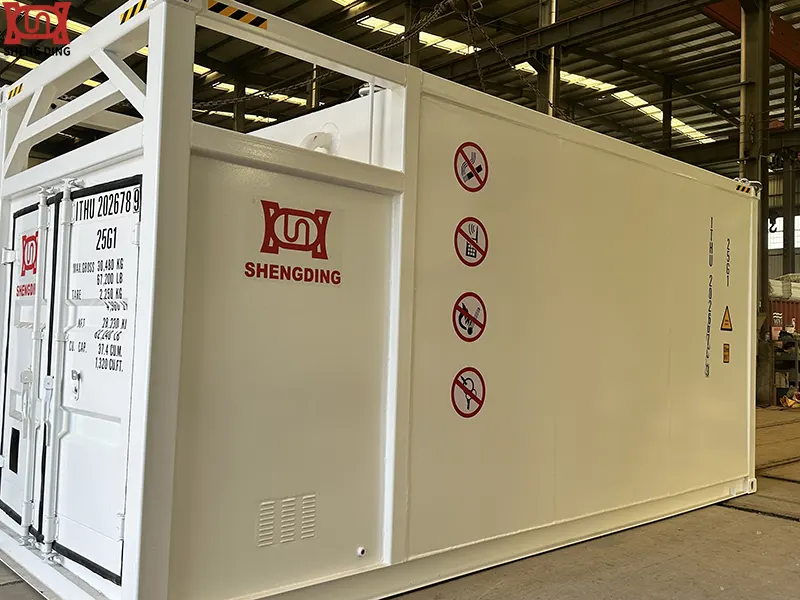
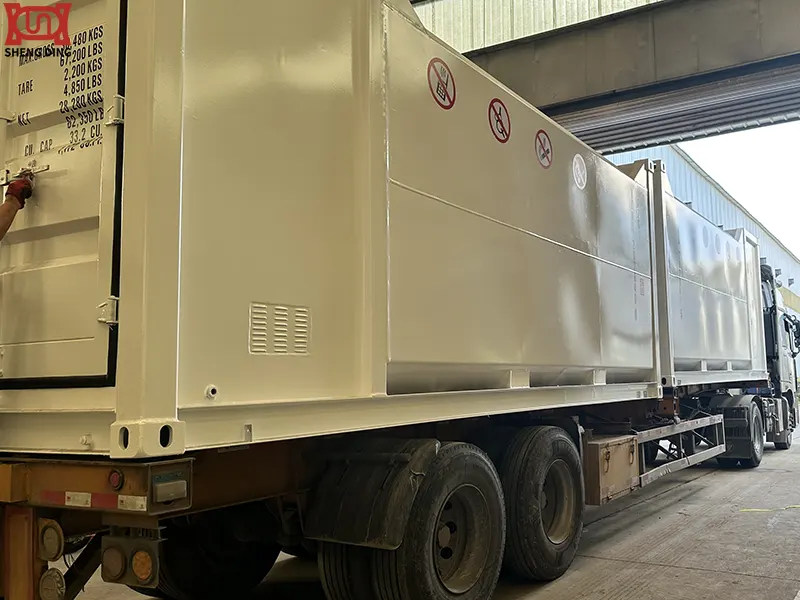
8. Precautions for Skid-Mounted Fuel Station Installation
8.1. Piping and Fuel Dispensing Installation
- Use oil-resistant nitrile gaskets for the flange sealing gaskets of the inlet and outlet pipelines. After installation, conduct sectional pressure tests to ensure no leakage.
- After the explosion-proof skid-mounted tanks arrive, avoid throwing them from heights or subjecting them to impacts and deformation. Upon arrival, inspect the explosion-proof core for damage.
- The fuel outlet pipeline should run along the slope towards the fuel dispenser to prevent air accumulation in the pipeline, which could cause inaccurate metering.
8.2. Special Protection Measures for African Climate (High Temperatures, Heavy Rain, Dust Storms)
- In high-temperature areas, install sunshades to reduce tank overheating and fuel vapor expansion due to direct sunlight.
- In areas with severe dust storms, install dust filters on the fuel dispenser vents; ensure proper drainage of dikes during the rainy season.
- In areas with large diurnal temperature variations, allow for thermal expansion and contraction in valves and fittings.
8.3. Lifting and Positioning Precautions
- Lifting points must strictly adhere to the original factory markings; lifting of pipelines or fuel dispensers is strictly prohibited. After positioning, re-check the levelness and secure the anchors.
In summary, the installation environment requirements for skid-mounted refueling stations in Africa are standardized construction guidelines developed based on local climate, geological conditions, land policies, and safety and environmental regulations, encompassing three core dimensions: compliance, safety, and adaptability. Strictly implementing the above seven environmental requirements can effectively avoid land compliance risks, climate construction hazards, and safety and environmental protection acceptance issues in overseas projects, ensuring the long-term, stable, safe, and compliant operation of skid-mounted refueling stations, while meeting the acceptance standards of safety supervision and environmental protection departments in various African countries, thus laying a solid foundation for the normalized fuel supply operations of overseas engineering projects.
Written by
TAIAN SHENGDING METAL CONTAINER MANUFACTURING CO., LTD.
Editor Wang
WhatsApp:+86 152 5486 3111
Email:shengdingtank@126.com


- WhatsApp
- E-MailE-Mail:shengdingtank@126.com
- WeChatWeChat:15254863111