The Top 10 Leading Technologies for Skid-Mounted Fuel Station Explosion-Proof Tanks


Against the backdrop of a dual upgrade in energy terminal safety and environmental compliance, the explosion-proof tank--serving as the core safety vessel for skid-mounted fuel stations--has evolved from a traditional oil storage unit into a comprehensive protection system characterized by intrinsic safety, intelligent control, and long-term durability. As an industry benchmark enterprise, Shengding has deeply cultivated the field of explosion-proof barrier technology. Driven by innovative R&D and grounded in lean manufacturing, the company has successfully resolved critical industry pain points--specifically, the difficulty of simultaneously balancing explosion protection with corrosion resistance, and reconciling safety requirements with operational efficiency. The following ten leading technologies--ranging from core materials, tank structure, and safety protection to intelligent monitoring and environmental adaptability--comprehensively define the technical benchmarks for the new generation of explosion-proof tanks. They provide robust support for the safe operation, regulatory compliance, and full lifecycle value of skid-mounted fuel stations.
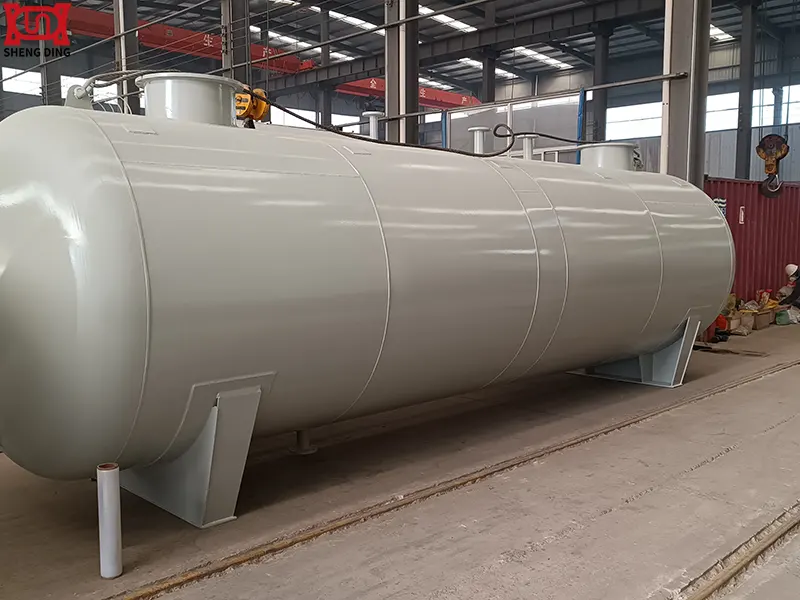
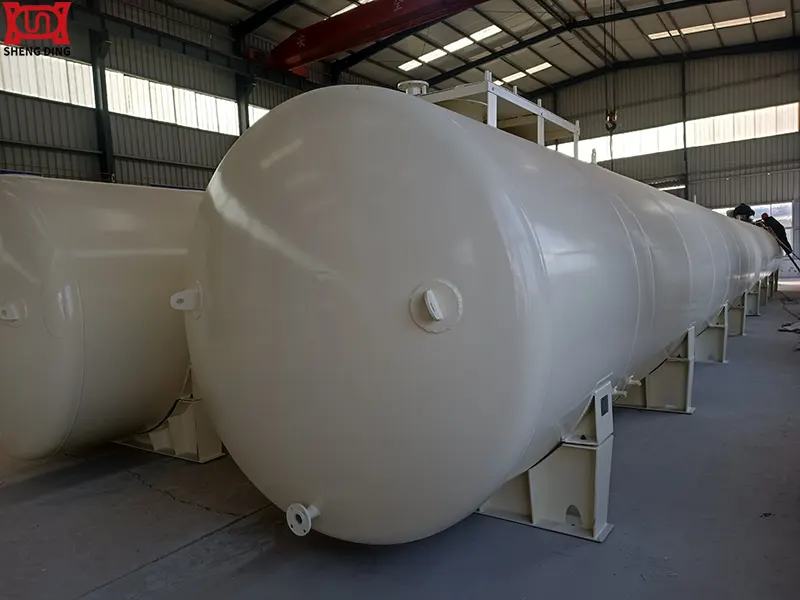
1. What is an Explosion-Proof Tank?
An explosion-proof tank is a specialized safety storage vessel in which honeycomb-structured metal explosion-proof barrier materials are installed inside a standard oil storage tank. It serves as a core component of skid-mounted refueling units, primarily designed to prevent explosions, fires, and leaks; it is currently the standard-issue storage tank for skid-mounted fuel stations.
1.1. Core Principles
The interior of the tank is filled with honeycomb-structured explosion-proof units made of aluminum-magnesium alloy or stainless steel, which partition the tank's internal space into countless tiny, sealed micro-chambers:
- When oil vapors encounter open flames, gunfire, static electricity, or physical impact, the resulting flame is rapidly fragmented, cooled, and its propagation is effectively blocked.
- Consequently, the internal pressure of the tank cannot rise sharply or instantaneously, thereby eliminating the risk of flashovers or explosions at the source.
1.2. Core Functions
- Intrinsic Explosion Protection: Even in the presence of open flames at the tank opening, lightning strikes, accidental gunfire, or vehicle collisions, the fuel inside the tank will not explode; instead, it will merely undergo slow, localized combustion.
- Combustion Suppression & Flame Retardancy: Significantly reduces the volatilization of oil vapors; flame propagation is blocked, preventing the fire from spreading.
- Anti-Surge & Anti-Impact: The honeycomb structure acts as a buffer against liquid sloshing, minimizing fluid impact forces and preventing the generation of static electricity during vehicle movement or transit over uneven terrain.
- Dual-Layer Leak Prevention: Typically features a double-walled structure; the interstitial space between the inner and outer tanks allows for real-time leak detection, thereby completely preventing soil and groundwater contamination.
- Anti-static Protection: The metal components ensure full-range conductivity, rapidly dissipating static electricity and eliminating the fire hazards associated with static discharge.
2. Factors to Consider When Selecting an Explosion-Proof Barrier Tank for Skid-Mounted Fueling Stations
2.1. Explosion-Proof Barrier Material
This directly determines the effectiveness of the explosion-proof function, the service life, and the maintenance costs.
- Material Priority: Aluminum-Magnesium Alloy (8-10 years) > 316L Stainless Steel (15-20 years) > Standard Aluminum Alloy (3-5 years).
- Porosity: 90%-95% (higher porosity results in better explosion suppression);
- Honeycomb Wall Thickness: 0.08-0.12 mm (walls that are too thin are prone to deformation; walls that are too thick consume excessive internal volume);
- Vibration-Induced Debris: <=1.0 mg/L (ensures against clogging);
- Compatibility: Compatible with gasoline, diesel, and ethanol-blended gasoline; exhibits no corrosion or swelling.
- Pitfall to Avoid: Low-quality materials may collapse within 1-2 years, rendering the explosion-proof function ineffective and making repairs extremely difficult.
2.2. Tank Structure and Materials
The prevailing standard is a double-walled tank design, consisting of an inner tank and an outer tank, with an interstitial space between them for leak detection.
- Tank Materials and Wall Thickness: Inner tank--Q345R steel, >=8 mm (for pressure bearing); Outer tank--Carbon steel, >=6 mm (for physical protection); For coastal or chemical industrial zones--316L stainless steel lining (to resist chloride ion corrosion, with a service life of >=20 years).
- Double-Wall Interstitial Space: 30-50 mm, equipped with a real-time leak detection system (accuracy <=0.1 L/h) that triggers a 100% reliable alarm in the event of a leak.
- Structural Strength: >=4 sets of reinforcing ribs; tanks larger than 25 m3 must include internal compartments (compartment size <=25 m3); tanks larger than 10 m3 located in urban areas must include internal compartments (compartment size <=10 m3); impact resistance capable of withstanding a collision from a 10-ton truck without deformation; seismic resistance rating of >=Magnitude 9.
- Anti-Corrosion Coating: Epoxy zinc-rich primer + Epoxy micaceous iron oxide intermediate coat + Polyurethane topcoat; salt spray resistance rating of >=5000 hours (standard carbon steel without such coating typically suffers corrosion perforation within 5-8 years).
3. Quick Reference Guide for Model Selection
| Dimension | Minimum National Standard Requirement | High-Quality Tank Standard | Risks Associated with Inferior Tanks |
| Explosion Overpressure | <=0.14 MPa | <=0.05 MPa | Risk of Explosion |
| Explosion-Proof Material | Aluminum-Magnesium Alloy | 316L Stainless Steel | Collapse within 1-2 Years |
| Tank Wall Thickness | Inner: 8 mm / Outer: 6 mm | Inner: 10 mm / Outer: 8 mm | Corrosion and Punctures |
| Leak Detection Accuracy | Real-time Alarm | <=0.1 L/h | Leakage and Contamination |
| Service Life | 3-5 Years | 15-20 Years | Frequent Maintenance |
4. Top 10 Leading Technologies for Explosion-Proof Barrier Tanks
4.1. Honeycomb Explosion-Proof Barrier Material Technology (Core Technology)
- Material: 316L Stainless Steel / Aluminum-Magnesium Alloy Honeycomb; Porosity: 90%-95%
- Explosion-Proof Capability: Explosion overpressure <=0.05 MPa (National Standard: <=0.14 MPa); No explosion upon impact from a 12J projectile
- Explosion Suppression Efficiency: Flame propagation speed reduced to < 0.1 m/s; Duration of high-temperature zone reduced by >=80%
- Service Life: Aluminum-Magnesium Alloy >=8 years (Industry Average: 3 years); Tensile strength degradation < 5% after 2,000 hours of service
4.2. Double-Walled Tank + Interstitial Leak Detection Technology
- Structure: Inner tank (8 mm Q345R steel); Outer tank (6 mm carbon steel); Interstitial space: 30-50 mm
- Design Pressure: Inner tank >=0.8 MPa; Outer tank at atmospheric pressure
- Leak Detection Sensitivity: 100% real-time alarm for interstitial leaks; Detection accuracy <=0.1 L/h
4.3. Active Explosion Suppression + Inert Gas Protection
- Response Time: <=30 ms upon trigger by open flame or static electricity; Simultaneous release of inert gas
- Oxygen Content Control: Oxygen concentration inside the tank maintained at <=8%; Continuously suppresses re-ignition
- Explosion-proof Redundancy: Multiple triggers (temperature/pressure/flammable gas); false alarm rate < 0.1%
4.4. Intelligent Liquid Level and Safety Monitoring System
- Liquid Level Accuracy: +-2mm; high-level alarm (90% volume); anti-overflow interlock
- Monitoring Parameters: Liquid level, pressure, temperature, oil/gas concentration, electrostatic grounding status, leak detection
- Remote Response: 4G/5G IoT connectivity; anomaly data uploaded within 1 second; remote emergency shut-off capability
4.5. High-Efficiency Oil and Gas Recovery (Environmental Protection + Safety)
- Recovery Rate: >=95% (National Standard: >=90%); VOC emissions < 20 mg/m3
- Volatility Suppression: Material adsorption + vapor-phase barrier; reduces evaporation volume by 70%-80%
- Airtightness: Breathing valve pressure range of 295-2000 Pa; leakage rate <= 0.01 m3/h
4.6. Highly Corrosion-Resistant Tank Technology
- Coating System: Zinc-rich epoxy primer + micaceous iron oxide epoxy intermediate coat + polyurethane topcoat; salt spray resistance >= 5000 hours
- Service Life: >=15 years in coastal environments (compared to 5-8 years for standard carbon steel); annual wall thickness reduction < 0.1 mm
- Material Upgrade: 316L stainless steel-lined tanks; service life >=20 years in chloride-rich environments
4.7. Modular Integration and Rapid Deployment
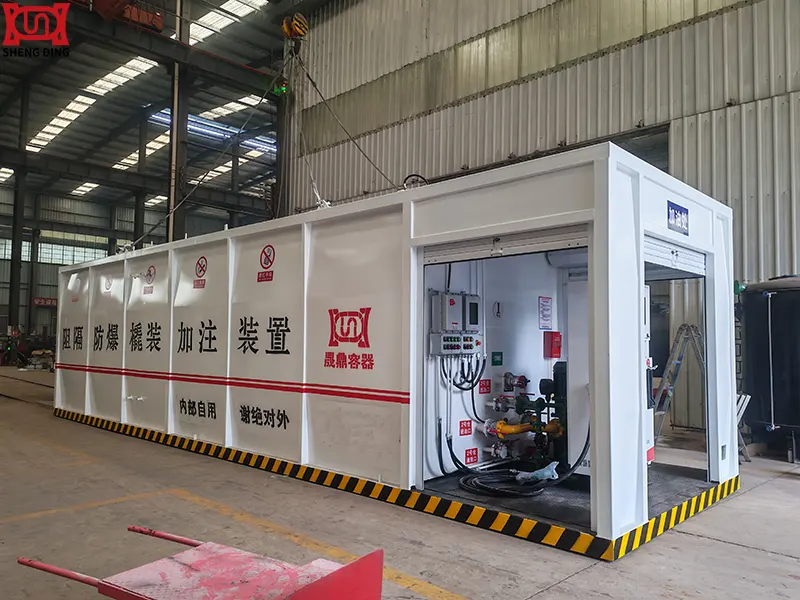
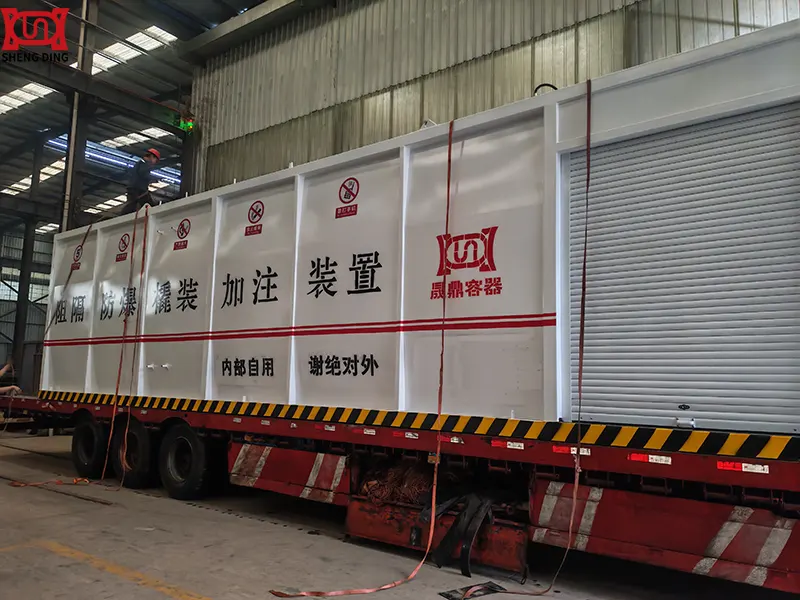
- Integration Level: Explosion-proof tank, fuel dispensers, power distribution, fire suppression, and monitoring systems are fully integrated; footprint is only 1/5 that of a traditional fueling station
- Deployment Cycle: 72 hours for installation and commissioning (compared to 30-60 days for a traditional station)
- Specifications: Single-tank capacity of 5-50 m3; urban installations limited to <=20 m3 (tanks >10 m3 must be compartmentalized into sections of <=10 m3)
4.8. Comprehensive Electrostatic and Lightning Protection Technology
- Electrostatic Protection: Material volume resistivity <= 1 * 10⁸ ohm.m; grounding resistance <= 4 ohm
- Lightning Protection: Direct lightning strike protection + induced lightning shielding; capable of withstanding lightning current surges of up to 100 kA
- Surge Protection: Built-in SPD (Surge Protection Device) capable of withstanding 40kA surges to safeguard the electrical system.
4.9. Emergency Pressure Relief and Automatic Fire Suppression Linkage
- Pressure Relief: Activation pressure of 21-35 kPa; pressure released within 0.1 seconds, reducing peak pressure by over 70%.
- Fire Suppression: Built-in aerosol/ultra-fine dry powder system; achieves total flooding within 3 seconds with 100% fire suppression efficiency.
- Fuel Shut-off: Automatic fuel shut-off triggered by high temperatures (>=70oC) to prevent combustion in the event of a leak.
4.10. Impact Resistance and Structural Reinforcement Technologies
- Impact Resistance: Capable of withstanding a collision from a 10-ton truck without structural deformation; seismic resistance rating of >=Magnitude 9.
- Tank Reinforcement: Features >=4 sets of reinforcing ribs; tanks >25 m3 are equipped with internal baffles (tanks <=25 m3 may also be equipped).
- Surge Suppression: Reduces the impact force of internal liquid surges by a factor of 40, preventing tank rollover and structural fatigue.
5. Common Issues with Barrier-Type Explosion-Proof Tanks
5.1. Emergency Pressure Relief Valve Failure / Incorrect Selection
- Symptoms: Internal tank pressure rises without releasing, or frequent false releases occur.
- Causes: Incorrect pressure relief setting (outside the 21-35 kPa range), valve core jamming, or incorrect installation orientation.
- Consequences: Tank deformation due to overpressure, or risk of explosion.
- Standard: Activation within 0.1 seconds at 21-35 kPa; requires periodic calibration.
5.2. High-Temperature Fuel Shut-off Valve Failure
- Symptoms: Failure to cut off fuel outflow during a fire, leading to the spread of the blaze.
- Causes: Incorrect installation location, temperature trigger set to a value other than 70oC, or valve core jamming.
- Standard: Automatic shut-off at >=70oC; requires monthly functional testing.
5.3. Failure to Meet Vapor Recovery Standards (A Frequent Environmental Compliance Issue)
- Symptoms: Vapor leakage, strong odors, or failure to pass environmental inspections.
- Causes: Absence of a vapor recovery system, recovery efficiency < 95%, or leaks in the piping system.
- Standard: Vapor recovery efficiency of >=95%; mandatory requirement for gasoline storage tanks.
5.4. Monitoring System "Blind and Deaf" (No Data / False Alarms)
- Symptoms: Inaccurate liquid levels (error > +-5mm), absence of remote alarms, failure to trigger leak detection alarms.
- Causes: Substandard sensors, lack of calibration, absence of 4G/5G remote transmission capabilities.
- Consequences: Failure to detect oil spills, leaks, or temperature excursions in a timely manner.
- Countermeasures: Ensure liquid level accuracy of +-2mm; ensure leak detection sensitivity of <=0.1 L/h; ensure anomaly data is uploaded within 1 second.
6. Electrical and Monitoring System Issues
6.1. Poor Static Grounding / Frequent Alarms
- Symptoms: Static electricity alarms, power trips caused by lightning strikes, risk of static charge accumulation.
- Causes: Grounding resistance > 4ohm, missing bonding jumpers across flanges or manholes, corrosion of grounding electrodes.
- Standards: Grounding resistance <= 4ohm; ensure equipotential bonding across the entire system.
6.2. Monitoring System "Blind and Deaf" (No Data / False Alarms)
- Symptoms: Inaccurate liquid levels (> +-5mm), failure to trigger leak detection alarms, absence of remote monitoring, data communication loss.
- Causes: Substandard sensors, lack of calibration, absence of 4G/5G connectivity, unstable power supply.
- Countermeasures: Ensure liquid level accuracy of +-2mm; ensure leak detection sensitivity of <=0.1 L/h; ensure anomaly data is uploaded within 1 second; implement dual-power supply backup.
6.3. Failure of Explosion-Proof Electrical Systems / Aging Wiring
- Symptoms: Water ingress into distribution boxes, short circuits, failure of explosion-proof lighting fixtures, damaged wiring insulation.
- Consequences: Sparks igniting oil vapors/gases, resulting in a risk of explosion.
- Countermeasures: Utilize explosion-proof distribution boxes; ensure watertight sealing; conduct regular inspections; replace aging components immediately.
7. Environmental and Fire Safety Issues
7.1. Substandard Oil Vapor Recovery (Strong Odors / Environmental Non-Compliance)
- Symptoms: Strong odors in the refueling area, oil vapor leakage, failure to pass environmental inspections.
- Causes: Absence of oil vapor recovery systems, recovery efficiency < 95%, leaks in piping/ducting, saturation of activated carbon filters.
- Standards: Mandatory oil vapor recovery efficiency of >= 95% for gasoline storage tanks; regular replacement of activated carbon filters.
7.2. Safety Device Failure (Pressure Relief / Fuel Shut-off / Fire Suppression)
- Emergency Pressure Relief Valve: Failure to relieve pressure / Accidental discharge (Pressure: 21-35 kPa);
- High-Temperature Fuel Shut-off Valve: Failure to cut off fuel supply at 70oC;
- Automatic Fire Suppression: Aerosol / Dry powder systems fail to activate or have expired.
- Countermeasures: Monthly testing, periodic calibration, and replacement upon expiration.
7.3. Missing / Expired Fire Safety Facilities
- Symptoms: Expired fire extinguishers, insufficient pressure in extinguishers, damp fire sand, absence of fire containment bunds.
- Consequences: Failure to pass fire safety acceptance inspections; lack of fire-fighting capability in the event of a fire.
- Countermeasures: Ensure adequate provision of dry powder fire extinguishers, fire sand, fire containment bunds, and emergency lighting; conduct monthly inspections.
In summary, the ten leading technologies featured in Shengding's skid-mounted fuel station explosion-proof tanks--centered on intrinsic safety, grounded in material innovation, extended through intelligent integration, and aimed at long-term reliability--construct a comprehensive technical framework that evolves from passive protection to active early warning, and from singular explosion prevention to full-scenario adaptability. These technologies not only resolve industry challenges such as traditional tank corrosion, leakage, explosion-protection failures, and monitoring delays, but also strictly adhere to the rigorous safety and environmental protection requirements stipulated by national standards such as GB50156-2021 and AQ/T3001-2021. Moving forward, Shengding will continue to focus on the integrated innovation of IoT, new materials, and emergency response technologies, driving the iterative upgrade of explosion-proof tanks toward greater intelligence, durability, and adaptability for integrated energy stations. By leveraging robust core technologies to fortify the safety foundations of skid-mounted fuel stations, Shengding aims to facilitate the realization of intrinsic safety and green development within the energy storage and transportation sectors, thereby continuing to lead the industry on a new journey of high-quality development.
Written by
TAIAN SHENGDING METAL CONTAINER MANUFACTURING CO., LTD.
Editor Wang
WhatsApp:+86 152 5486 3111
Email:shengdingtank@126.com


- WhatsApp
- E-MailE-Mail:shengdingtank@126.com
- WeChatWeChat:15254863111