Skid-Mounted Fuel Station Installation: 7 Steps to First Dispense


Installing a skid-mounted fuel station doesn't have to be complicated. Follow this 7-step guide to go from site selection to first dispense--safely, compliantly, and on schedule.
Introduction
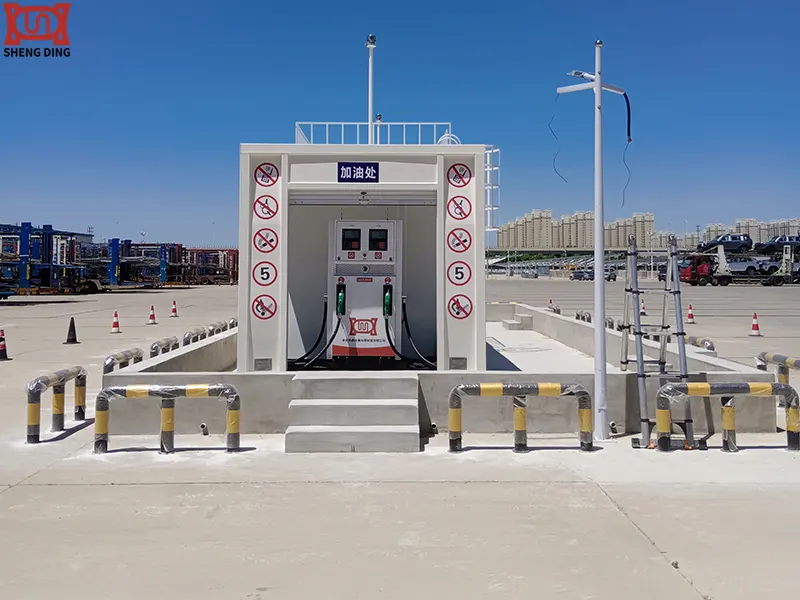
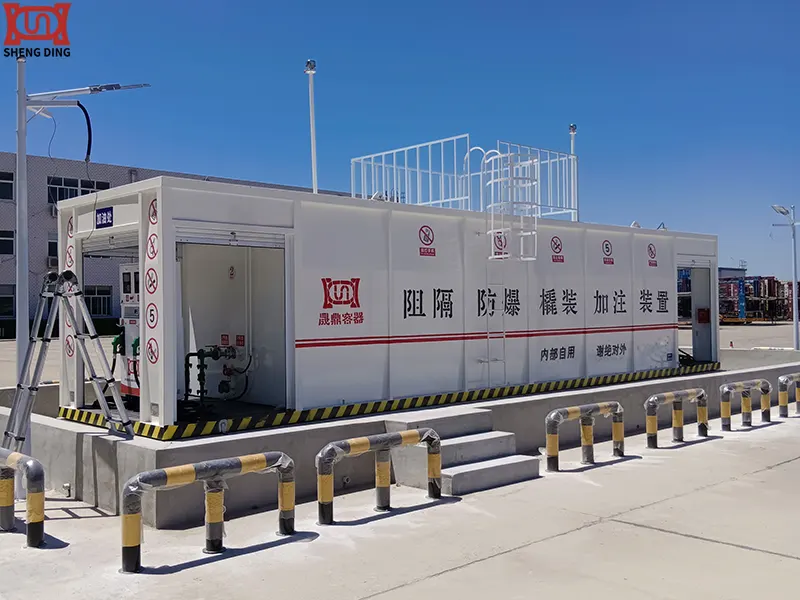
A skid-mounted fuel station--also known as a mobile fuel station or container fuel station--is a factory-built, transportable fueling system that arrives with tanks, pumps, dispensers, and safety equipment pre-installed. Unlike traditional fuel stations that require months of on-site construction, skid-mounted units are designed for rapid deployment.
But here's the catch: installation is where most projects go off track. Poor site planning, missed permits, or rushed commissioning can add days or even weeks of delay. A standard skid-mounted fuel station installation typically takes 7-15 days from pad readiness to commissioning. Mini skids can be operational in hours, while large custom container stations may need up to 30 days if civil work and inspections are complex.
This guide walks you through every phase--from the day you choose a site to the moment the first liter dispenses.
Step 1: Site Selection & Compliance Planning
The most expensive installation problems start before the station arrives. A few hours of planning can save days of rework.
What to Check:
- Land Use Compliance: Skid-mounted fuel stations can only be installed on legal industrial or storage land. Installation is strictly prohibited in residential areas, commercial zones, ecological control areas, or basic farmland. In many jurisdictions, these units are restricted to internal fleet use, emergency response, or temporary events.
- Safety Clearances: Maintain minimum separation distances from ignition sources, buildings, and sensitive areas:
- Open flames or hot-work areas: 25-30 m
- General buildings and warehouses: 15 m
- Roads and highways: 8 m
- Overhead high-voltage lines: at least one pole height + 15 m horizontally
- Water sources, rivers, or wells: 100 m
- Site Conditions: Ensure the site is flat, free of flammable materials, and compliant with local environmental, fire, and safety requirements.
Permits & Approvals:
Installing a skid-mounted fuel station is classified as a special construction project. You'll need:
- Fire design review and approval from the local housing and urban-rural development department
- Land use, safety, and environmental permits
- A complete set of compliance documents from the equipment manufacturer, including certificates, third-party test reports, and explosion-proof certifications
Pro Tip: Don't fall for the myth that skid-mounted stations don't need government approval. Both diesel and gasoline require permits--regulations vary by region, but skipping this step will derail your project.
Step 2: Foundation Construction
The foundation is the critical hidden work of any skid-mounted fuel station installation. It directly affects equipment stability, leak prevention, and long-term performance--and it's a key focus during fire and environmental inspections.
Key Tasks:
1. Site Clearing & Leveling
Clear the site of debris and loose soil. Compact the ground to ensure even load distribution and prevent future settlement or tilting.
2. Reinforced Concrete Foundation
Pour a reinforced concrete foundation according to the design specifications. Key requirements:
- Use compliant grade concrete with proper reinforcement
- The foundation top should be 0.2-0.3 m above the surrounding ground level to prevent water accumulation
- Precisely reserve anchor bolt holes and pipeline interfaces based on equipment drawings
3. Leak Prevention & Drainage
To meet environmental compliance requirements:
- Install a secondary containment berm with an effective capacity of no less than 50% of the total tank volume
- Lay a impermeable layer and oil collection trenches
- Design proper drainage slopes to prevent water pooling around the foundation
4. Grounding System
Pre-install the lightning protection and static electricity grounding system during foundation work. Grounding resistance must meet national safety standards.
Pro Tip: For cold-climate regions, add antifreeze agents to the concrete and install insulation layers to protect against freeze-thaw damage.
Step 3: Equipment Delivery & Inspection
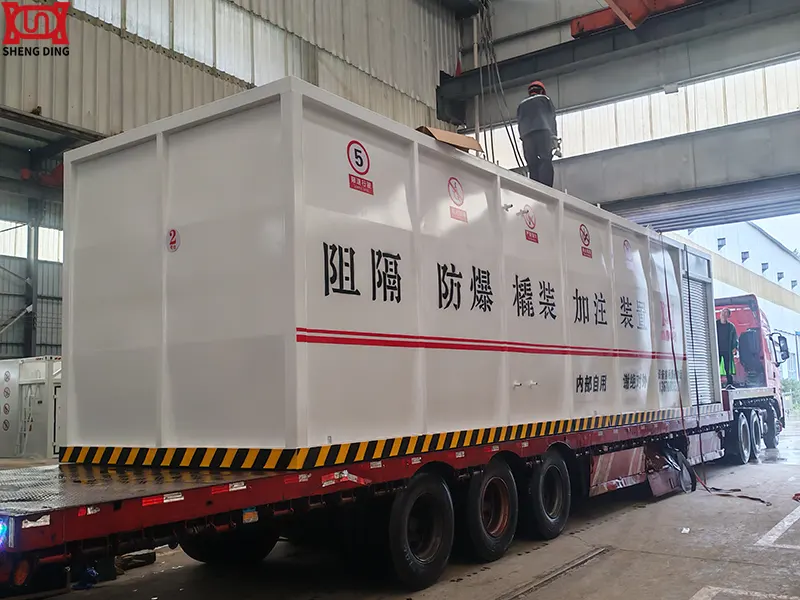
Before the crane arrives, inspect everything thoroughly.
Pre-Unloading Checklist:
- Base Load Capacity: Confirm the foundation can bear the combined weight of the skid plus the full fuel load
- Equipment Integrity: Check for shipping damage--inspect the exterior paint for scratches, rust, or corrosion
- Component Completeness: Verify that all components (double-walled tank, dispenser, automatic fire extinguisher, leak detection system, etc.) are intact and functional
- Documentation: Confirm the unit comes with the factory certificate, third-party test reports, and explosion-proof certification
Step 4: Crane Lifting & Positioning
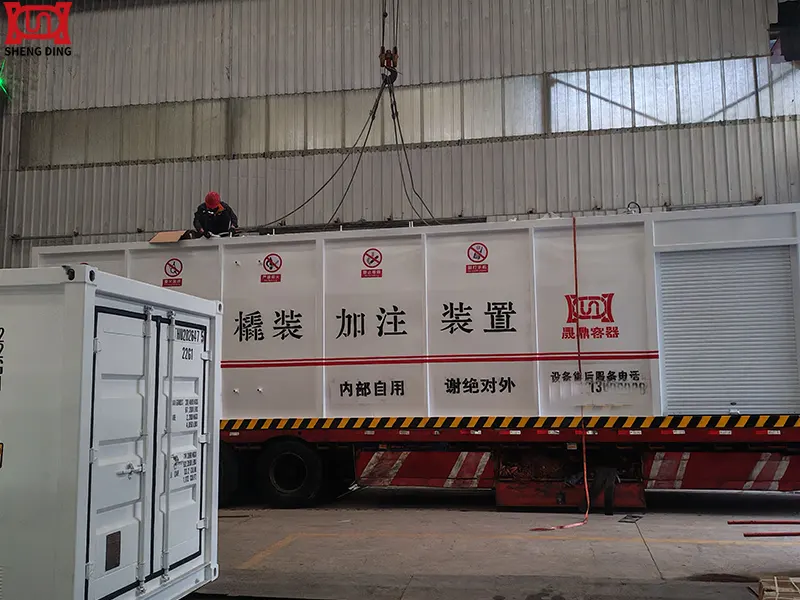
Once the foundation has cured and the equipment has passed inspection, it's time for the lift.
Lifting Best Practices:
- Use lifting equipment with adequate capacity for the skid's weight. For a typical module, a 25-ton crane with an 8-meter working radius (rated capacity -12 tons) is often appropriate
- Attach lifting slings to the pre-installed lifting lugs on the skid (minimum load capacity >=5 tons)
- Assign a dedicated signal person to direct the operation
- Maintain a lifting angle <=60o and use guide ropes at both ends to prevent swinging
- Lower the unit slowly and precisely onto the foundation
Securing the Unit:
- Fasten the skid to the foundation using anchor bolts
- Check and adjust levelness
- the unit must be perfectly horizontal
- Verify the unit is stable, centered, and free of
Warning: Never rush the lift. Rough handling or tilted positioning can deform the structure or damage internal components.
Step 5: Piping, Venting & Electrical Connections
With the unit in place, it's time to connect the systems.
Piping Connections:
- Connect the fuel inlet/outlet lines and vent lines
- All joints should use self-sealing quick-connect couplings to ensure leak-proof seals
- The fuel outlet pipe should be positioned approximately 0.15 m above the tank bottom
- For gasoline units, install both vapor recovery systems for unloading and dispensing
Electrical & Grounding:
- Connect power to the distribution panel, dispenser, and control systems
- Install the static grounding system--all electrical equipment in hazardous areas must meet explosion-proof requirements
- Verify grounding resistance meets the required standard
Safety Systems:
- Install automatic fire extinguishers above the dispenser with an activation temperature <=95oC
- Position portable dry powder extinguishers, wheeled extinguishers, fire sand, and fire blankets as required
Step 6: System Commissioning & Testing
Commissioning is the most critical step before putting the station into service. Every system must be verified.
Functional Tests:
- Dispenser Calibration: Verify metering accuracy. Gasoline dispenser flow rate should not exceed 50 L/min
- Tank Level Alarms: Test the 90% capacity warning alarm and the 95% capacity automatic shut-off valve
- Leak Detection: Confirm the double-wall leak detection system between the inner and outer tank walls is functioning properly
- Pressure Testing: Perform tank pressure tests in accordance with GB/T150 requirements
Safety Device Verification:
Test the responsiveness of:
- Emergency pressure relief devices
- High-temperature automatic fuel shut-off valves
- Static grounding system
Environmental Testing:
Conduct vapor leak detection to ensure emissions meet environmental standards.
Pro Tip: Use nitrogen or compressed air to test pipelines for leaks before introducing fuel--this ensures the system is airtight and safe.
Step 7: Final Inspection, Approval & Staff Training
The last step is also the most overlooked--but it's what separates a legal, safe operation from a liability.
Inspection & Approval:
- Arrange for a third-party safety inspection, including lightning protection, static electricity, and fire system acceptance
- Submit for final review and approval from the local authorities
- The review process typically takes about 20 working days
- Only after receiving approval can the station be put into service
Staff Training:
Before the first drop of fuel flows:
- Train at least two employees on equipment operation, emergency procedures, and safety protocols
- Provide specialized training for fuel handlers on fire prevention and accident response
- Key personnel must pass an exam before being authorized to operate the station
Documentation:
Maintain complete records of:
- Installation drawings and as-built documentation
- Test reports and inspection certificates
- Training records
- Approval documents
Installation Timeline Overview
| Phase | Typical Duration | Key Milestone |
| Planning & Permits | 1-4 weeks | All approvals secured |
| Foundation Construction | 3-7 days | Concrete cured |
| Delivery & Lifting | 1-2 days | Unit positioned and secured |
| Piping & Electrical | 2-4 days | All connections complete |
| Commissioning | 1-3 days | All systems tested and calibrated |
| Inspection & Approval | -20 working days | Final approval received |
Conclusion
Installing a skid-mounted fuel station is a straightforward process when done right--but it requires careful planning, strict compliance with regulations, and methodical execution. The manufacturer builds and tests the equipment; the buyer prepares the site and manages local compliance. When both sides communicate early and follow these seven steps, the project stays on schedule and the station operates safely for years to come.
Need help with your skid-mounted fuel station installation? Contact Shengding Container for expert guidance, custom solutions, and turnkey installation support.
Recommended Reading
- Skid-Mounted Fuel Station 101: What It Is and How It Works
- Skid-Mounted Fuel Station Safety Systems: 9 Essential Features
- Double-Walled Oil Tank Corrosion: Causes, Solutions & Prevention
- 20ft vs 40ft Mobile Container Fuel Station: Which One Fits Your Need?
Target Keywords: skid-mounted fuel station installation, mobile fuel station installation guide, how to install a skid-mounted fuel station, container fuel station setup, skid-mounted fuel station commissioning
Written by
TAIAN SHENGDING METAL CONTAINER MANUFACTURING CO., LTD.
Editor Wang
WhatsApp:+86 152 5486 3111
Email:shengdingtank@126.com


- WhatsApp
- E-MailE-Mail:shengdingtank@126.com
- WeChatWeChat:15254863111