Skid-mounted fuel station power control cabinet: core functions and practical operation guide


The power control cabinet is the power hub of a skid-mounted fuel station, undertaking key functions such as power distribution, equipment control, and safety protection. Its operational stability directly affects the safety and efficiency of the gas station. It is the "power nerve center" and "safety guardian" of the entire gas station, and its role and operation are crucial. The following details its important role and operational matters from the aspects of core functions, practical operation (including start-up, shutdown, inspection, and troubleshooting), and safety regulations. Shengding Container Company can provide professional and practical technical guidelines:
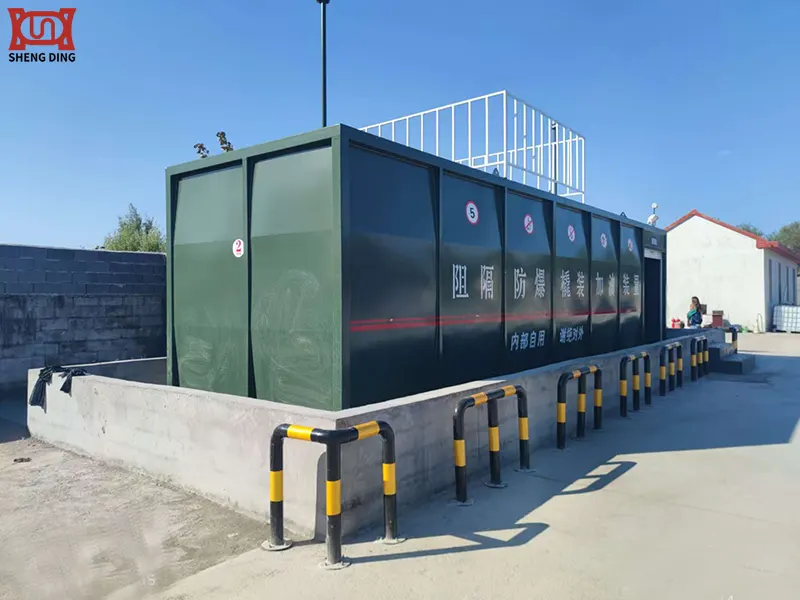
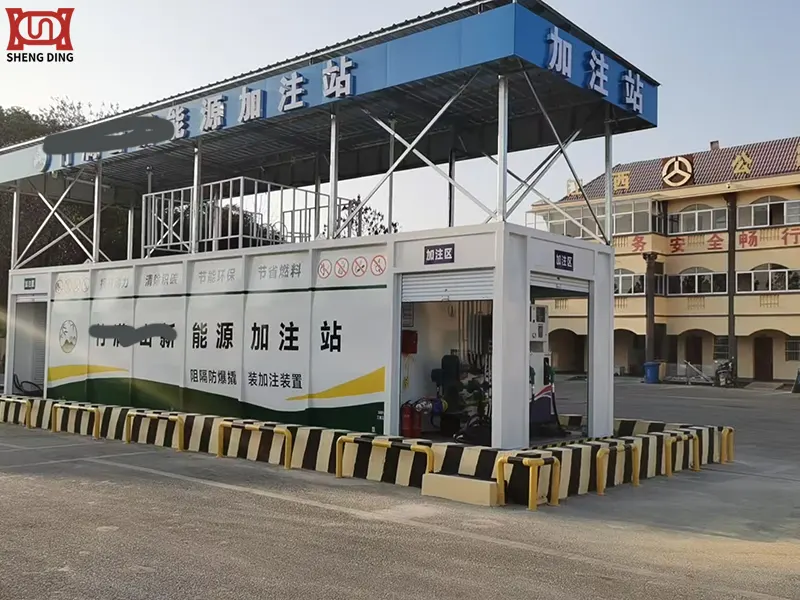
1. Core Functions (Focusing on the Specificities of Skid-Mounted Station Scenarios)
1.1. Power Distribution and Load Management
- Core Function: Distributes external 380V/220V power (or generator backup power) to various electrical equipment, including fuel dispensers, submersible pumps, vapor recovery devices, lighting systems, monitoring equipment, fire pumps, etc.
- Scenario Adaptation: Independent circuits are established using air switches and residual current circuit breakers (RCCBs) to prevent single-device failures from affecting the overall power supply; automatic switching between main power and backup power (generator) is supported (requires a dual power switching module) to ensure uninterrupted operation of critical equipment (such as fire pumps and emergency lighting) during power outages.
1.2. Equipment Start/Stop and Interlock Control
- Manual/Automatic Control: Fuel dispensers and submersible pumps can be directly controlled via knobs and buttons; some intelligent control cabinets can be linked to a PLC system to achieve interlocked start-up of the submersible pump and fuel dispenser (the submersible pump starts to build pressure before refueling and shuts down after a delay after refueling).
- Emergency Control: An emergency stop button is provided, allowing for one-button power cut-off of all non-emergency equipment in case of emergencies (such as leaks or fires), reducing risk.
1.3. Safety Protection (Core Requirements for Skid-Mounted Station Explosion-Proof)
- Overload Protection: When the equipment current exceeds the rated value (e.g., submersible pump jamming causing overload), the circuit breaker automatically trips to prevent motor burnout.
- Short Circuit Protection: In the event of a short circuit in the line or equipment, the short circuit protector trips within milliseconds to prevent fire or explosion risks.
- Leakage Protection: Equipped with a leakage circuit breaker (operating current <= 30mA, operating time <= 0.1s) to prevent electric shock to personnel (e.g., operators touching live parts of the fuel dispenser).
- Undervoltage/Overvoltage Protection: Automatically cuts off power in case of abnormal voltage (e.g., power grid fluctuations) to protect precision equipment (e.g., fuel dispenser metering modules).
- Explosion-proof Adaptation: The control cabinet body must comply with the Ex d IIB T4 Gb explosion-proof standard (suitable for flammable gas environments in gas stations), with good sealing performance to prevent oil and gas from entering and causing an explosion.
1.4. Monitoring and Alarm
- Real-time Monitoring: Displays total current and voltage via ammeters and voltmeters; some intelligent models can monitor the load current and leakage current of each circuit.
- Fault Alarm: In case of short circuit, leakage, overload, or abnormal voltage, an audible and visual alarm (indicator light flashing + buzzer) will alert the user, some models can be linked to the PLC to upload data to the management platform.
1.5. Auxiliary Functions
- Heat Dissipation Design: Built-in fan or heat sink to prevent component aging due to high temperatures (heat dissipation is especially important in the enclosed space of a skid-mounted station).
- Grounding Protection: Cabinet grounding resistance <= 4ohm, conducting leakage current to the ground to ensure personnel safety.
2. Daily Start-up and Shutdown Operation Procedures
2.1. Pre-Startup Inspection (Mandatory Step)
- Power Supply Check: Confirm that the external power supply voltage is stable (380V-10% or 380V+10%), and that the standby generator has sufficient fuel and is in standby mode.
- Visual Inspection: The cabinet's explosion-proof seal is intact (no damage or loosening), the wiring terminals are free of oxidation and overheating, and the indicator lights have no abnormal alarms.
- Protection Device Check: The leakage circuit breaker and air switch are both in the "open" state, and the emergency stop button is not pressed (in the pop-out state).
- Grounding Check: The cabinet grounding bolts are tight, and the grounding wire is free of breaks and corrosion.
2.2. Startup Operation (Execute in Sequence)
- Close the main power circuit breaker (labeled "Main Switch") and observe whether the voltmeter reading is normal (around 380V).
- Close each branch circuit breaker in sequence (in the order of "Lighting - Monitoring - Submersible Pump - Fuel Dispenser - Fuel Vapor Recovery") to avoid a sudden voltage drop caused by starting high-power equipment simultaneously.
- Start the Submersible Pump: Press the "Submersible Pump Start" button and observe the ammeter reading (it should be within the equipment's rated current range, e.g., a 5.5kW submersible pump's rated current is approximately 11A). After confirming there are no abnormal sounds, start the fuel dispenser.
- Intelligent Linkage Mode: If PLC linkage is configured, confirm that the "Automatic Linkage" switch is on. The submersible pump will automatically start synchronously when the fuel dispenser starts and will shut down after a 30-second delay after refueling is completed.
2.3. Shutdown Operation (Normal/Emergency Scenarios)
- Normal Shutdown: First, shut down all fuel dispensers - Press the "Submersible Pump Stop" button - Disconnect each branch circuit breaker in sequence - Finally, disconnect the main power circuit breaker.
- Emergency Stop: Press the red "Emergency Stop" button on the cabinet (automatically cuts off all power). Use only in emergencies such as fire or leaks. After troubleshooting, rotate the emergency stop button clockwise to reset, then restart according to the normal procedure.
3. Key Monitoring Points During Operation (Inspect every 2 hours)
- Current/Voltage: Total current does not exceed the rated value of the main circuit breaker (e.g., for a 100A main switch, the operating current should be <= 80A), and there should be no significant fluctuations in the current of each branch circuit.
- Temperature/Sound: Cabinet surface temperature <= 60oC, no burning smell or abnormal noise inside (such as the buzzing sound of the circuit breaker or the sound of a malfunctioning fan).
- Alarm Status: Indicator lights are normal (power light is constantly green, fault light is red and off), no audible or visual alarms.
- Explosion-proof Sealing: Check that the sealing rings at the cabinet door seams and wiring ports are not aged or detached to prevent oil and gas from entering.
4. Common Fault Handling (Power-Off Troubleshooting Principles)
| Fault Phenomenon | Troubleshooting Steps | Handling Method |
| Main Circuit Breaker Tripping (Trips Upon Closing) | 1. Disconnect all branch circuits and close the main circuit breaker individually (to determine if the main circuit breaker is faulty); 2. Close each branch circuit one by one to locate the tripped circuit; 3. Check the equipment in that circuit (such as the submersible pump, fuel dispenser) for short circuits or leakage. | 1. Main circuit breaker fault: Replace with the same model circuit breaker (e.g., CM1-100L/3300); 2. Equipment short circuit: Inspect the submersible pump motor and fuel dispenser wiring, and close the circuit breaker after troubleshooting. |
| Leakage Alarm Tripping | 1. Disconnect branch circuits and close them one by one to test and locate the leaking equipment; 2. Check if the equipment grounding is good and if the wiring is damaged (e.g., the fuel dispenser cable is crushed). | 1. Damaged wiring: Wrap or replace the cable; 2. Equipment leakage: Stop the faulty equipment (such as the fuel dispenser) and contact maintenance personnel for repair. |
| Submersible pump cannot start | 1. Check if the submersible pump circuit breaker is closed; 2. Measure if the circuit voltage is normal; 3. Check if the PLC linkage signal is normal (in automatic mode). | 1. Close the circuit breaker; 2. Abnormal voltage: Contact the power supply department; 3. Linkage failure: Switch to "manual mode" to start and repair the PLC module. |
| Cabinet overheating | 1. Check if the cooling fan is running; 2. Check if the total current is overloaded; 3. Check if the wiring terminals are loose (loose connections cause overheating). | 1. Fan failure: Replace the fan; 2. Overload: Reduce the number of high-power devices running simultaneously; 3. Tighten the terminals (use a torque wrench and tighten to the manufacturer's specified torque). |
5. Maintenance and Upkeep Standards (Regular Implementation)
- Daily: Clean dust from the cabinet surface (use a dry cloth; do not wash with water), check indicator lights and emergency stop button status.
- Weekly: Tighten wiring terminals (focus on checking the submersible pump and fuel dispenser circuits), check the residual current circuit breaker test button (it should trip after being pressed; test the protection sensitivity).
- Monthly: Check the explosion-proof sealing rings and grounding resistance (measure with a grounding resistance tester; <= 4ohm), clean the internal heat dissipation channels of the cabinet.
- Annually: Replace aging circuit breakers and residual current devices (generally with a service life of 5-8 years), commission a third party to conduct explosion-proof testing (issue a test report).
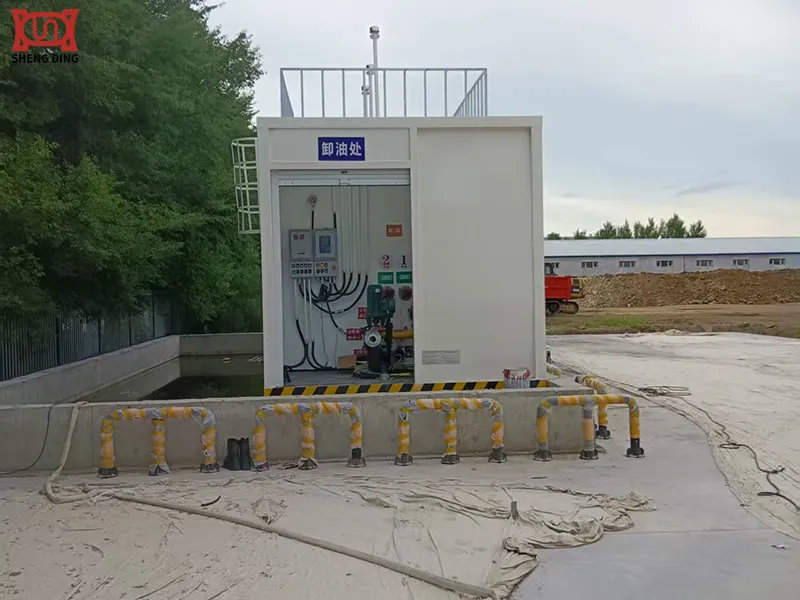
6. Safety Operation Prohibitions (Red Line Requirements)
- 6.1. No Unlicensed Operation: Operators must hold an electrician's certificate and be familiar with the operating procedures for explosion-proof electrical equipment.
- 6.2. No Live Work: When troubleshooting or replacing components, the power must be disconnected first, and a voltage tester must be used to confirm that there is no power before proceeding.
- 6.3. Prohibition of Unauthorized Modification: Unauthorized replacement of circuit breaker models (e.g., using 100A instead of 63A) or short-circuiting of leakage protection devices is prohibited.
- 6.4. Prohibition of Environmental Violations: Flammable and explosive materials must not be stored near the control cabinet, and smoking is prohibited. Good ventilation must be maintained.
- 6.5. Prohibition of Damp Operation: The cabinet must not be opened in rainy weather to prevent moisture ingress and short circuits.
7. Key Selection and Matching Requirements (Supplementary Notes)
- 7.1. Rated Parameter Matching: The rated current of the main circuit breaker should be 1.2-1.5 times greater than the calculated current of the total power of all equipment (e.g., for a total power of 50kW, the calculated current is approximately 100A, so a 125A circuit breaker should be selected).
- 7.2. Explosion-proof Rating: Must comply with industry standards, explosion-proof marking Ex d IIB T4 Gb (applicable to environments with Class IIB flammable gases such as gasoline and diesel).
- 7.3. Protection Rating: Cabinet protection rating >= IP54, preventing dust and rainwater ingress (skid-mounted stations are mostly used outdoors).
- 7.4. Backup Power Interlock: Equipped with an Automatic Power Switch (ATS) module, ensuring the generator automatically starts operating within 30 seconds of an external power outage.
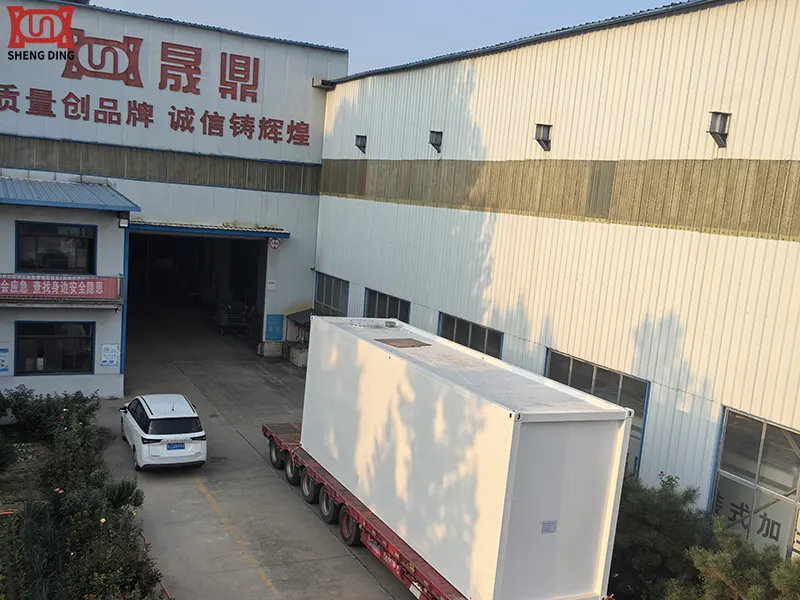
By following these standardized operating procedures, the safe and stable operation of the skid-mounted fuel station's power control cabinet can be effectively guaranteed, reducing equipment failure and safety risks. In actual operation, it is necessary to follow the equipment manual and the station's emergency plan, and conduct regular emergency drills (such as power outage switching and emergency shutdown). Taian Shengding Container Co., Ltd.'s skid-mounted fuel stations come with professional equipment instruction manuals. After purchasing the company's products, dedicated technical personnel will provide on-site guidance. Please call us if you have any product needs.
Written by
TAIAN SHENGDING METAL CONTAINER MANUFACTURING CO., LTD.
Editor Wang
WhatsApp:+86 152 5486 3111
Email:shengdingtank@126.com


- WhatsApp
- E-MailE-Mail:shengdingtank@126.com
- WeChatWeChat:15254863111